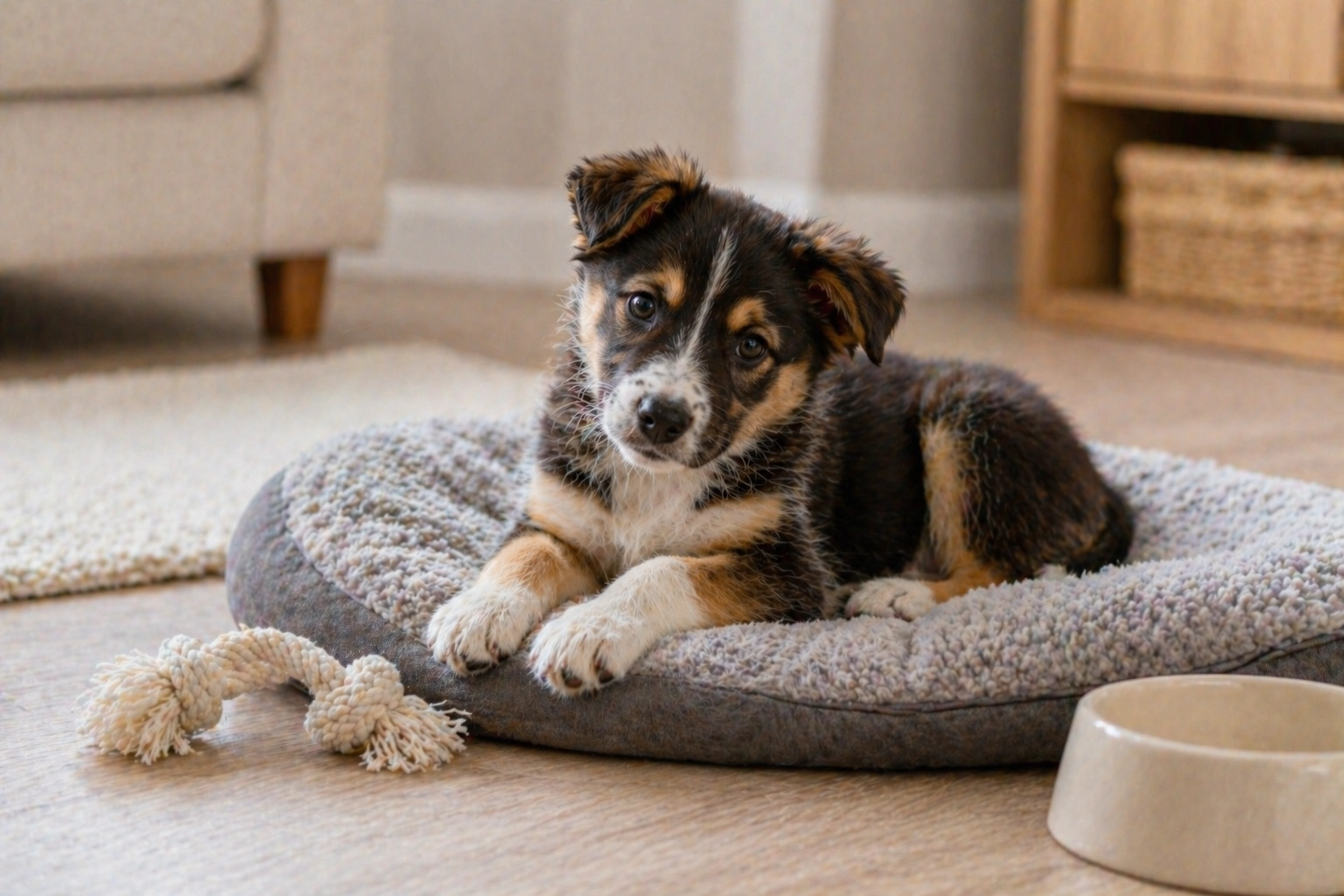
Getting a puppy is exciting, but it also changes your daily routine completely. The first few weeks are usually about feeding schedules, sleep, potty training and overall adjustment. The better you prepare in advance, the less stressful it will be for both the puppy and your household.
Your main goal at the start is to create a safe environment, get the essentials ready and understand what to expect in the first days.
What to do before your puppy arrives
1. Set up a safe area
Your puppy needs a space where they can rest and feel secure, while still being easy to supervise. A kitchen, part of a room, a playpen or a gated area all work well.
Why it helps:
- reduces the risk of chewing unwanted items
- makes potty training easier
- helps establish a routine
- prevents overwhelm from too much space
2. Remove potential hazards
Puppies explore the world with their mouths. Remove anything dangerous from their reach:
- cables, chargers, extension cords
- household chemicals
- medications
- trash bins
- small objects
- shoes
- children’s toys
- toxic plants (such as dieffenbachia, lily, aloe vera, ivy and cyclamen)
- plastic bags, threads, rubber bands
3. Plan for potty training
Decide in advance where the puppy will go to the bathroom. This could be pee pads at home or a schedule of frequent outdoor trips if the puppy is old enough.
Make sure you have:
- pee pads
- odor remover
- wipes and paper towels
Basic checklist: what to buy in advance
1. Food and water
- at least two stable bowls
- the same food the puppy is currently eating
- a measuring cup or kitchen scale
- a container for food storage
Tip: avoid changing your puppy’s diet right away unless necessary.
2. Sleep and rest
- a dog bed or mattress
- a blanket
Tip: choose a bed that is easy to wash.
You can also check our article How to choose the right bed for your dog.
3. Walks and training
- a properly sized collar or harness
- a lightweight leash
- an ID tag
- treats for training
- waste bags for walks
4. Home and safety
- a playpen or divider
- a few safe toys
- chew toys
- odor remover
- a brush suited to your puppy’s coat type
5. Health
- contact details for a nearby veterinary clinic
- a carrier for transport
- a folder for documents, vaccinations and notes
The first days at home
On the first day, your puppy needs calm more than stimulation.
It’s best to:
- limit the number of visitors
- show water, sleeping area and potty spot
- let them explore at their own pace
- keep your voice calm
- avoid forcing interaction or play
- observe more than you interfere
The best preparation is not about buying everything, but about setting up your home properly. If the space is safe, the essentials are ready and the routine becomes clear over time, your puppy will adjust much more easily.
Leave a Reply