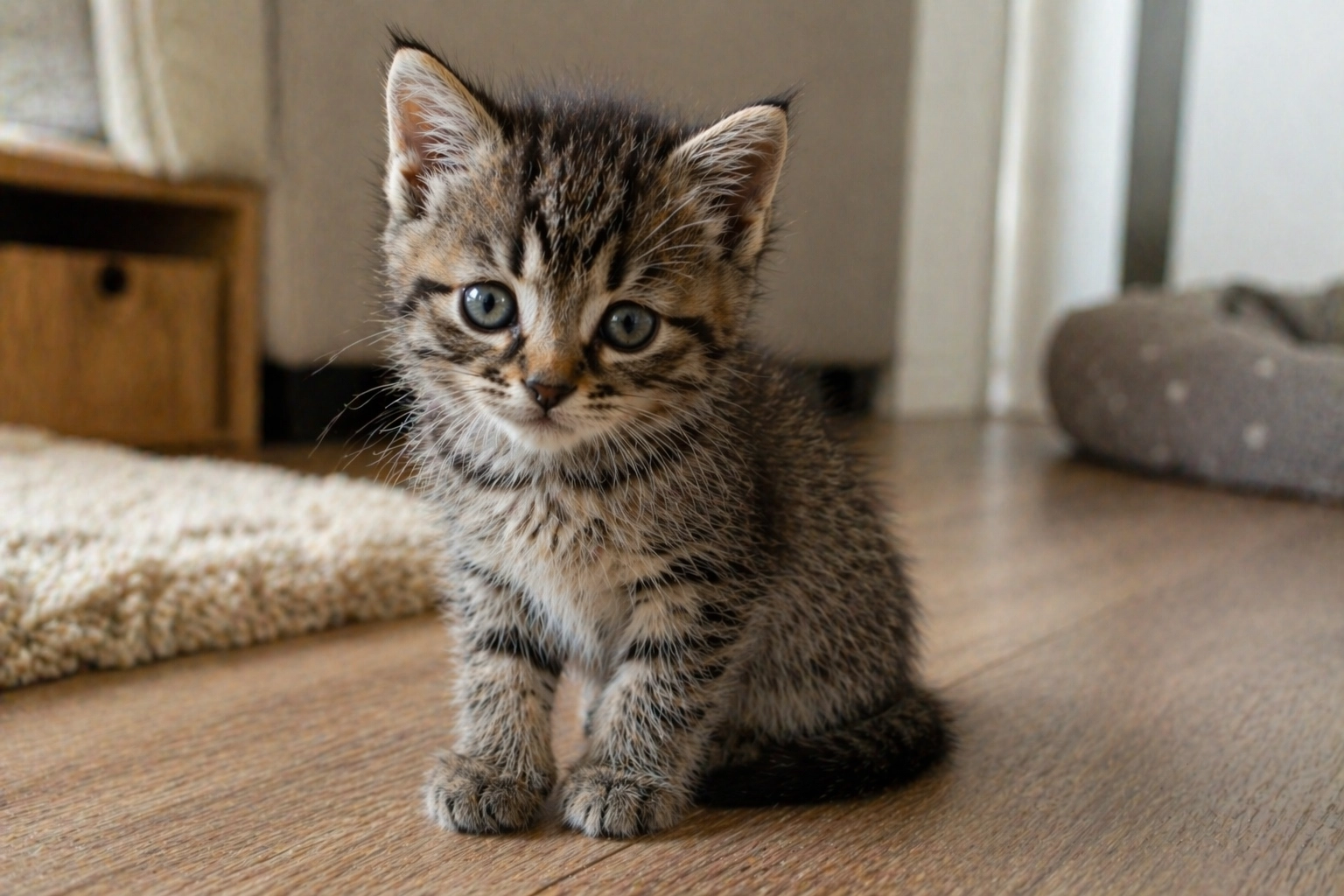
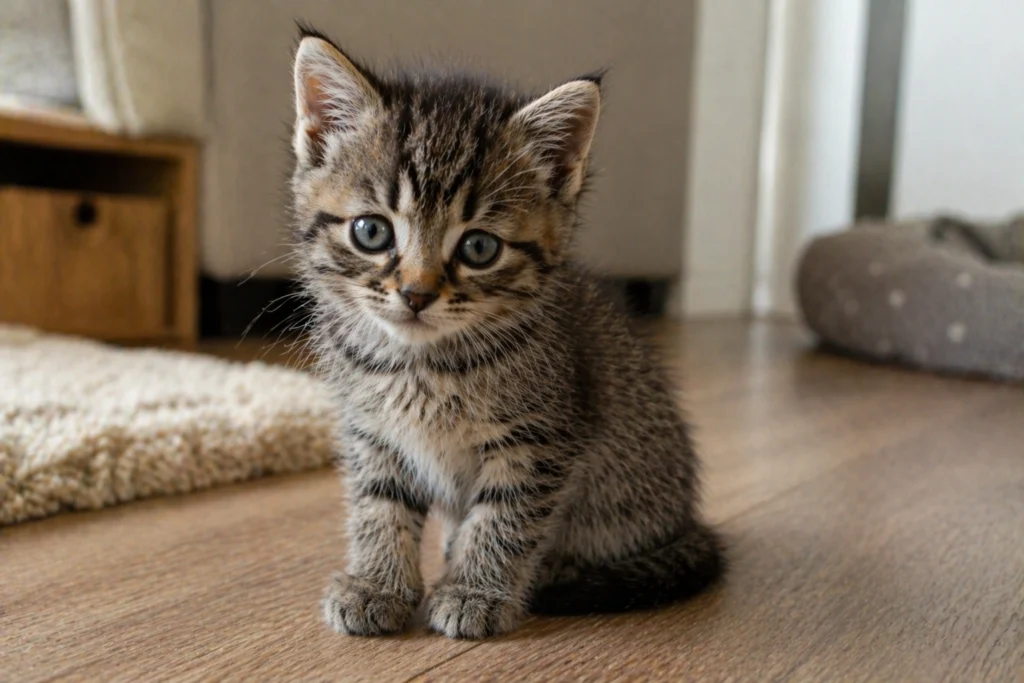
Bringing a kitten home is exciting, but good preparation makes all the difference. A safe environment and the right essentials will help your new pet settle in quickly, feel secure and adapt more easily to your home routine.
In this guide, we explain how to prepare for a kitten so your first days together feel calm, comfortable and stress-free.
Prepare your home in advance
For a small kitten, even ordinary household items can be risky. The calmer and safer the space feels at the beginning, the easier the adjustment period will be.
Make your home safe
- Hide electrical cords and cables your kitten could chew.
- Keep cleaning products, medicines and small objects out of reach.
- Check your windows. Use secure screens or safe ventilation locks.
- Make sure your houseplants are safe for cats, as some are toxic.
- If you have high surfaces, limit access at first so your kitten cannot climb and fall during play.
If you have small children
Explain in advance that a kitten is not a toy, but a living animal that also needs time to adjust to a new home. The first few days are especially important for a calm start.
It helps to agree on a few simple rules:
- do not pick up the kitten without an adult
- do not wake the kitten while it is sleeping
- do not pull the tail, paws or ears
- do not shout nearby or scare the kitten
- always let the kitten walk away or hide
- use proper toys for play, not hands
A gentle introduction helps both the child and the kitten become true friends.
Keep the first days stress-free
Prepare a quiet corner where your kitten can rest. On day one, avoid too much attention or excitement. Your kitten needs time to explore new smells, observe the space and feel safe.
There is no need to introduce every room right away. At first, one area with a bed, water, food and a litter box is enough. This helps your kitten adjust to the new environment and daily routine.
What to buy first
Here are the essentials to have ready before your kitten arrives:
1. Food and water bowls
You will need at least two bowls: one for water and one for food. If you plan to serve both dry and wet food, having a third bowl is helpful.
Choose sturdy ceramic or stainless steel bowls. They are safe, easy to clean and long-lasting. Fresh water should always be available.
2. Litter box and litter
Choose a litter box that suits your kitten’s size. Your pet should be able to step in easily and turn around comfortably. For very young kittens, low-sided boxes are usually best. Place the litter box in a quiet area away from noise and drafts. There are many litter types, and the best option often comes down to trial and observation. If your kitten is already used to a certain litter, it is best not to change it right away.
3. Food
The right diet depends on your kitten’s age, breed and your veterinarian’s advice. Young kittens need food specially formulated for growth. Avoid sudden diet changes. If your kitten was eating something different before, switch gradually over several days.
4. Carrier
A carrier is useful for much more than vet visits. It keeps your kitten safe during travel and can also become a cozy hiding spot at home. Choose a sturdy carrier with good ventilation and a secure door. Leave it open regularly so your kitten can start seeing it as a familiar and safe place.
5. Scratching post
A scratching post helps protect furniture and gives your kitten a natural place to scratch and maintain its claws. Place it near your kitten’s future resting area. To make it more appealing, choose one with a hanging toy or add a little catnip.
6. Toys
Toys are essential for healthy development and mental stimulation. Shared playtime also helps build trust between you and your kitten. Choose balls, wand toys and soft safe toys without small detachable parts.
What you need for kitten care
Here are a few essentials for regular care and overall health:
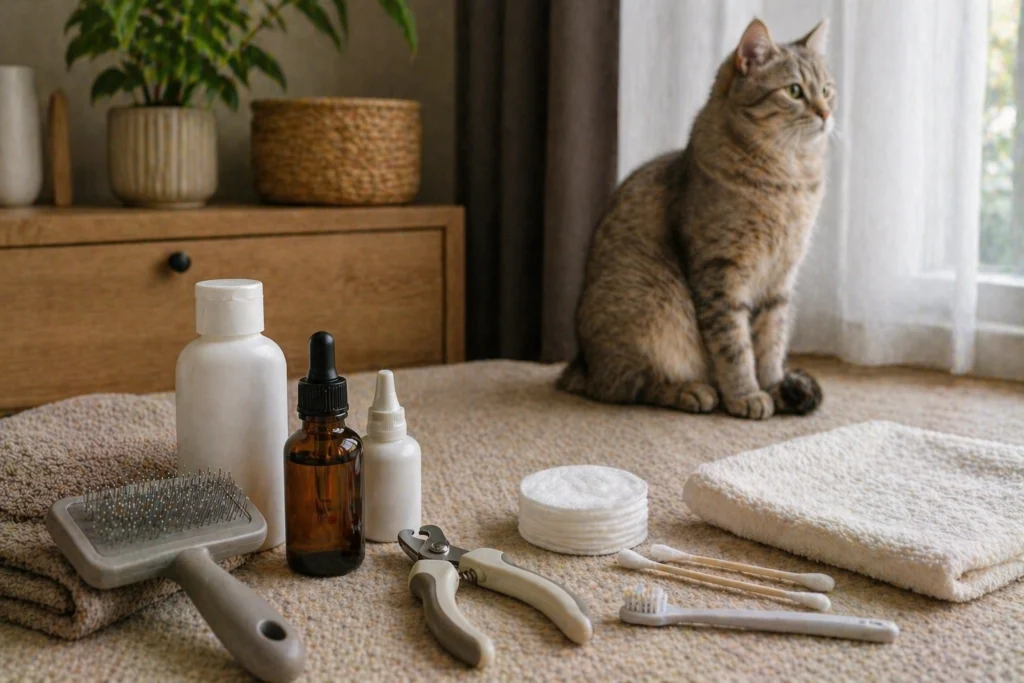
1. Grooming basics
Useful items may include:
- a brush or comb
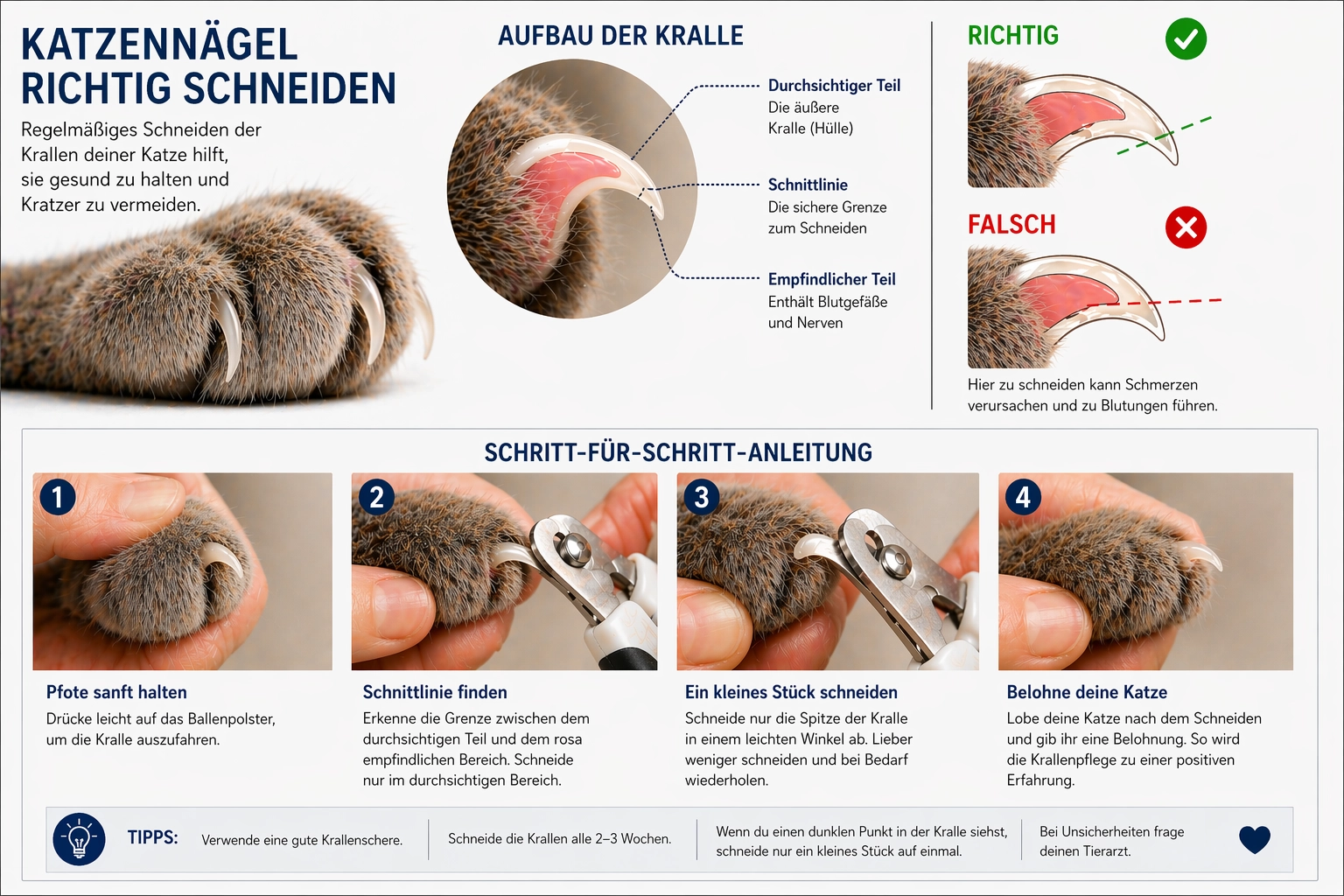
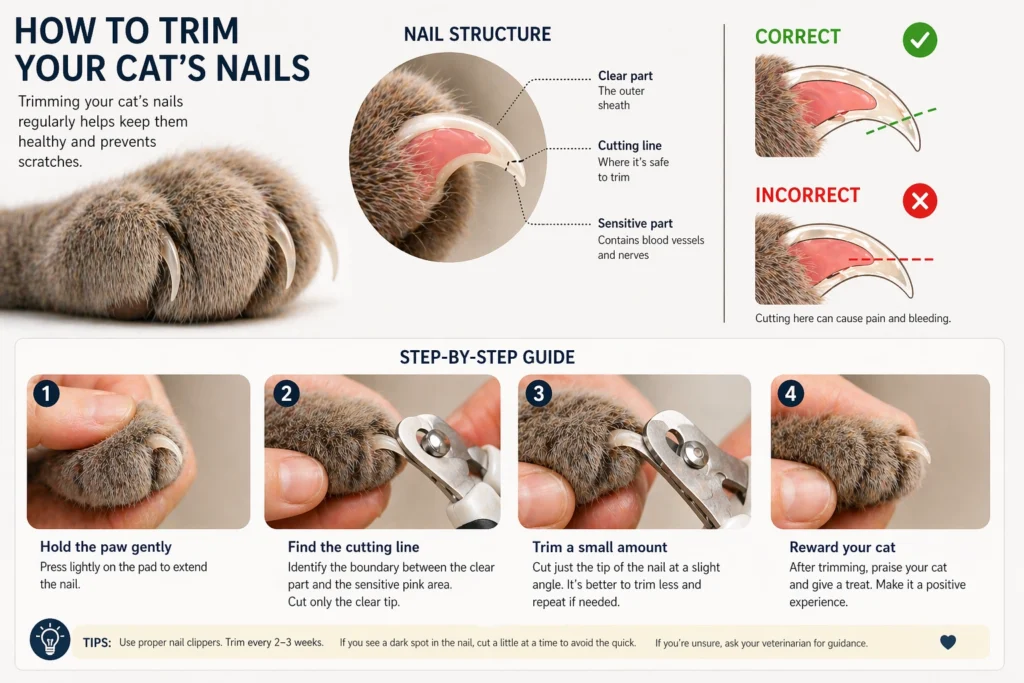
- nail clippers
- pet wipes
- shampoo, if needed
Do not use products made for humans. They are not suitable for animals’ sensitive skin. At first, a basic set is enough, along with gentle introductions to grooming routines.
2. Parasite protection
Even indoor cats need protection from external and internal parasites. Drops and tablets should always be chosen based on age and weight, as unsuitable products may be unsafe.
3. When to see a vet
A routine check-up soon after bringing your kitten home is a smart idea. A veterinarian can assess overall health, recommend vaccinations, advise on parasite prevention and answer feeding or care questions. If your kitten loses appetite, becomes lethargic or develops digestive issues, seek veterinary care without delay.
Common issues in the first weeks
Every kitten adjusts differently. Temporary challenges are common at first and are usually resolved with patience, calm routines and consistency.
1. Not eating
After moving to a new home, a kitten may refuse food because of stress. Give it time, keep the environment calm and make sure fresh water is always available. If appetite does not return within 24 hours or other symptoms appear, contact a veterinarian.
2. Hiding
This is a normal response to a new environment. Do not pull your kitten out by force. It will come out when it feels more confident. A calm voice and predictable surroundings will help your kitten settle in faster.
3. Not using the litter box
The cause may be stress, an inconvenient location or an unsuitable litter box. Keep the area clean and remove strong smells nearby. You can also try a litter training aid.
4. Biting and scratching
Your kitten may bite or scratch while playing, defending itself or burning off energy. Redirect attention to toys and avoid encouraging play with hands. With patience and consistency, this behavior usually improves over time.
Taking good care of a kitten is not only important for health, but also a wonderful way to build a strong bond during the first stage of your life together. A happy kitten will thank you with gentle purring and affection.