Category: Product Guides

  • How to choose the right bed for your dog

    How to choose the right bed for your dog

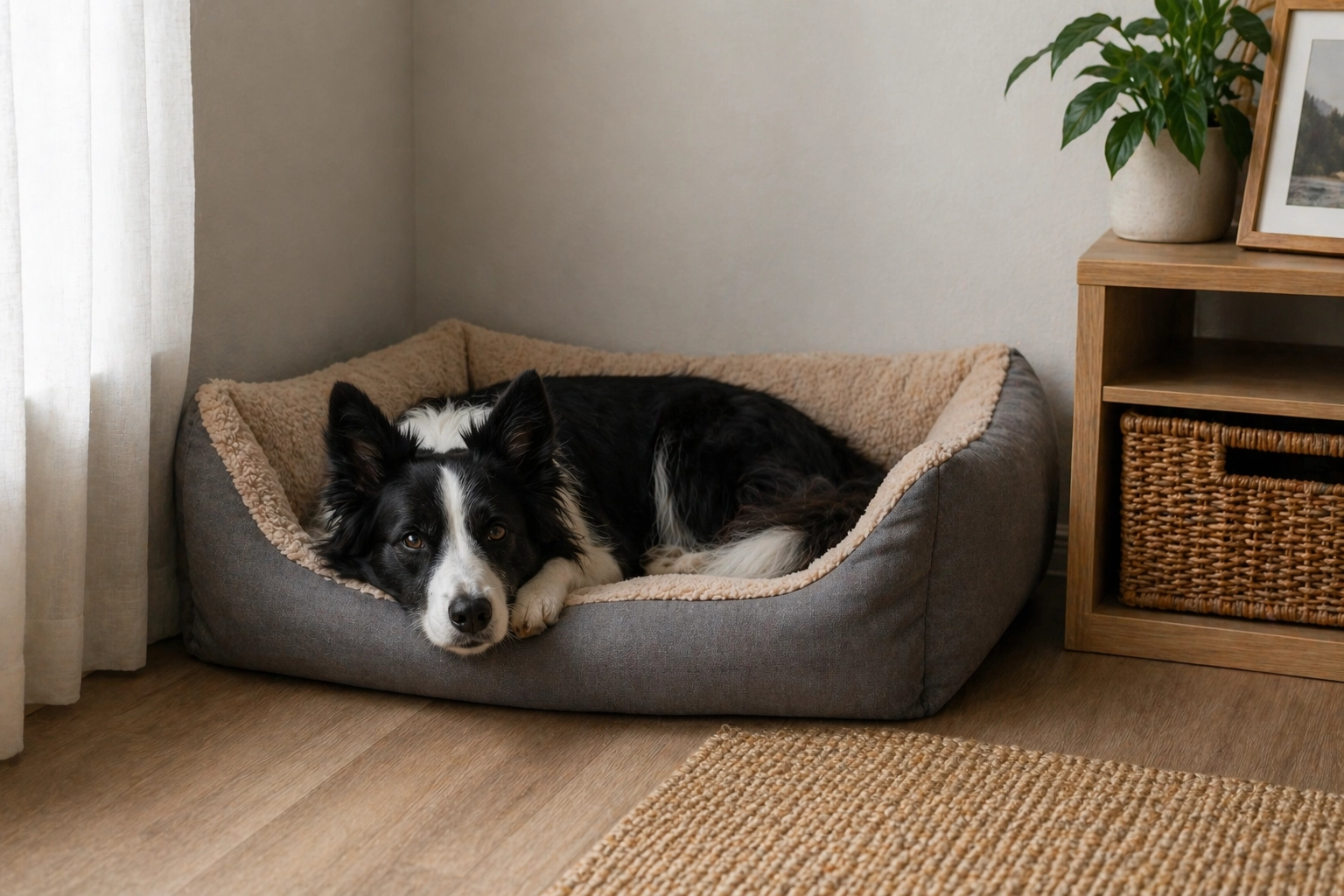
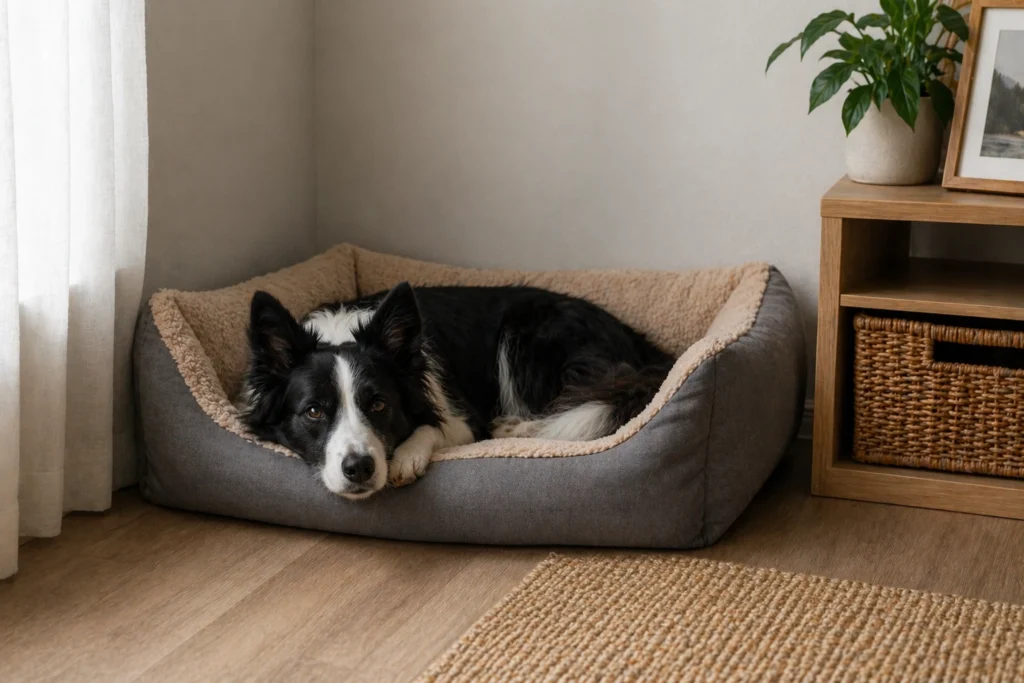
    A dog bed is where your dog sleeps, rests and spends a big part of the day. Its comfort directly affects your dog’s daily well-being. That’s why it’s worth choosing carefully, taking into account your dog’s size, age and even their preferred sleeping position.

    Size: allow extra space

    The bed should let your dog lie comfortably in a natural position without feeling cramped. Some dogs stretch out fully, while others curl up and change position throughout the night.

    To estimate the right size:

    • measure your dog from nose to the base of the tail while lying down
    • add extra space so they can shift positions freely
    • keep in mind that raised sides reduce the usable space inside

    If the bed is too small, your dog may avoid it or only use part of it.

    Types of dog beds

    • Mattress or cushion

    A flat, open surface without raised edges.

    Suitable for: dogs that like to stretch out, large breeds, warm indoor spaces.

    • Bolster bed

    Soft raised edges around the perimeter.

    Suitable for: dogs that like to curl up and rest their head on something.

    • Enclosed bed

    A covered design that provides a sense of shelter and privacy.

    Suitable for: cautious, small or noise-sensitive dogs.

    That said, not all dogs enjoy enclosed spaces.

    Filling

    A good filling should hold its shape and distribute weight evenly instead of clumping.

    Common options:

    • high-density foam
    • hollow fiber and other synthetic fills
    • memory foam

    For large, senior dogs or dogs with joint discomfort, choose a firm base with good support.

    Bed care

    A dog bed is used every day, so easy maintenance matters.

    What to look for:

    • a removable cover
    • machine-washable materials
    • durable, wear-resistant fabric
    • clean stitching without loose threads
    • a non-slip base for smooth floors

    If your dog sheds heavily, light fabrics may need more frequent cleaning. If your dog tends to dig, choose more durable materials.

    Age matters

    1. Puppy

    Choose something easy to wash. Many puppies chew on fabric, so an affordable option is often best at first.

    2. Active adult dog

    Durable, easy-care beds are the best choice.

    3. Senior dog

    Look for a low entry, stable shape and a firm, supportive surface.

    If your dog has chronic joint or spine issues, or is recovering from an injury, it’s best to consult a veterinarian before choosing a bed.

    Where to place the bed

    Even a good bed may go unused if it’s placed in the wrong spot. Choose a calm area without drafts. Unlike cats, many dogs prefer to stay close to their people rather than being isolated.

    It may take some trial and error to find the right location.

    Common mistakes

    • choosing a bed that is too small
    • thin filling that quickly loses shape
    • fabric that is difficult to clean
    • high beds that are hard for older dogs to access
    • choosing based only on appearance
    • expecting your dog to love it immediately

    The right bed combines comfort for your dog with practicality for you: the right size, a supportive surface and easy care. The better it matches your dog’s habits and needs, the more likely it is to become their favorite place to rest.

  • A kitten at home: what to buy and how to prepare

    A kitten at home: what to buy and how to prepare

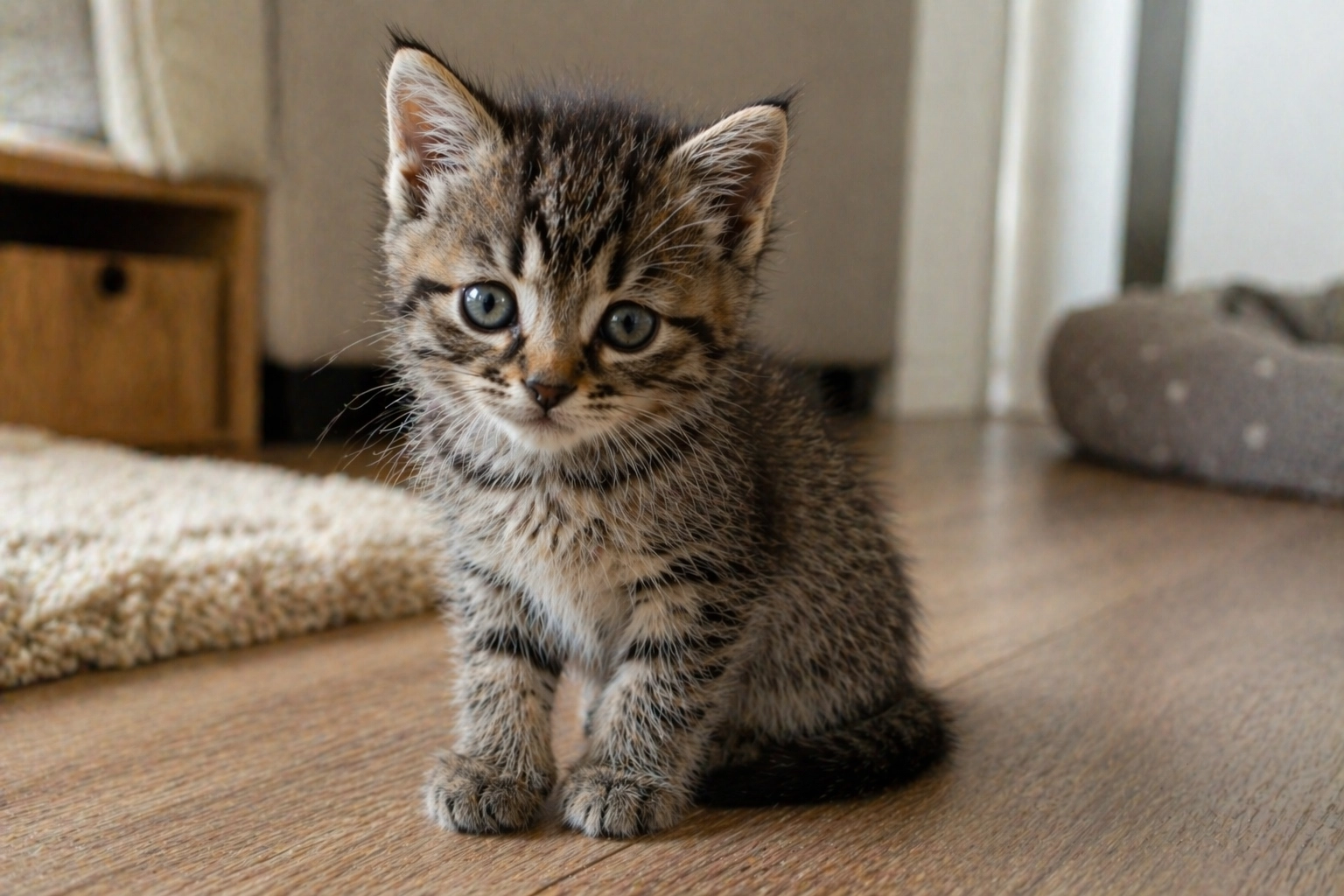
    Bringing a kitten home is exciting, but good preparation makes all the difference. A safe environment and the right essentials will help your new pet settle in quickly, feel secure and adapt more easily to your home routine.

    In this guide, we explain how to prepare for a kitten so your first days together feel calm, comfortable and stress-free.

    Prepare your home in advance

    For a small kitten, even ordinary household items can be risky. The calmer and safer the space feels at the beginning, the easier the adjustment period will be.

    Make your home safe

    • Hide electrical cords and cables your kitten could chew.
    • Keep cleaning products, medicines and small objects out of reach.
    • Check your windows. Use secure screens or safe ventilation locks.
    • Make sure your houseplants are safe for cats, as some are toxic.
    • If you have high surfaces, limit access at first so your kitten cannot climb and fall during play.

    If you have small children

    Explain in advance that a kitten is not a toy, but a living animal that also needs time to adjust to a new home. The first few days are especially important for a calm start.

    It helps to agree on a few simple rules:

    • do not pick up the kitten without an adult
    • do not wake the kitten while it is sleeping
    • do not pull the tail, paws or ears
    • do not shout nearby or scare the kitten
    • always let the kitten walk away or hide
    • use proper toys for play, not hands

    A gentle introduction helps both the child and the kitten become true friends.

    Keep the first days stress-free

    Prepare a quiet corner where your kitten can rest. On day one, avoid too much attention or excitement. Your kitten needs time to explore new smells, observe the space and feel safe.

    There is no need to introduce every room right away. At first, one area with a bed, water, food and a litter box is enough. This helps your kitten adjust to the new environment and daily routine.

    What to buy first

    Here are the essentials to have ready before your kitten arrives:

    1. Food and water bowls

    You will need at least two bowls: one for water and one for food. If you plan to serve both dry and wet food, having a third bowl is helpful.

    Choose sturdy ceramic or stainless steel bowls. They are safe, easy to clean and long-lasting. Fresh water should always be available.

    2. Litter box and litter

    Choose a litter box that suits your kitten’s size. Your pet should be able to step in easily and turn around comfortably. For very young kittens, low-sided boxes are usually best. Place the litter box in a quiet area away from noise and drafts. There are many litter types, and the best option often comes down to trial and observation. If your kitten is already used to a certain litter, it is best not to change it right away.

    3. Food

    The right diet depends on your kitten’s age, breed and your veterinarian’s advice. Young kittens need food specially formulated for growth. Avoid sudden diet changes. If your kitten was eating something different before, switch gradually over several days.

    4. Carrier

    A carrier is useful for much more than vet visits. It keeps your kitten safe during travel and can also become a cozy hiding spot at home. Choose a sturdy carrier with good ventilation and a secure door. Leave it open regularly so your kitten can start seeing it as a familiar and safe place.

    5. Scratching post

    A scratching post helps protect furniture and gives your kitten a natural place to scratch and maintain its claws. Place it near your kitten’s future resting area. To make it more appealing, choose one with a hanging toy or add a little catnip.

    6. Toys

    Toys are essential for healthy development and mental stimulation. Shared playtime also helps build trust between you and your kitten. Choose balls, wand toys and soft safe toys without small detachable parts.

    What you need for kitten care

    Here are a few essentials for regular care and overall health:

    1. Grooming basics

    Useful items may include:

    • a brush or comb
    • nail clippers
    • pet wipes
    • shampoo, if needed

    Do not use products made for humans. They are not suitable for animals’ sensitive skin. At first, a basic set is enough, along with gentle introductions to grooming routines.

    2. Parasite protection

    Even indoor cats need protection from external and internal parasites. Drops and tablets should always be chosen based on age and weight, as unsuitable products may be unsafe.

    3. When to see a vet

    A routine check-up soon after bringing your kitten home is a smart idea. A veterinarian can assess overall health, recommend vaccinations, advise on parasite prevention and answer feeding or care questions. If your kitten loses appetite, becomes lethargic or develops digestive issues, seek veterinary care without delay.

    Common issues in the first weeks

    Every kitten adjusts differently. Temporary challenges are common at first and are usually resolved with patience, calm routines and consistency.

    1. Not eating

    After moving to a new home, a kitten may refuse food because of stress. Give it time, keep the environment calm and make sure fresh water is always available. If appetite does not return within 24 hours or other symptoms appear, contact a veterinarian.

    2. Hiding

    This is a normal response to a new environment. Do not pull your kitten out by force. It will come out when it feels more confident. A calm voice and predictable surroundings will help your kitten settle in faster.

    3. Not using the litter box

    The cause may be stress, an inconvenient location or an unsuitable litter box. Keep the area clean and remove strong smells nearby. You can also try a litter training aid.

    4. Biting and scratching

    Your kitten may bite or scratch while playing, defending itself or burning off energy. Redirect attention to toys and avoid encouraging play with hands. With patience and consistency, this behavior usually improves over time.

    Taking good care of a kitten is not only important for health, but also a wonderful way to build a strong bond during the first stage of your life together. A happy kitten will thank you with gentle purring and affection.

  • How to choose a litter box for your cat

    How to choose a litter box for your cat

    A litter box is one of the essentials for any cat at home. To help your cat build good toilet habits as quickly as possible, the box should always be clean and the right size. In this article, we look at the main types of litter boxes, along with their pros and cons.

    Types of litter boxes for cats

    Some cats are perfectly happy with a simple open tray, while others prefer a more private and enclosed space. The best option for you and your pet is often found through trial and error.

    If you want to switch from one litter box to another, here is the best way to do it:

    1. Place the new litter box next to the old one. Do not remove the old box right away — your cat needs time to get used to the new item.
    2. Use familiar litter. At first, keep the same litter and the same depth your cat already knows.
    3. Let scent help. Add a small amount of used litter from the old box into the new one.
    4. Be patient. Some cats adjust in a day, while others need more time.
    5. Reward success. If your cat uses the new box, praise them with affection or a treat.

    Once your cat starts using the new litter box regularly, the old one can be removed.

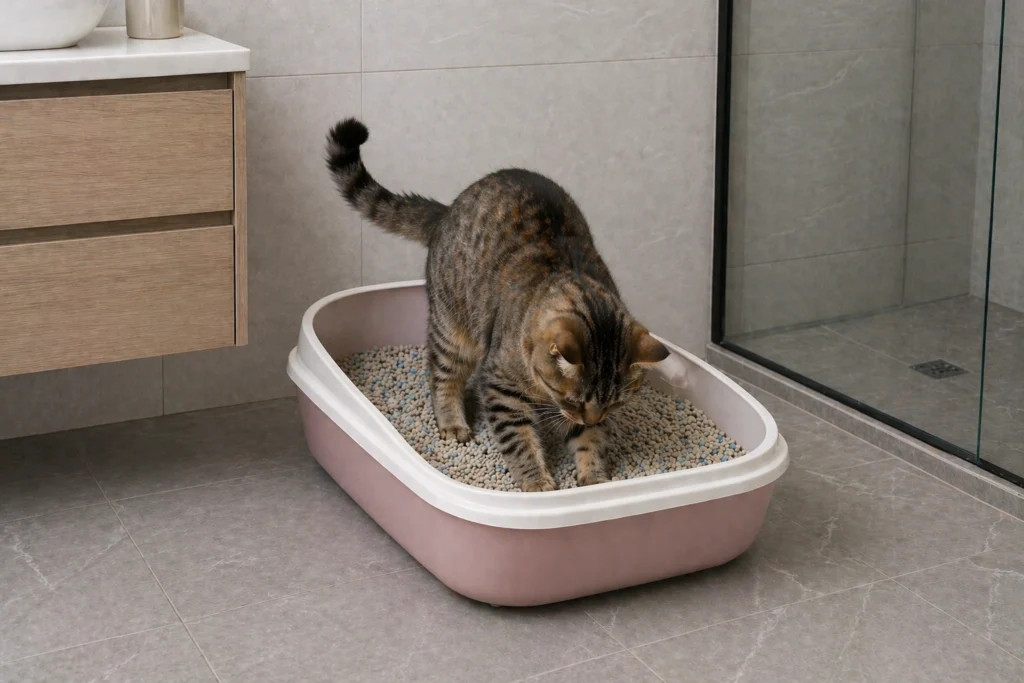
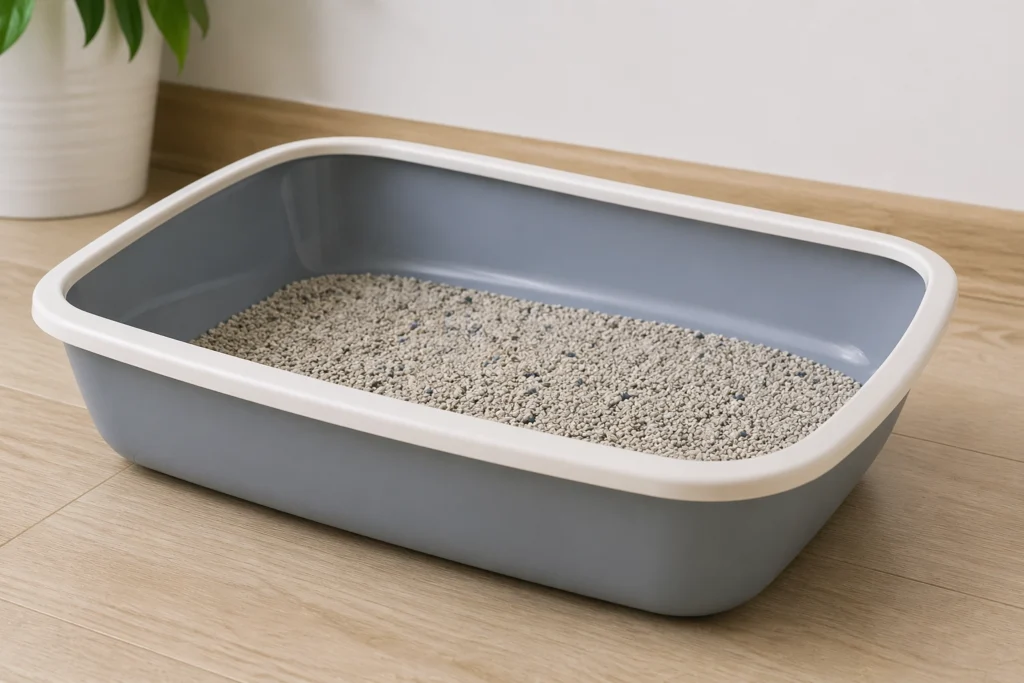
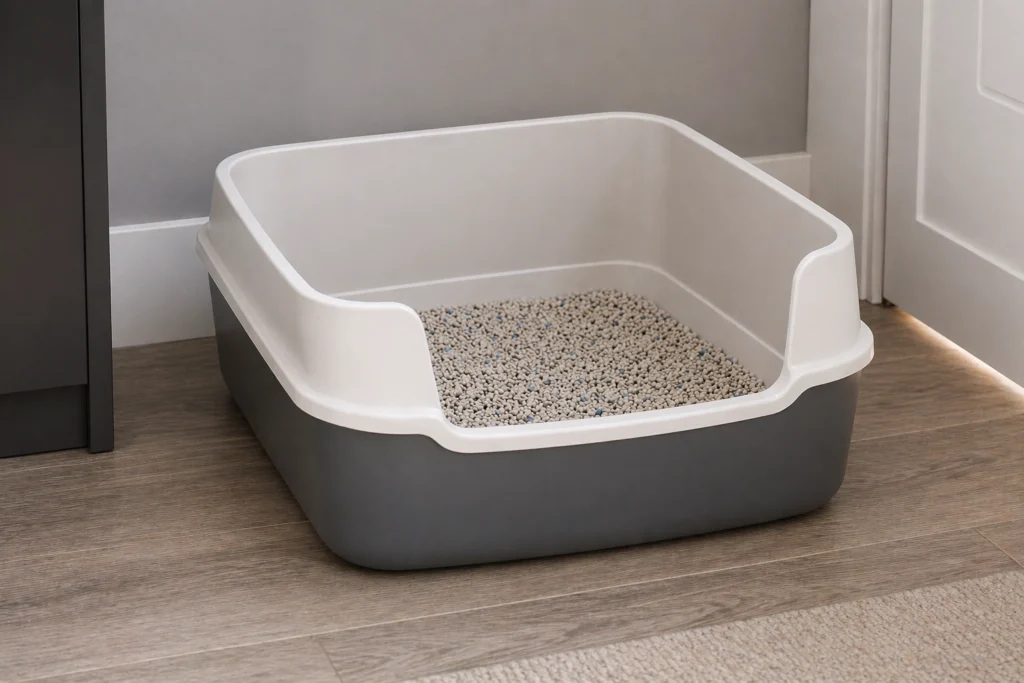
    Classic open litter box

    The most common and familiar option is a simple plastic tray with low or medium sides.

    Pros:

    • affordable
    • easy to wash and scoop

    Cons:

    • litter often gets kicked outside the box
    • odors may spread more easily
    • everything is visible

    Despite these downsides, an open litter box is usually the best choice for kittens and senior cats.

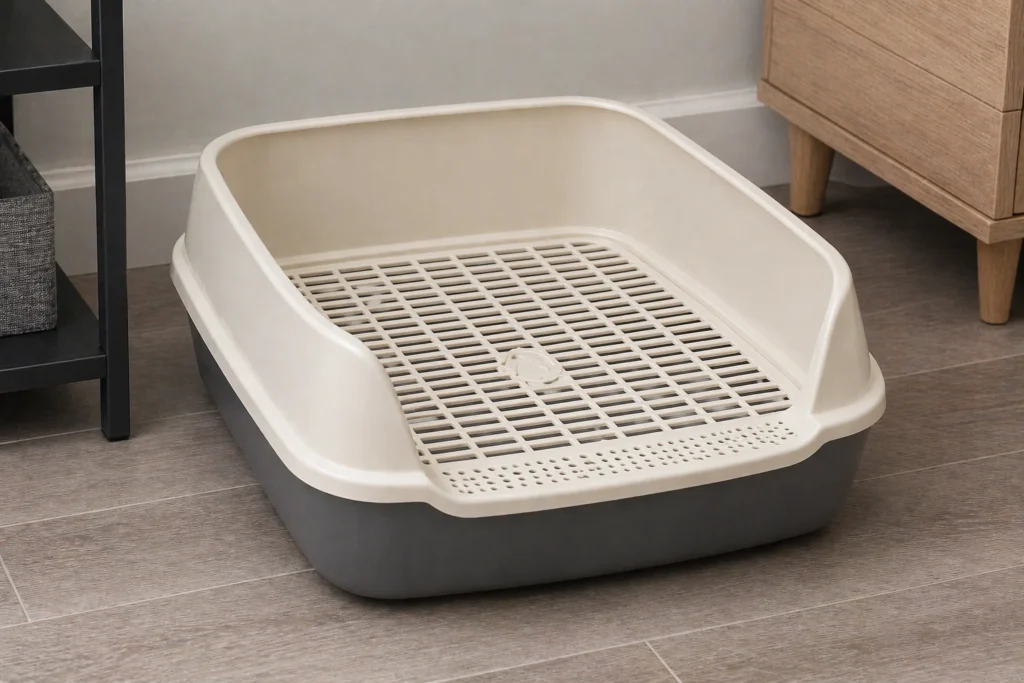
    Litter box with grate

    This is an open litter box with a plastic grid placed over the tray. Litter goes underneath the grate or may not be used at all.

    Pros:

    • litter does not stick to paws as much
    • uses less litter, or none at all
    • the cat cannot eat the litter

    Cons:

    • needs frequent cleaning
    • odor appears quickly
    • some cats miss the ability to dig
    • may take time to get used to

    This option can work well for owners who are ready to clean the box several times a day to keep the area tidy. It is worth knowing that grate-style boxes can be harder for some cats to accept.

    Litter box with high sides

    High-sided boxes are ideal for cats that love digging energetically in their litter.

    Pros:

    • much less mess around the box
    • more room for larger cats

    Cons:

    • not ideal for kittens or senior cats, as getting in may be difficult

    A great choice for active adult cats.

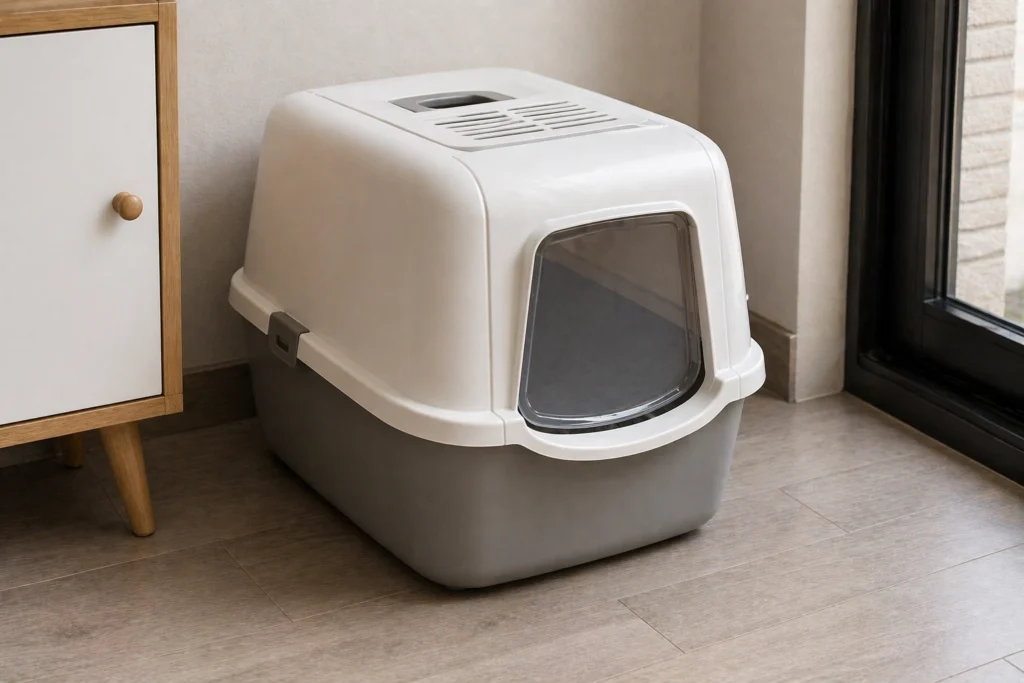
    Covered litter box

    Enclosed “house-style” models with a lid and an entrance on the side or front.

    Pros:

    • less odor outside the box
    • litter stays inside more easily
    • more privacy for the cat

    Cons:

    • takes up more space
    • still needs regular cleaning
    • not every cat likes enclosed spaces

    A good option for shy cats and owners who value a tidy home.

    Tip: The ideal height of a covered litter box is the distance from the litter surface to the tip of your cat’s ears while sitting, plus 5 cm (about 2 inches).

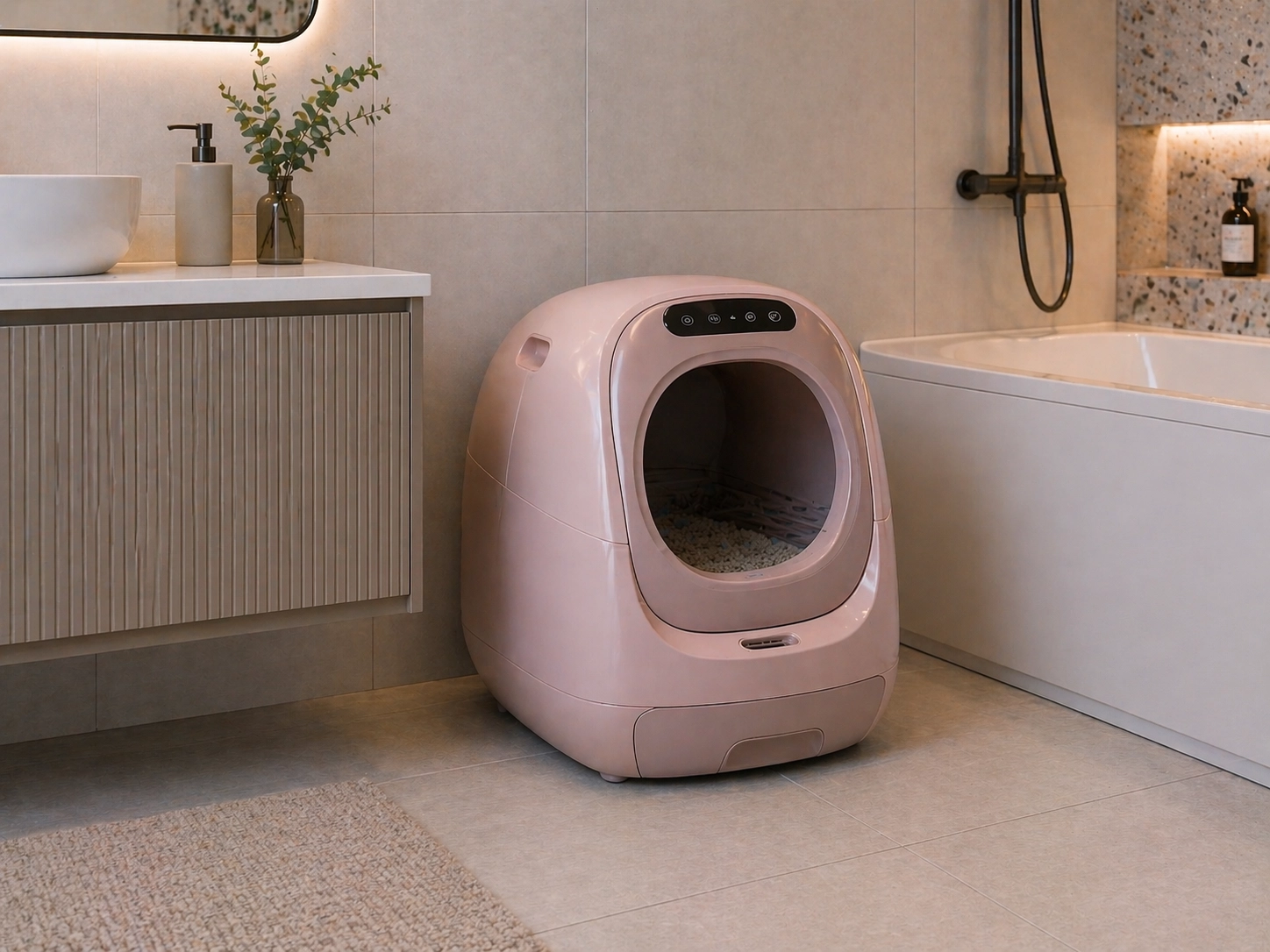
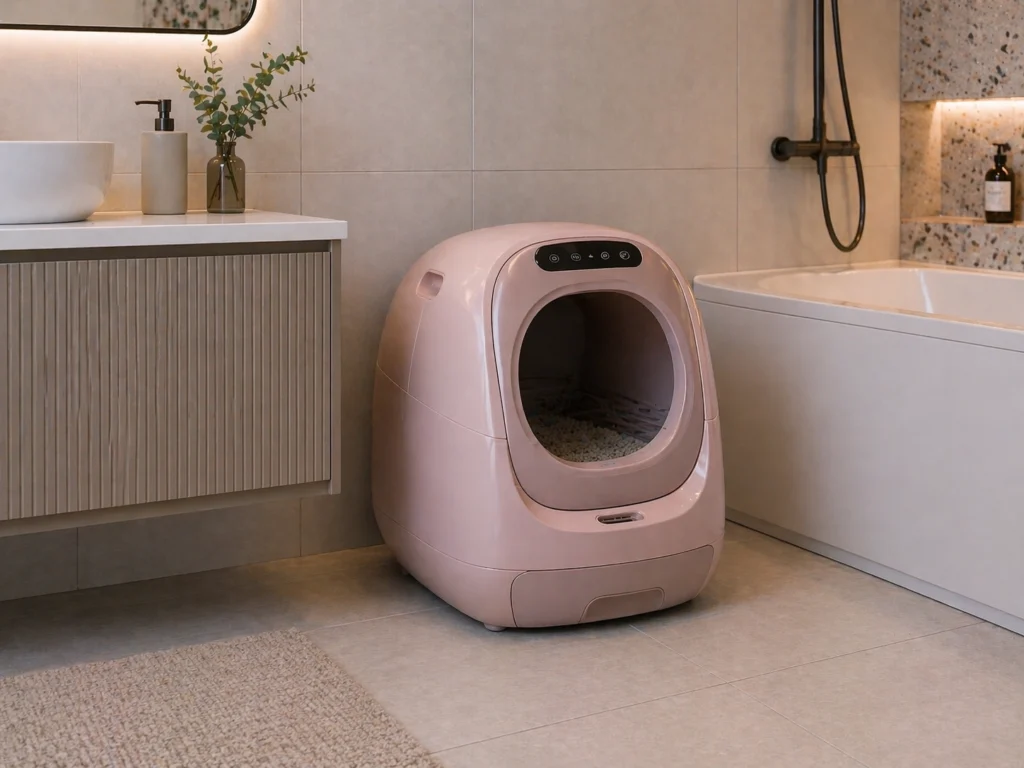
    Self-cleaning litter box

    An automatic model that removes waste after use.

    Pros:

    • minimal manual cleaning
    • litter stays cleaner and fresher
    • some models include health tracking and notify owners how often the cat uses the box

    Cons:

    • expensive
    • requires power
    • may scare some cats; poorly designed models can be unsafe

    A convenient option for busy owners or frequent travelers, but not suitable for every cat. If you choose this type, reliable safety sensors are essential.

    Useful accessories

    Items that make litter box care easier:

    • Scoop. Choose one with slots large enough for clean litter to fall through, but small enough to hold clumps.
    • Litter mat. Helps catch litter from your cat’s paws and keeps the floor cleaner. If your cat likes chewing non-food items, this may not be the best choice.
    • Waste bags. Useful for quick and tidy disposal of used litter.
    • Litter storage container. Keeps extra litter nearby and protects it from moisture.

    When choosing a litter box, do not focus on appearance alone. It should fit your cat’s size, feel comfortable and be placed in a calm location. If your cat avoids the box, the problem is usually not personality — it is often that the setup simply does not suit them.

  • Top 5 essentials for every cat owner

    Top 5 essentials for every cat owner

    Taking good care of a cat involves more than just a litter box, food bowls and toys. There are a few everyday essentials that help support your cat’s health, comfort and overall well-being. Here are five useful items worth having at home.

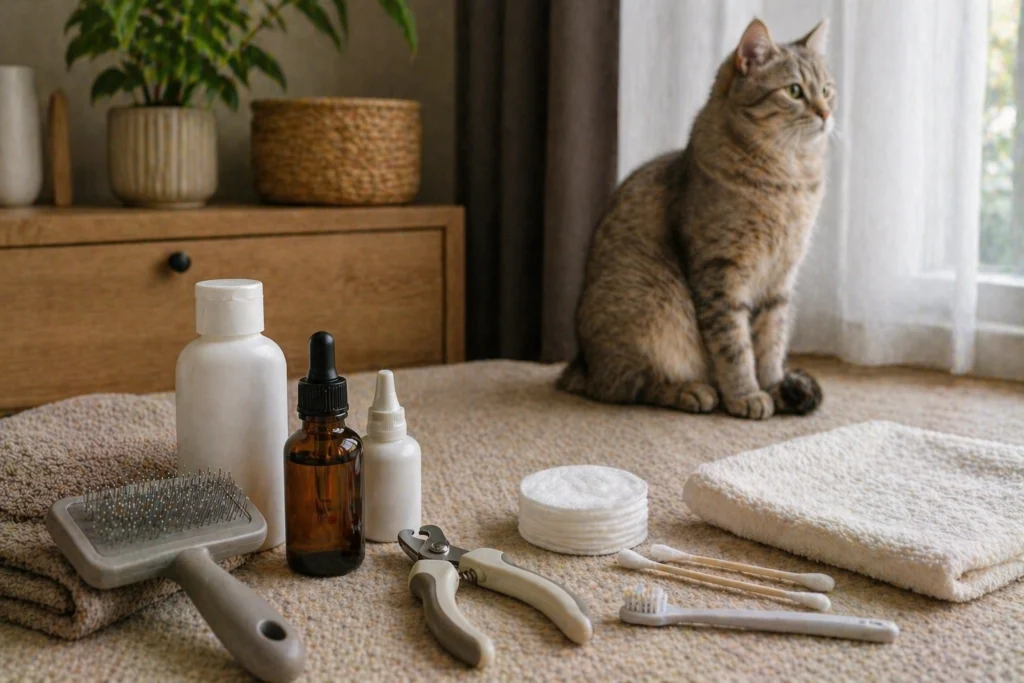
    1. Brush or grooming comb

    Regular brushing helps remove loose fur, reduce mats and noticeably cut down on shedding around the home. Despite the common myth, grooming is important for all cats with fur, not only long-haired breeds.

    It can also become a great bonding moment that helps build trust between you and your cat.

    2. Nail clippers

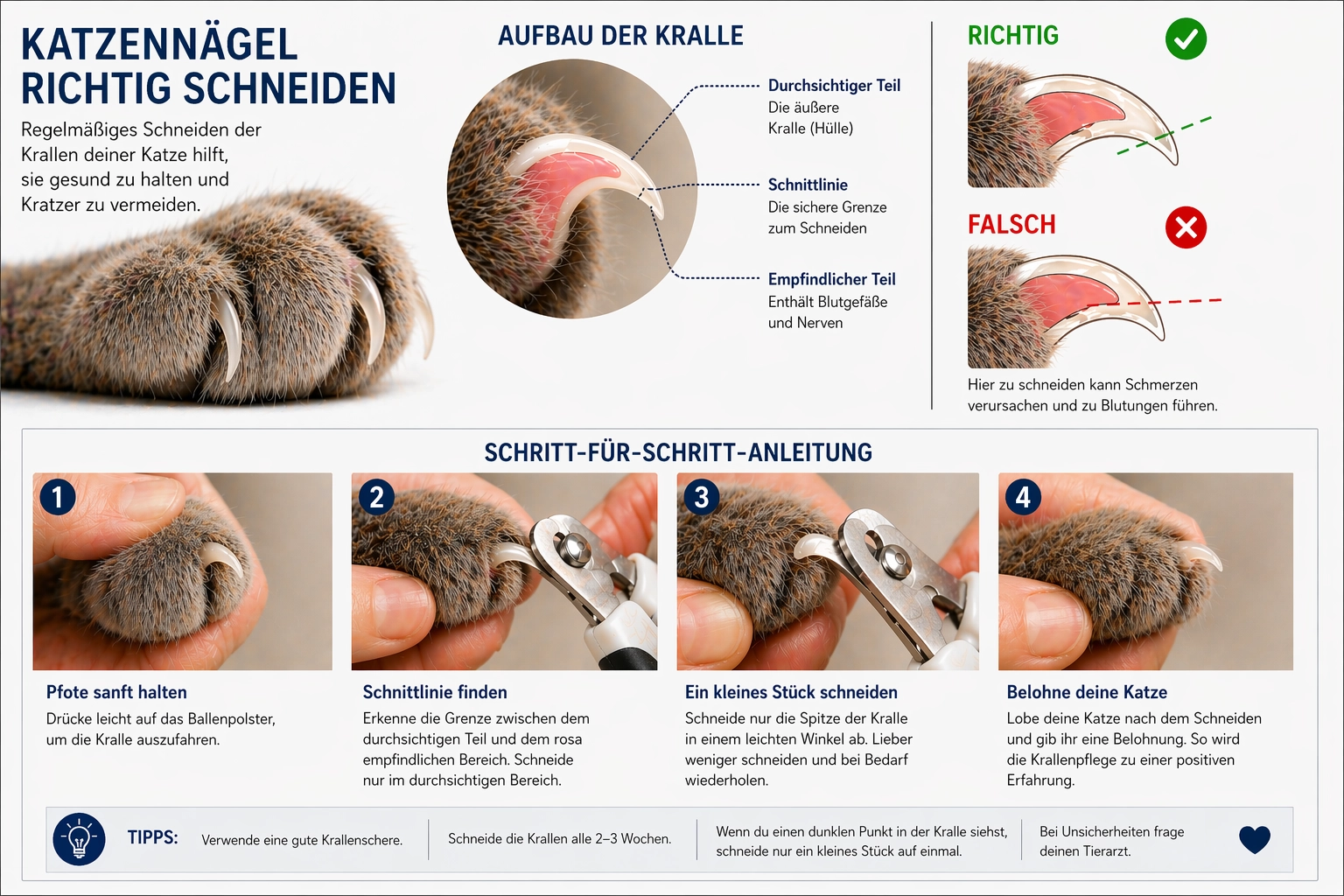
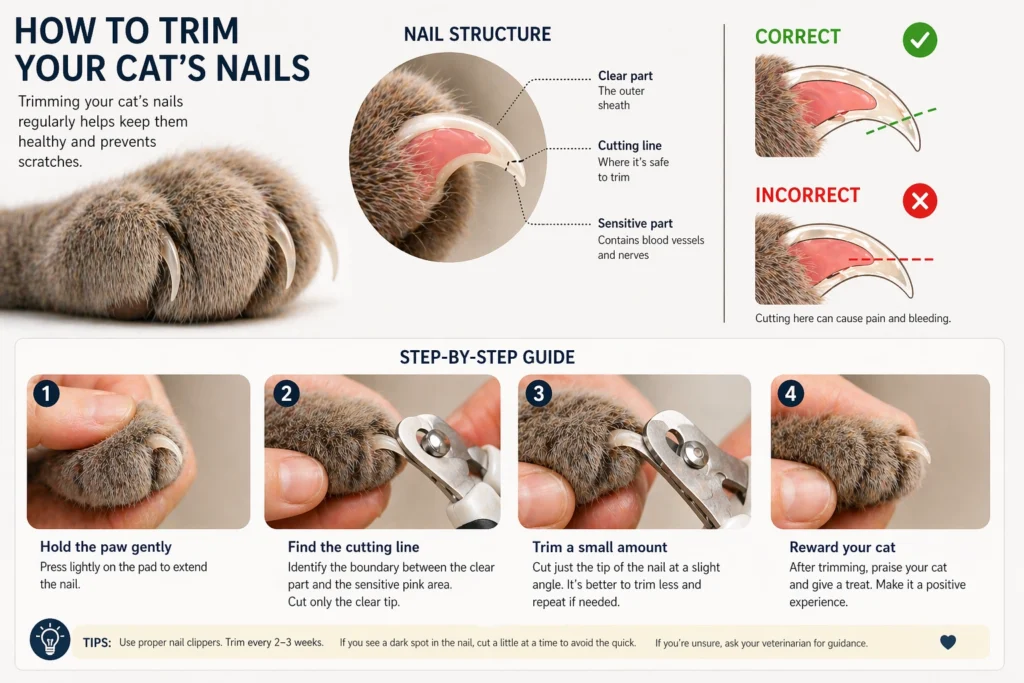
    If your cat’s claws do not wear down naturally, they may need occasional trimming. For this, it is best to use nail clippers made specifically for pets, as they are safer and easier to handle than regular scissors.

    Important: Only trim the clear tip of the claw and avoid the sensitive inner part. If your cat gets nervous, it is perfectly fine to split the task into several short sessions.

    3. Parasite protection

    Even indoor cats need protection from fleas, ticks and internal parasites. There are different options available, including spot-on treatments, tablets and pastes. The right product should always be chosen according to your cat’s age and weight.

    4. Wipes, soft pads and cotton swabs

    Useful items for small daily care tasks: wiping the eyes, removing dirt from the coat or gently cleaning the chin and paws after coming home.

    5. Toothbrush and toothpaste for cats

    Dental care is often overlooked. Regular oral hygiene helps reduce the risk of plaque, dental disease and gum problems. Cats should only use toothbrushes and toothpaste designed specifically for pets.

    To complete your basic setup, keep a simple pet first-aid kit at home and save the contact details of a trusted veterinarian.

  • How to choose the right bowls for your cat

    How to choose the right bowls for your cat

    A bowl may seem like a simple purchase, but it can affect your cat’s daily comfort and sometimes even their willingness to eat or drink. In this guide, we look at what kind of bowls your whiskered companion really needs.

    How many bowls does a cat need?

    At minimum, two:

    • one for water
    • one for food

    If your cat eats both wet and dry food, it is best to have separate bowls for each type.

    What kind of bowl is best for a cat?

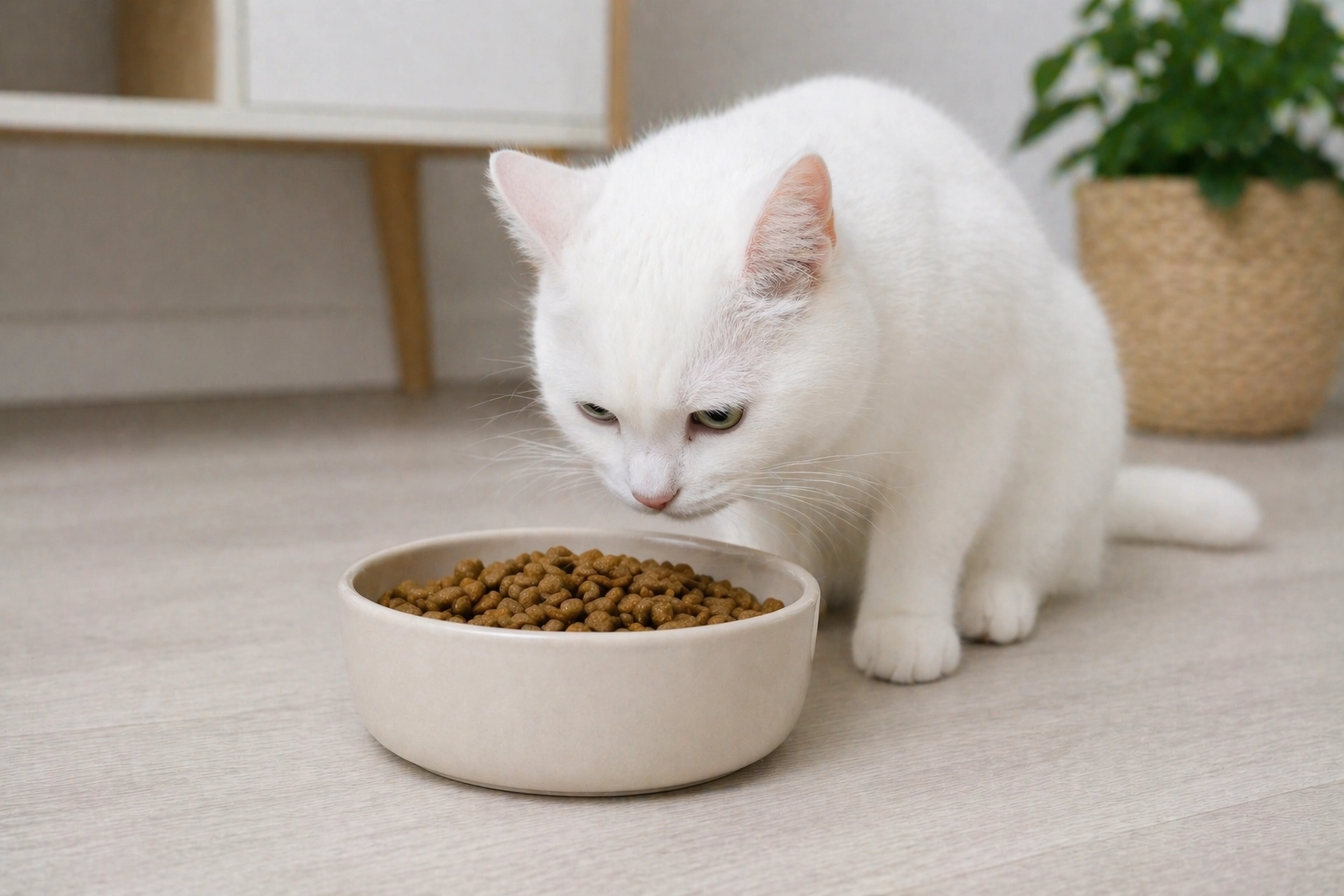
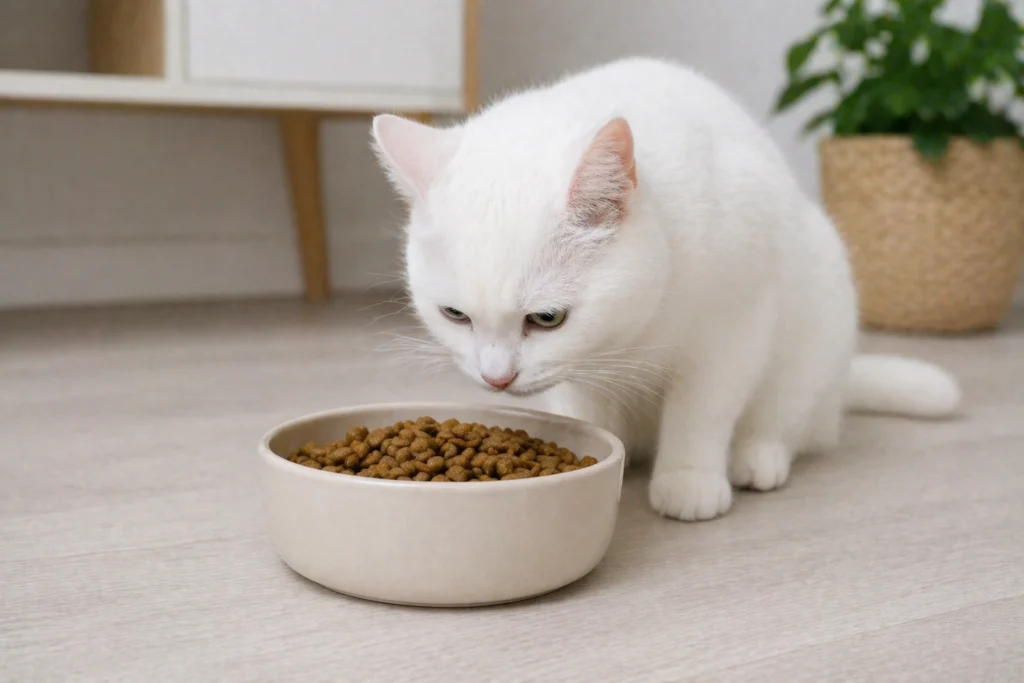
    • Ceramic. Heavy, stable, easy to clean and resistant to odors. One of the best choices for everyday use at home.
    • Stainless steel. Durable, hygienic and long-lasting. A great option for daily use.
    • Plastic. The lightest and most affordable option, but plastic bowls can scratch easily, absorb odors and wear out faster. Poor-quality plastic may even release unwanted substances into food or water.

    How to choose the right size

    The bowl should suit your cat’s size and feel comfortable to use every day. One that is too small will empty quickly, while one that is too large may take up unnecessary space.

    For most cats, medium-sized bowls work well and hold a single portion without overflowing. For water, a larger bowl is often more practical so fresh water stays available throughout the day.

    The most important rule is simple: your cat should be able to eat and drink comfortably without pressing their face against the sides or brushing their whiskers against the rim.

    How to care for your cat’s bowls

    • wash bowls daily
    • change the water every day
    • do not leave wet food sitting out for hours
    • check regularly for chips or damage and replace bowls when needed

    Where to place the bowls

    Choose a calm spot away from noise and busy walkways. It is often a good idea to place the water bowl separately from the food, as many cats prefer to drink this way. Food and water should also not be placed next to the litter box.

  • A puppy at home: what to buy and how to prepare

    A puppy at home: what to buy and how to prepare

    Getting a puppy is exciting, but it also changes your daily routine completely. The first few weeks are usually about feeding schedules, sleep, potty training and overall adjustment. The better you prepare in advance, the less stressful it will be for both the puppy and your household.

    Your main goal at the start is to create a safe environment, get the essentials ready and understand what to expect in the first days.

    What to do before your puppy arrives

    1. Set up a safe area

    Your puppy needs a space where they can rest and feel secure, while still being easy to supervise. A kitchen, part of a room, a playpen or a gated area all work well.

    Why it helps:

    • reduces the risk of chewing unwanted items
    • makes potty training easier
    • helps establish a routine
    • prevents overwhelm from too much space

    2. Remove potential hazards

    Puppies explore the world with their mouths. Remove anything dangerous from their reach:

    • cables, chargers, extension cords
    • household chemicals
    • medications
    • trash bins
    • small objects
    • shoes
    • children’s toys
    • toxic plants (such as dieffenbachia, lily, aloe vera, ivy and cyclamen)
    • plastic bags, threads, rubber bands

    3. Plan for potty training

    Decide in advance where the puppy will go to the bathroom. This could be pee pads at home or a schedule of frequent outdoor trips if the puppy is old enough.

    Make sure you have:

    • pee pads
    • odor remover
    • wipes and paper towels

    Basic checklist: what to buy in advance

    1. Food and water

    • at least two stable bowls
    • the same food the puppy is currently eating
    • a measuring cup or kitchen scale
    • a container for food storage

    Tip: avoid changing your puppy’s diet right away unless necessary.

    2. Sleep and rest

    • a dog bed or mattress
    • a blanket

    Tip: choose a bed that is easy to wash.

    You can also check our article How to choose the right bed for your dog.

    3. Walks and training

    • a properly sized collar or harness
    • a lightweight leash
    • an ID tag
    • treats for training
    • waste bags for walks

    4. Home and safety

    • a playpen or divider
    • a few safe toys
    • chew toys
    • odor remover
    • a brush suited to your puppy’s coat type

    5. Health

    • contact details for a nearby veterinary clinic
    • a carrier for transport
    • a folder for documents, vaccinations and notes

    The first days at home

    On the first day, your puppy needs calm more than stimulation.

    It’s best to:

    • limit the number of visitors
    • show water, sleeping area and potty spot
    • let them explore at their own pace
    • keep your voice calm
    • avoid forcing interaction or play
    • observe more than you interfere

    The best preparation is not about buying everything, but about setting up your home properly. If the space is safe, the essentials are ready and the routine becomes clear over time, your puppy will adjust much more easily.

  • How to choose a leash and harness for your dog

    How to choose a leash and harness for your dog

    A comfortable walk starts with the right leash and harness. The gear you choose affects your dog’s comfort, your control and overall safety. Poorly fitted or low-quality equipment can restrict movement, cause discomfort or fail at the worst possible moment.

    Types of leashes

    The right leash depends on your dog’s size and how you usually walk them.

    1. Standard leash

    A simple, reliable option for everyday use. Works well for most dogs. In the city, a length of about 1.2 to 2 meters is usually ideal.

    Best for: daily walks, training, vet visits.

    2. Retractable leash

    Gives your dog more freedom to roam, but offers less control and can create sudden pulling. It’s also less durable due to the internal mechanism.

    Best for: calm dogs in safe, open areas.

    3. Long line

    Typically 3 to 10 meters long. Great for training and outdoor walks where your dog can have more space without being fully off-leash.

    Best for: training, recall practice, and outdoor walks where your dog can have more freedom without being fully off-leash.

    Leash materials

    • Nylon — lightweight, affordable, easy to clean
    • Leather — durable, long-lasting, softens over time
    • Canvas / webbing — strong and reliable, good for larger dogs
    • Rubberized — better grip, especially in wet conditions

    What to check before buying

    • the clip opens easily but stays securely fastened
    • stitching is strong and even
    • the handle feels comfortable in your hand
    • the leash weight matches your dog’s size

    Collar or harness?

    There is no one-size-fits-all answer.

    A collar and leash is a classic setup that works well for calm dogs who don’t pull and respond reliably to commands.

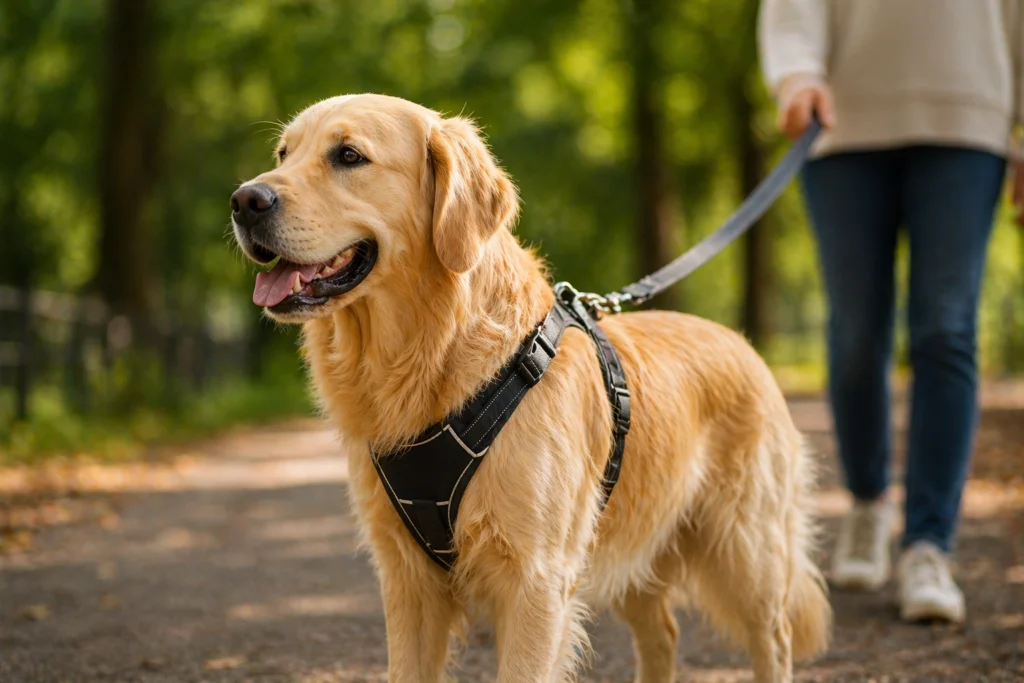
    If your dog tends to lunge forward, coughs when the leash tightens or has a sensitive neck, a harness is usually the more comfortable option. It distributes pressure across the body instead of the neck.

    How to choose a harness

    A harness should fit snugly without putting pressure on the body. A good design allows free movement and does not rub the skin.

    Types of harnesses

    1. Y-shaped harness

    Straps run across the chest and between the front legs, leaving the shoulders free. This design does not put pressure on the neck and allows natural movement, making it a great choice for active daily walks.

    Key points:

    • proper adjustment is important to avoid rubbing under the legs
    • if too loose, the dog may slip out

    2. Vest-style harness

    A softer, wider design, often used for small dogs. The fabric sits gently against the body and reduces pressure from straps.

    Key points:

    • may feel warmer in hot weather
    • make sure it doesn’t rub or stay damp

    3. No-pull harness

    Features a front clip on the chest to help reduce pulling. It gently redirects the dog when they pull forward, making walks easier with strong or untrained dogs.

    Key points:

    • does not replace proper leash training
    • may shift to the side if not fitted correctly
    • choose a model that does not restrict front leg movement

    How to choose the right size

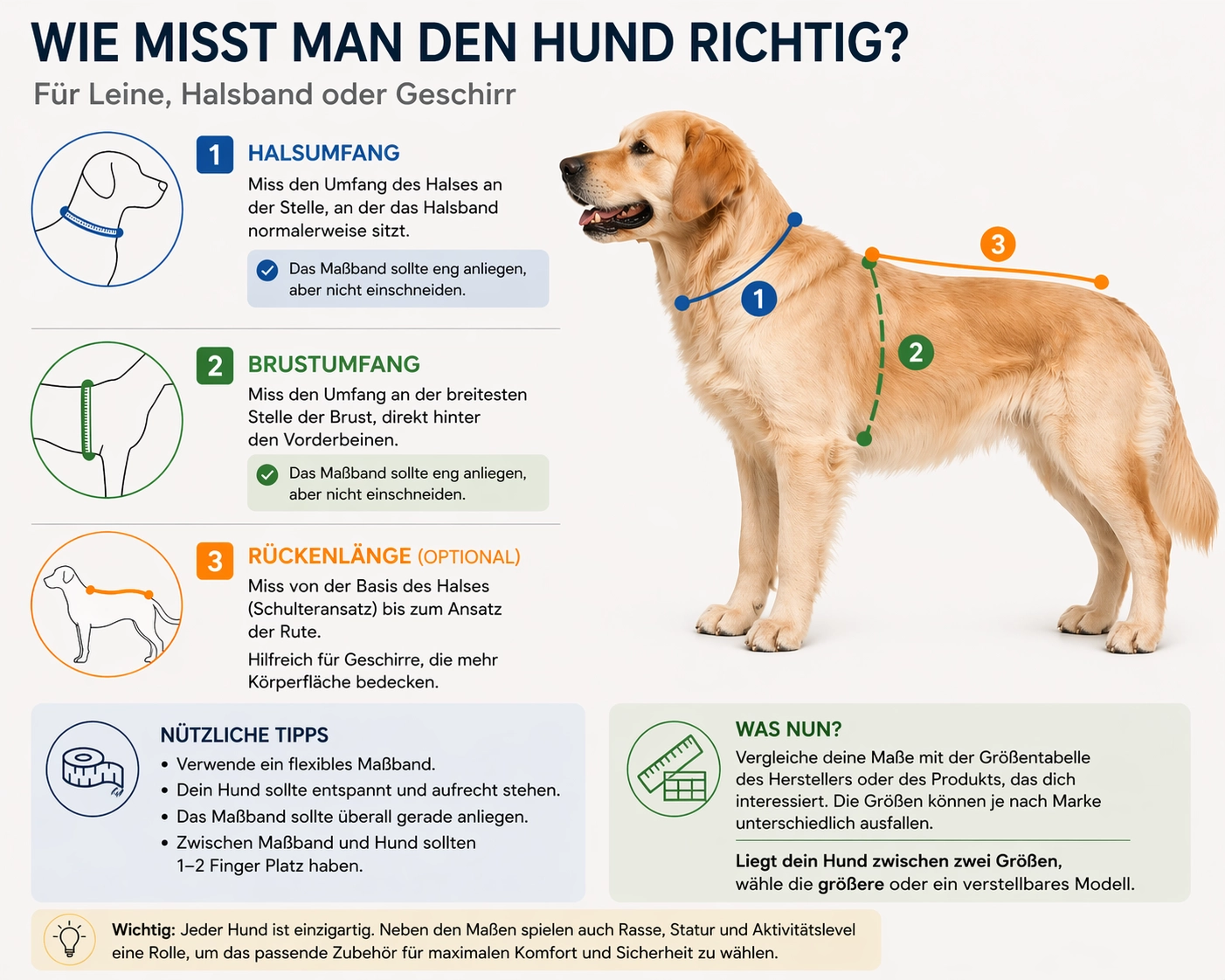
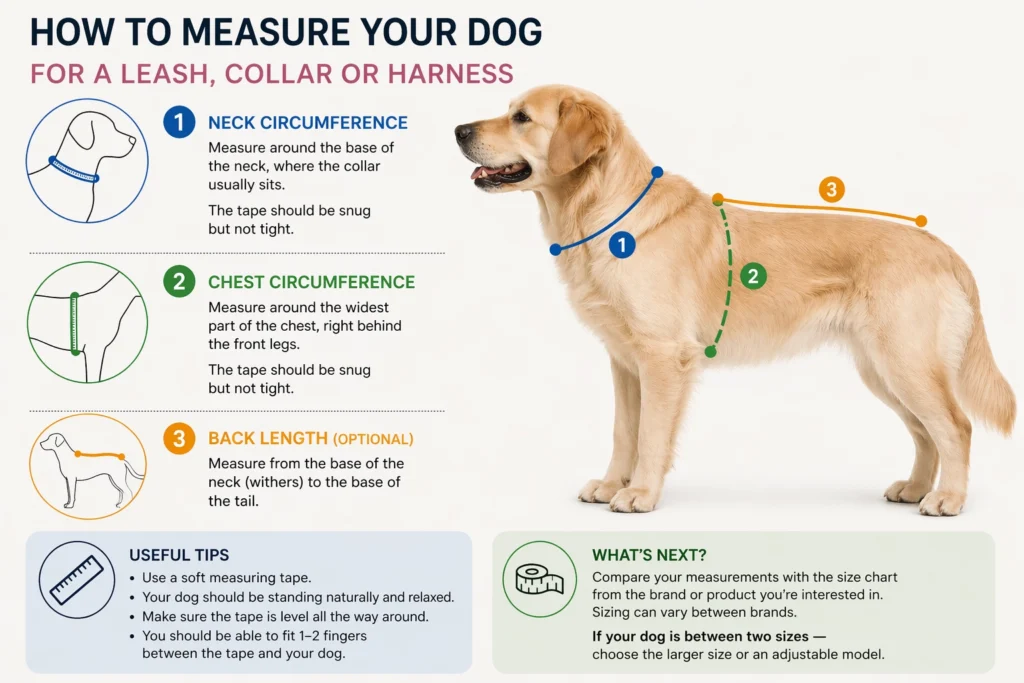
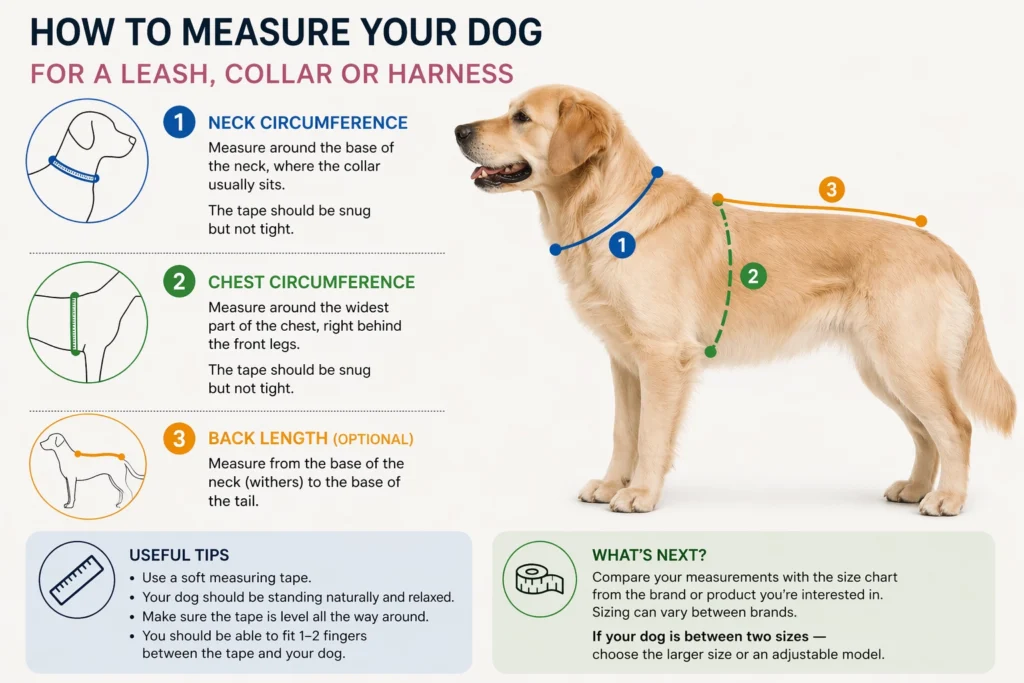
    It’s best to take measurements and compare them to the brand’s size chart.

    What to measure

    You’ll usually need:

    • chest girth — the widest part of the body, just behind the front legs
    • neck girth — at the base of the neck where the harness sits

    Sometimes it also helps to know your dog’s back length and weight.

    What to do next

    Each brand has its own sizing. You can usually find it on the packaging, product page or label.

    Sizes are often listed as XS, S, M, L, XL or in centimeters.

    Important: a size M in one brand may not match a size M in another, so do not rely on the letter alone.

    If your dog falls between two sizes, it is usually better to choose the larger one — especially if the harness is adjustable.

    For example, if your dog’s chest measures 52 cm and the chart shows:

    • S — 40–50 cm
    • M — 50–60 cm

    Choose M if there is room for adjustment.

    Check the fit after buying

    Once the harness is on, make sure it:

    • does not hang loosely
    • does not dig into the body
    • does not rub under the legs
    • does not restrict movement

    A simple rule: you should be able to fit two fingers between the strap and your dog’s body.

    Common mistakes

    • buying without taking measurements
    • using a leash that is too thin for a large dog or too heavy for a small one
    • choosing a harness that rubs under the legs
    • picking a harness that is too loose and easy to escape from

    The right gear is one that feels comfortable for your dog — and gives you confidence and control during every walk.

  • Dog clothing: how to choose

    Dog clothing: how to choose

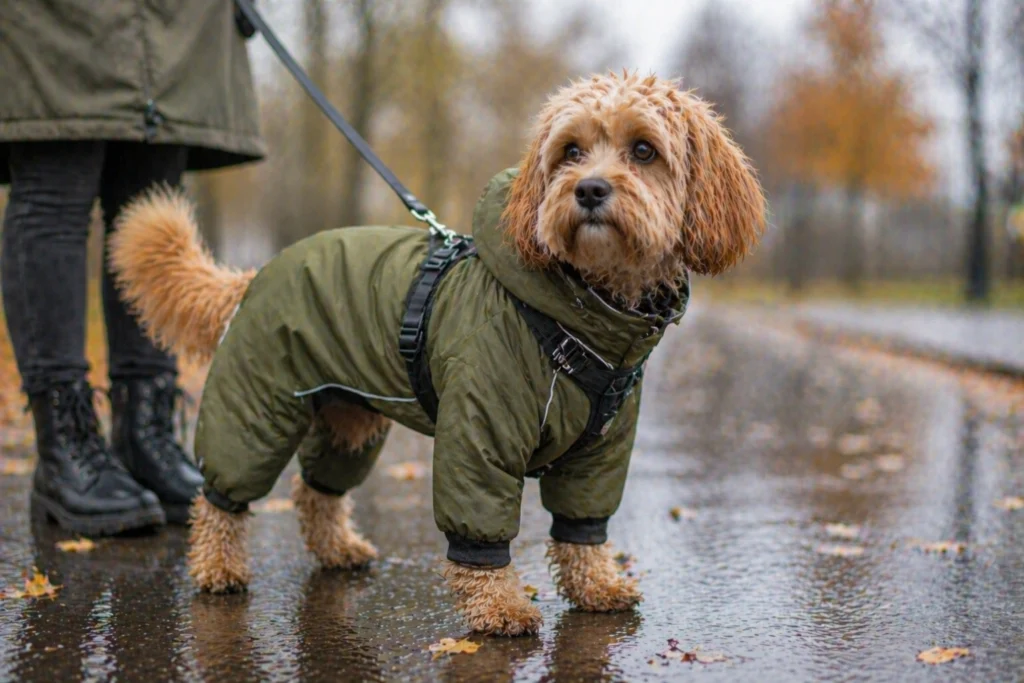
    Dog clothing is not necessary for every pet or every situation. For some dogs, it helps make walks more comfortable, while for others it may be unnecessary. The key is to match the clothing to the weather and your dog’s comfort.

    When clothing is actually needed

    Clothing is most useful for:

    • small dogs
    • short-haired breeds
    • dogs without an undercoat
    • senior dogs
    • puppies
    • dogs after a short haircut 
    • rainy, snowy, windy or cold weather

    For example, breeds like Chihuahuas, Italian Greyhounds, Chinese Cresteds, Toy Terriers and Miniature Pinschers often benefit from clothing.

    When you can skip it

    Many dogs with thick coats and dense undercoats (such as Huskies, Malamutes, Samoyeds and Newfoundlands) are comfortable without extra layers in mild weather. That said, even these breeds may benefit from a raincoat or protection from mud.

    How to choose dog clothing

    1. By season

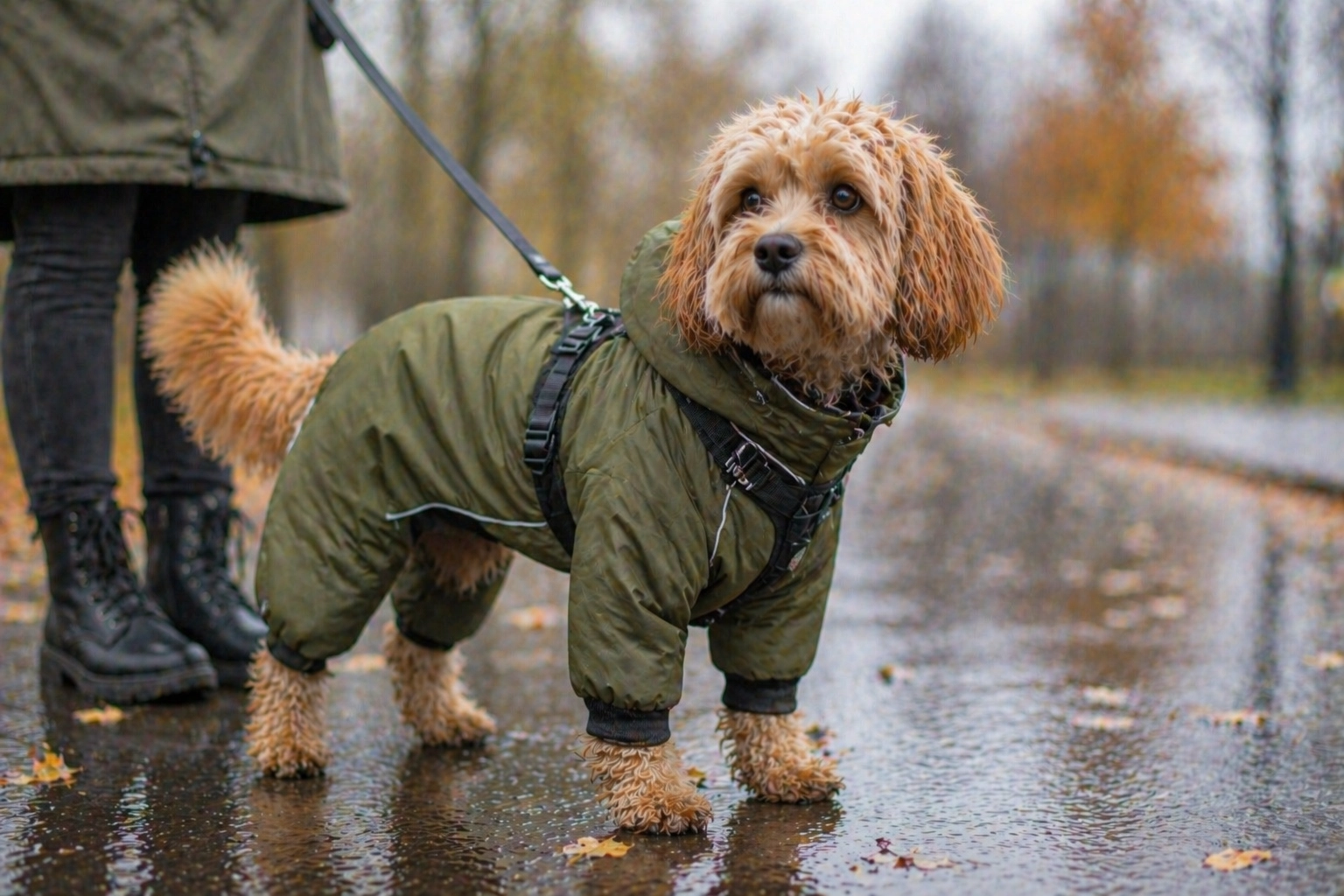
    • rainy fall — a lightweight raincoat or waterproof layer
    • winter — insulated options with wind and water protection
    • spring — lighter protection from damp weather and wind

    2. By fit

    Good clothing should:

    • not rub or irritate
    • not restrict movement
    • stay in place without twisting
    • not put pressure on the neck, chest or underarms
    • allow your dog to go to the bathroom comfortably

    If your dog moves stiffly, freezes or keeps trying to remove the clothing, it’s a sign the fit isn’t right.

    3. By material

    Pay attention to:

    • outer fabric suitable for the weather
    • soft inner lining
    • strong stitching
    • easy-to-use fasteners
    • machine-washable materials

    How to take measurements

    You will usually need three measurements:

    • back length (from the base of the neck to the base of the tail)
    • chest girth (the widest part of the body)
    • neck girth

    Always compare your measurements with the brand’s size chart, as sizing can vary between manufacturers.

    How to get your dog used to clothing

    If your dog has never worn clothes before, take it step by step:

    • let them sniff the item first
    • try it on briefly at home
    • praise and reward
    • gradually increase wearing time

    Common mistakes

    • guessing the size instead of measuring
    • choosing heavy or stiff fabrics
    • overheating the dog
    • leaving clothing wet after walks

    Clothing only helps when it actually makes your dog more comfortable and protects them from the weather. If it fits well, doesn’t restrict movement and matches the season, it’s doing its job.

  • Essential grooming supplies for your dog

    Essential grooming supplies for your dog

    Dog care is not just about feeding and walks. To keep your dog comfortable day to day, it helps to have a basic set of grooming and hygiene essentials at home.

    You don’t need to buy everything at once or go for a full setup right away. It’s better to start with a practical core kit and add more as needed.

    Basic dog grooming checklist

    1. Coat care

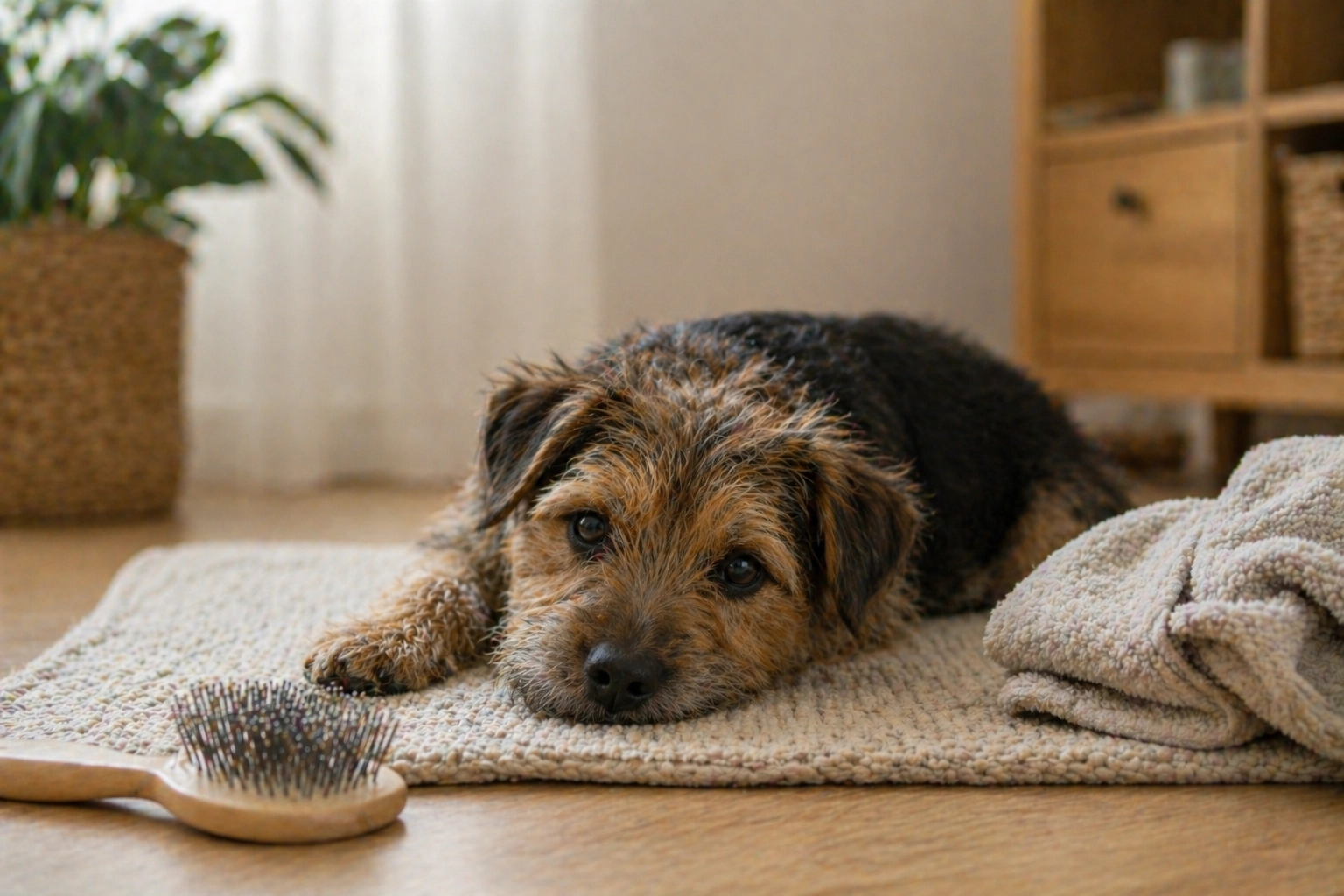
    Important: different coat types require different tools.

    For short-haired breeds(such as Labrador Retrievers, Beagles, Pugs, Dobermans):

    • grooming glove
    • fine-tooth comb
    • brush for short coats
    • deshedding tool (for some coat types)

    For medium-haired breeds(such as Huskies or Corgis):

    • grooming glove
    • comb with mixed tooth lengths
    • deshedding tool
    • slicker brush
    • dematting tool (if needed)

    For long-haired breeds(such as Shih Tzus, Collies, Maltese and others), a more complete set is needed:

    • grooming glove
    • wide-tooth comb
    • fine-tooth comb
    • deshedding tool
    • slicker brush
    • dematting tool
    • scissors

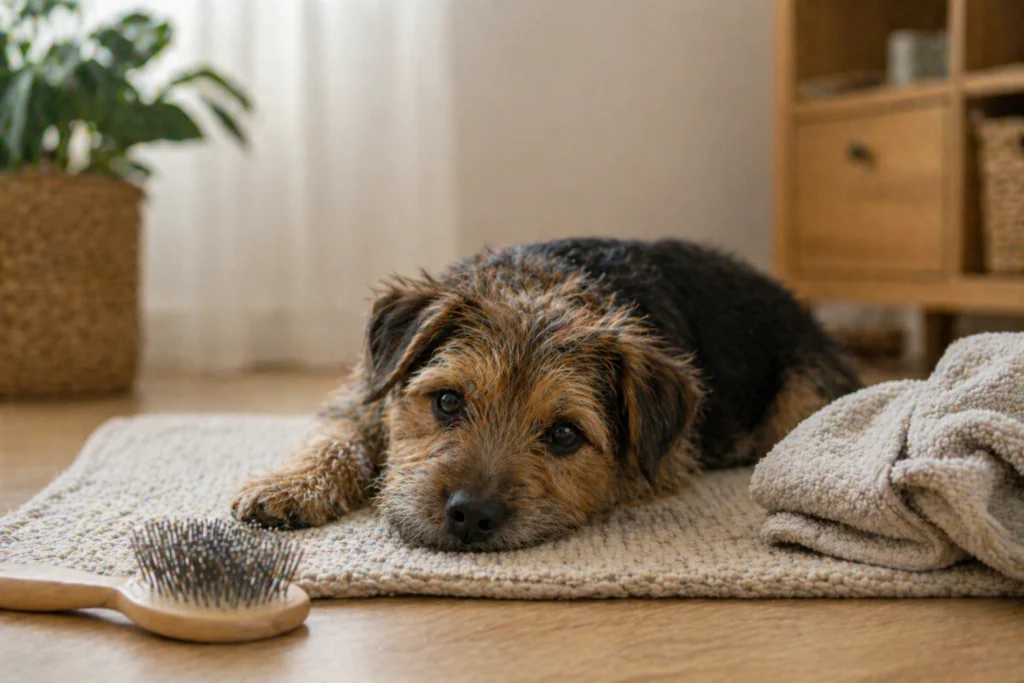
    Dogs with wire-haired breeds do not have an undercoat, so deshedding tools and slicker brushes are not used. A suitable brush and a stripping comb are usually enough.

    2. Bathing and hygiene

    • dog shampoo
    • a separate towel
    • wipes or soft cloths for cleaning paws
    • conditioner (if needed)

    Human shampoos are not suitable for dogs.

    3. Paws and nails

    • nail clippers in the right size
    • nail file (optional)
    • paw balm or protective treatment

    Common mistakes

    • buying random products without considering the dog’s size
    • using human products instead of dog-specific ones
    • choosing cheap tools that are uncomfortable to use
    • buying too many items instead of starting with a basic set
    • not replacing consumables on time

    Good care is not about having a lot of tools, but about choosing the right ones. A simple, practical set that fits your dog and is used regularly is more than enough.