A comfortable walk starts with the right leash and harness. The gear you choose affects your dog’s comfort, your control and overall safety. Poorly fitted or low-quality equipment can restrict movement, cause discomfort or fail at the worst possible moment.
Types of leashes
The right leash depends on your dog’s size and how you usually walk them.
1. Standard leash
A simple, reliable option for everyday use. Works well for most dogs. In the city, a length of about 1.2 to 2 meters is usually ideal.
Best for: daily walks, training, vet visits.
2. Retractable leash
Gives your dog more freedom to roam, but offers less control and can create sudden pulling. It’s also less durable due to the internal mechanism.
Best for: calm dogs in safe, open areas.
3. Long line
Typically 3 to 10 meters long. Great for training and outdoor walks where your dog can have more space without being fully off-leash.
Best for: training, recall practice, and outdoor walks where your dog can have more freedom without being fully off-leash.
Leash materials
- Nylon — lightweight, affordable, easy to clean
- Leather — durable, long-lasting, softens over time
- Canvas / webbing — strong and reliable, good for larger dogs
- Rubberized — better grip, especially in wet conditions
What to check before buying
- the clip opens easily but stays securely fastened
- stitching is strong and even
- the handle feels comfortable in your hand
- the leash weight matches your dog’s size
Collar or harness?
There is no one-size-fits-all answer.
A collar and leash is a classic setup that works well for calm dogs who don’t pull and respond reliably to commands.
If your dog tends to lunge forward, coughs when the leash tightens or has a sensitive neck, a harness is usually the more comfortable option. It distributes pressure across the body instead of the neck.
How to choose a harness
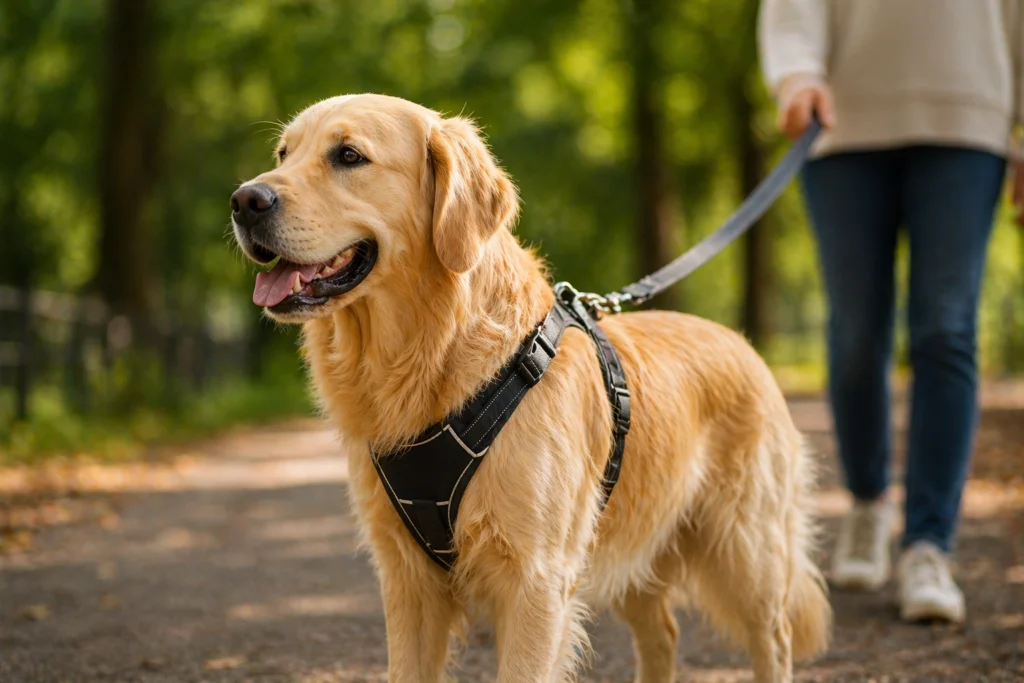
A harness should fit snugly without putting pressure on the body. A good design allows free movement and does not rub the skin.
Types of harnesses
1. Y-shaped harness
Straps run across the chest and between the front legs, leaving the shoulders free. This design does not put pressure on the neck and allows natural movement, making it a great choice for active daily walks.
Key points:
- proper adjustment is important to avoid rubbing under the legs
- if too loose, the dog may slip out
2. Vest-style harness
A softer, wider design, often used for small dogs. The fabric sits gently against the body and reduces pressure from straps.
Key points:
- may feel warmer in hot weather
- make sure it doesn’t rub or stay damp
3. No-pull harness
Features a front clip on the chest to help reduce pulling. It gently redirects the dog when they pull forward, making walks easier with strong or untrained dogs.
Key points:
- does not replace proper leash training
- may shift to the side if not fitted correctly
- choose a model that does not restrict front leg movement
How to choose the right size
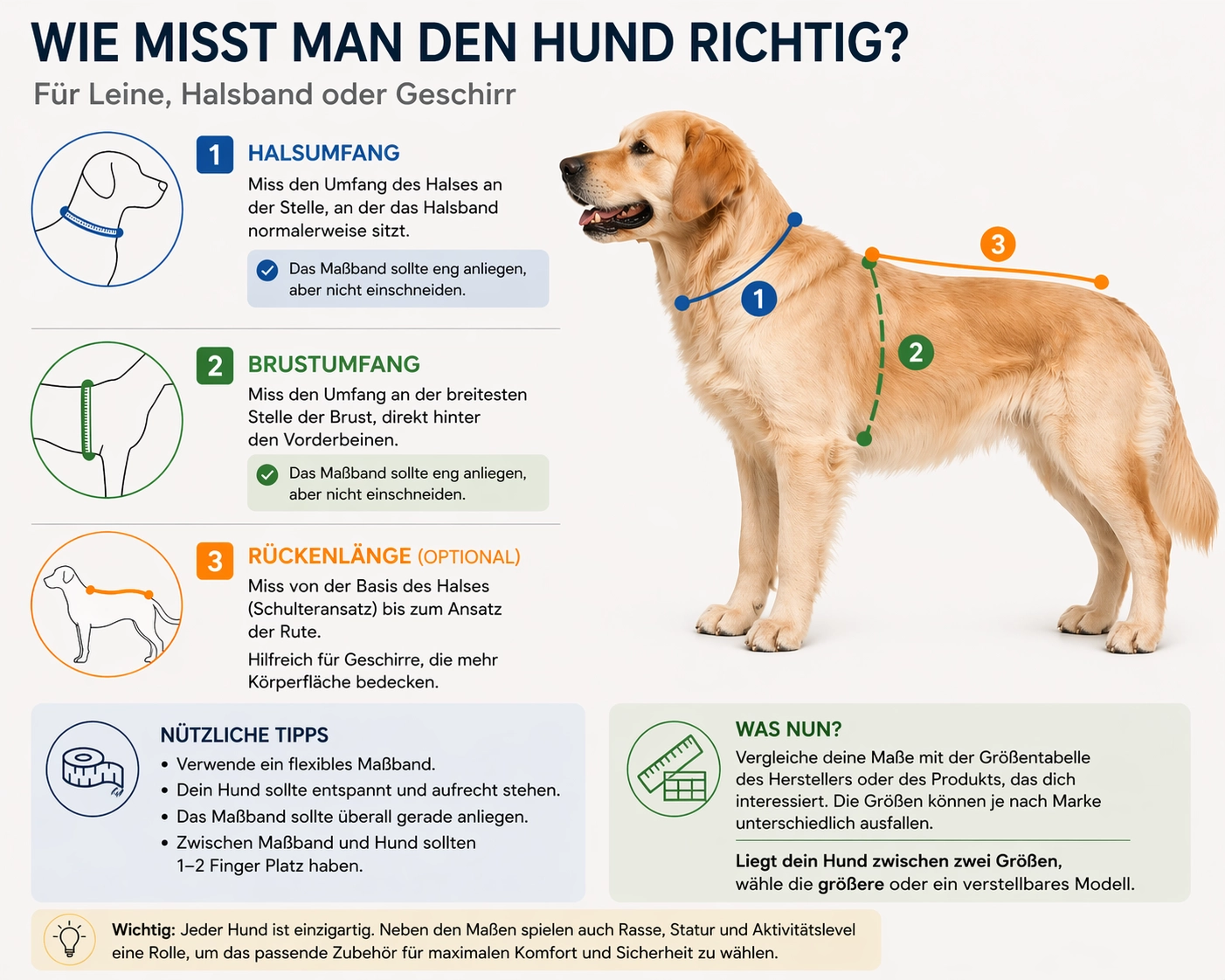
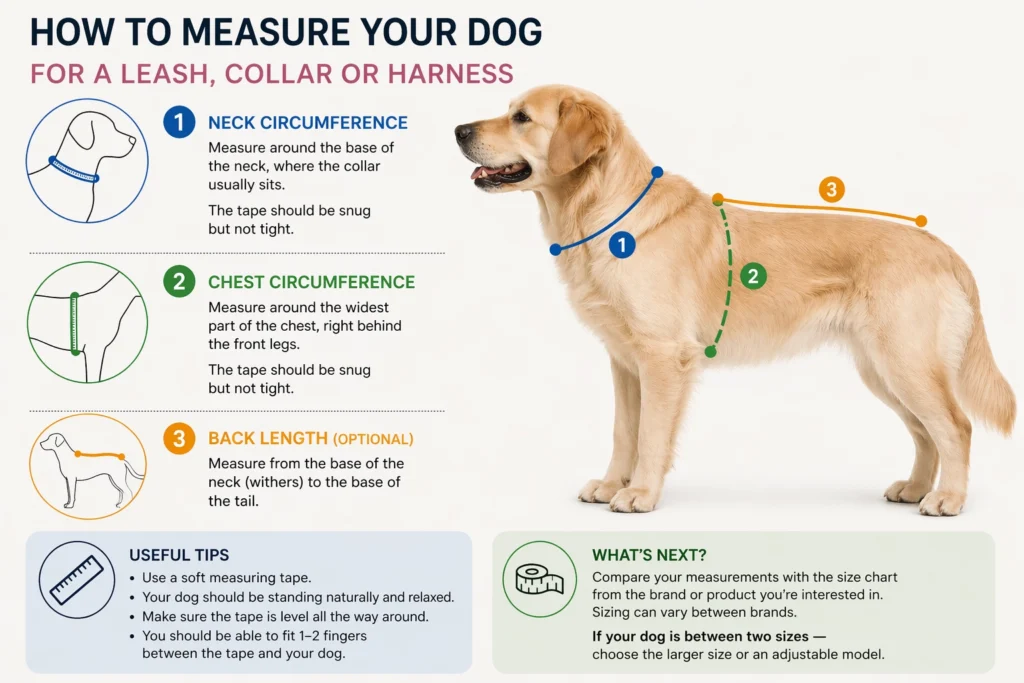
It’s best to take measurements and compare them to the brand’s size chart.
What to measure
You’ll usually need:
- chest girth — the widest part of the body, just behind the front legs
- neck girth — at the base of the neck where the harness sits
Sometimes it also helps to know your dog’s back length and weight.
What to do next
Each brand has its own sizing. You can usually find it on the packaging, product page or label.
Sizes are often listed as XS, S, M, L, XL or in centimeters.
Important: a size M in one brand may not match a size M in another, so do not rely on the letter alone.
If your dog falls between two sizes, it is usually better to choose the larger one — especially if the harness is adjustable.
For example, if your dog’s chest measures 52 cm and the chart shows:
- S — 40–50 cm
- M — 50–60 cm
Choose M if there is room for adjustment.
Check the fit after buying
Once the harness is on, make sure it:
- does not hang loosely
- does not dig into the body
- does not rub under the legs
- does not restrict movement
A simple rule: you should be able to fit two fingers between the strap and your dog’s body.
Common mistakes
- buying without taking measurements
- using a leash that is too thin for a large dog or too heavy for a small one
- choosing a harness that rubs under the legs
- picking a harness that is too loose and easy to escape from
The right gear is one that feels comfortable for your dog — and gives you confidence and control during every walk.
Leave a Reply