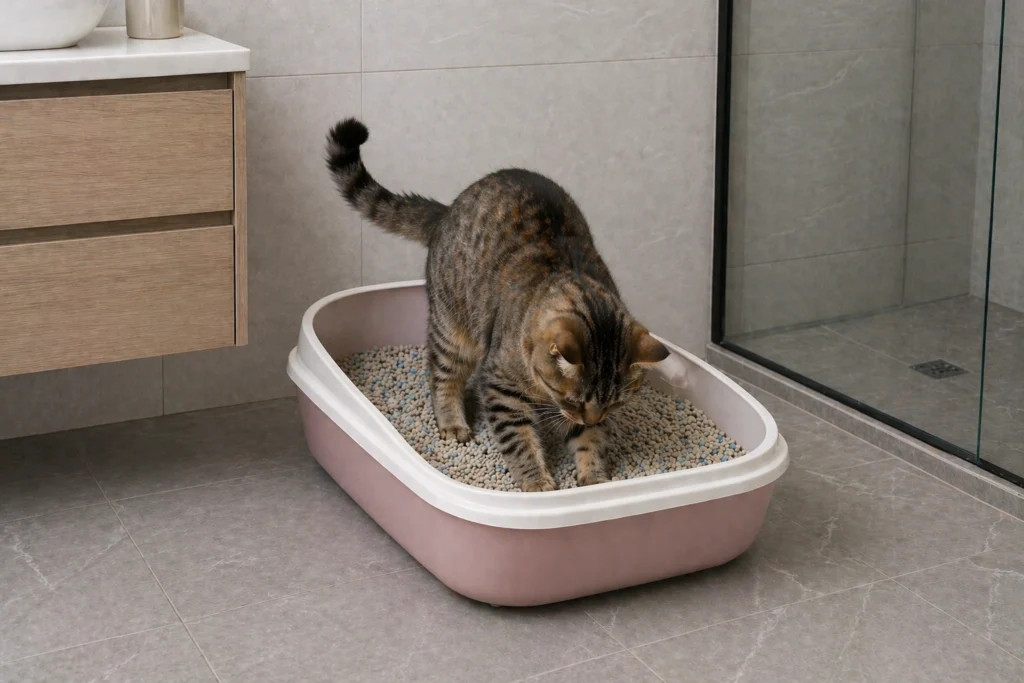
A litter box is one of the essentials for any cat at home. To help your cat build good toilet habits as quickly as possible, the box should always be clean and the right size. In this article, we look at the main types of litter boxes, along with their pros and cons.
Types of litter boxes for cats
Some cats are perfectly happy with a simple open tray, while others prefer a more private and enclosed space. The best option for you and your pet is often found through trial and error.
If you want to switch from one litter box to another, here is the best way to do it:
- Place the new litter box next to the old one. Do not remove the old box right away — your cat needs time to get used to the new item.
- Use familiar litter. At first, keep the same litter and the same depth your cat already knows.
- Let scent help. Add a small amount of used litter from the old box into the new one.
- Be patient. Some cats adjust in a day, while others need more time.
- Reward success. If your cat uses the new box, praise them with affection or a treat.
Once your cat starts using the new litter box regularly, the old one can be removed.
Classic open litter box
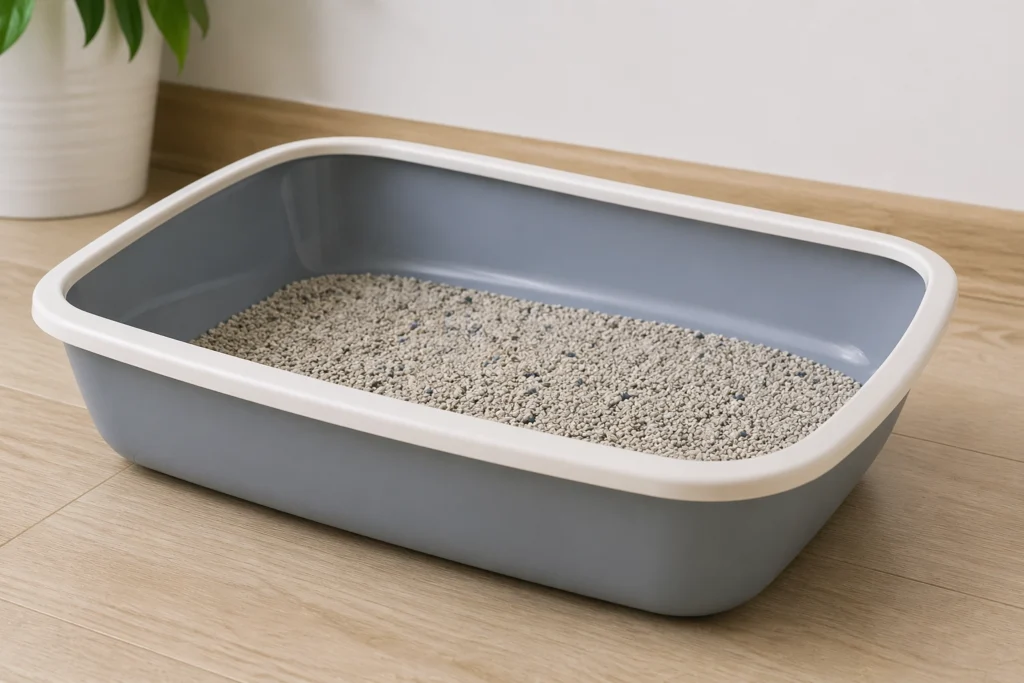
The most common and familiar option is a simple plastic tray with low or medium sides.
Pros:
- affordable
- easy to wash and scoop
Cons:
- litter often gets kicked outside the box
- odors may spread more easily
- everything is visible
Despite these downsides, an open litter box is usually the best choice for kittens and senior cats.
Litter box with grate
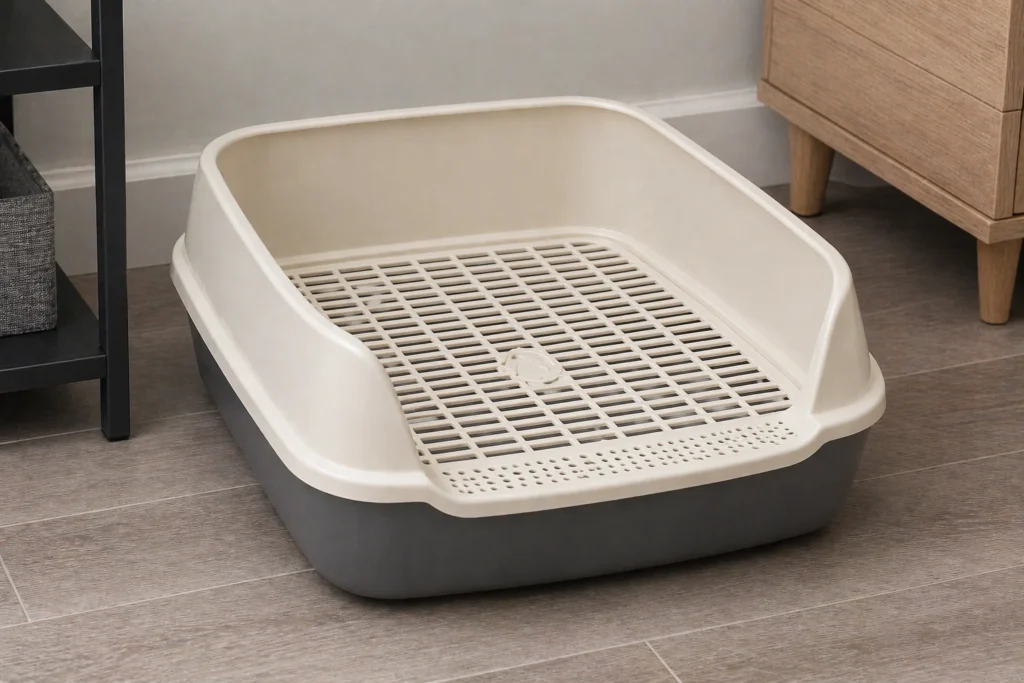
This is an open litter box with a plastic grid placed over the tray. Litter goes underneath the grate or may not be used at all.
Pros:
- litter does not stick to paws as much
- uses less litter, or none at all
- the cat cannot eat the litter
Cons:
- needs frequent cleaning
- odor appears quickly
- some cats miss the ability to dig
- may take time to get used to
This option can work well for owners who are ready to clean the box several times a day to keep the area tidy. It is worth knowing that grate-style boxes can be harder for some cats to accept.
Litter box with high sides
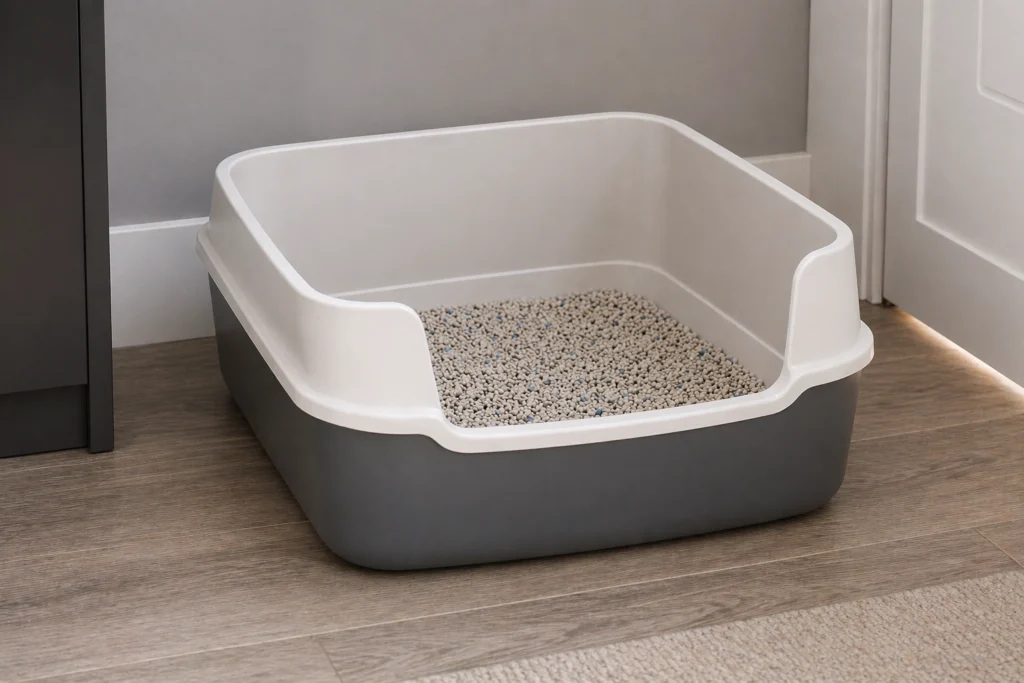
High-sided boxes are ideal for cats that love digging energetically in their litter.
Pros:
- much less mess around the box
- more room for larger cats
Cons:
- not ideal for kittens or senior cats, as getting in may be difficult
A great choice for active adult cats.
Covered litter box
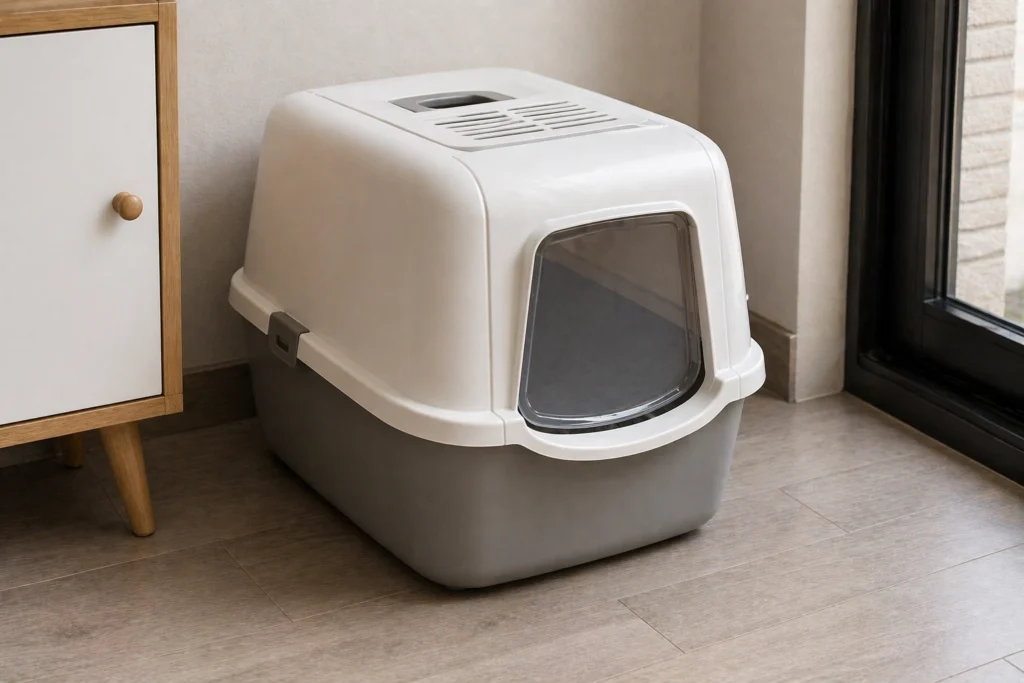
Enclosed “house-style” models with a lid and an entrance on the side or front.
Pros:
- less odor outside the box
- litter stays inside more easily
- more privacy for the cat
Cons:
- takes up more space
- still needs regular cleaning
- not every cat likes enclosed spaces
A good option for shy cats and owners who value a tidy home.
Tip: The ideal height of a covered litter box is the distance from the litter surface to the tip of your cat’s ears while sitting, plus 5 cm (about 2 inches).
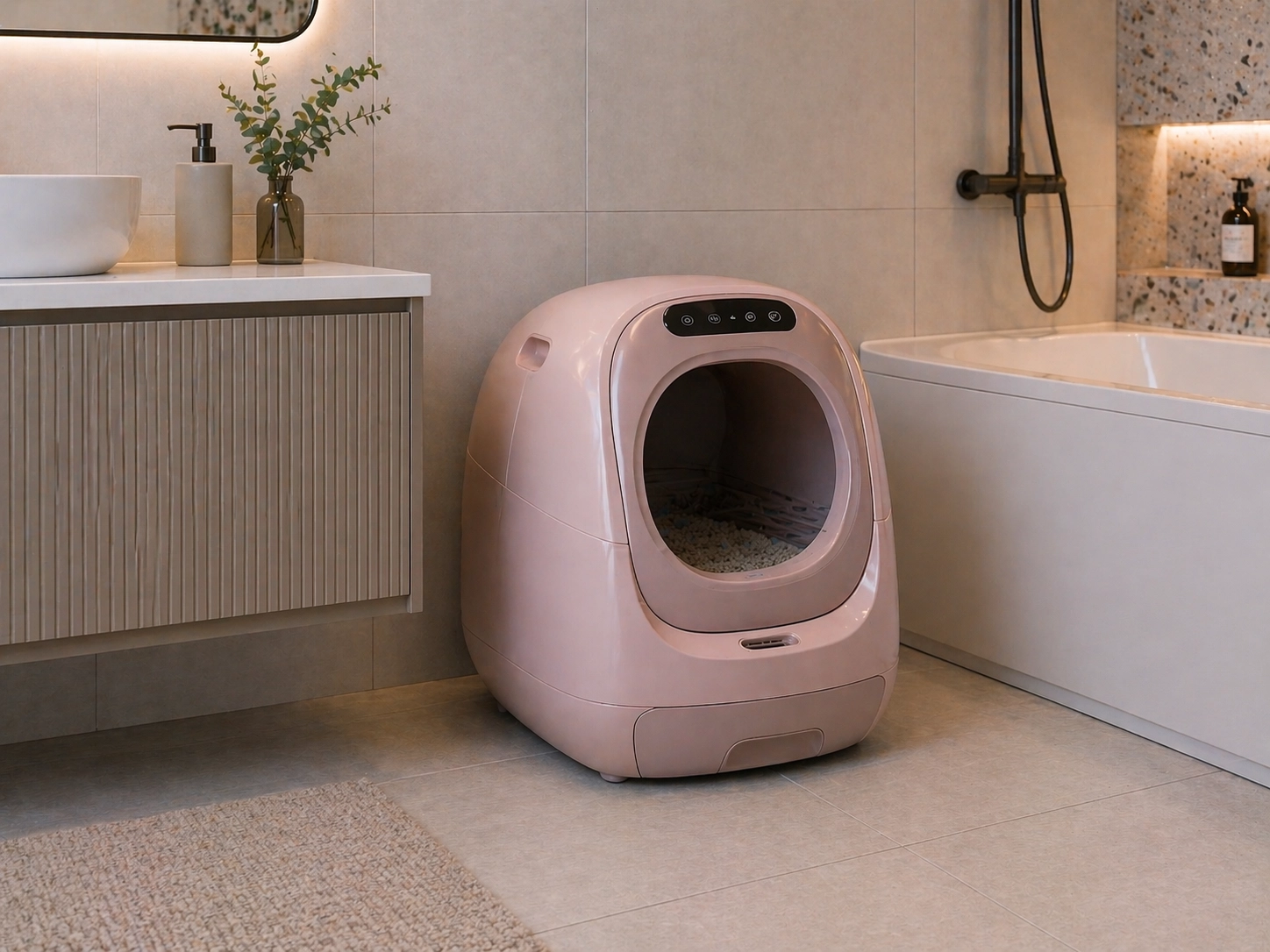
Self-cleaning litter box
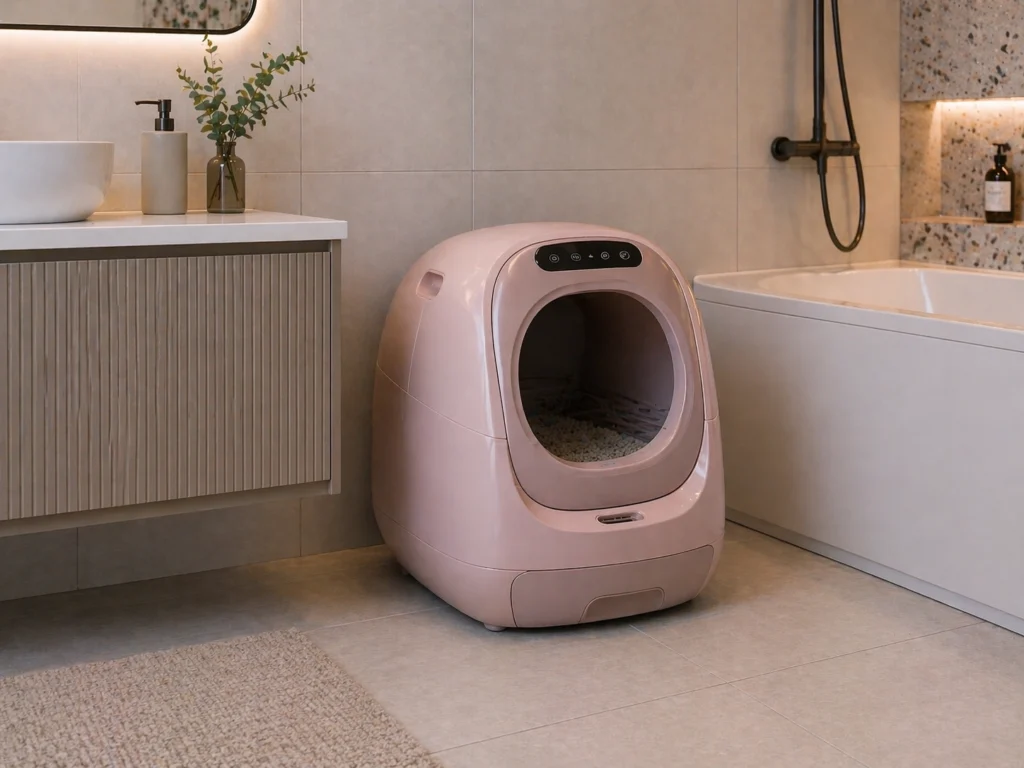
An automatic model that removes waste after use.
Pros:
- minimal manual cleaning
- litter stays cleaner and fresher
- some models include health tracking and notify owners how often the cat uses the box
Cons:
- expensive
- requires power
- may scare some cats; poorly designed models can be unsafe
A convenient option for busy owners or frequent travelers, but not suitable for every cat. If you choose this type, reliable safety sensors are essential.
Useful accessories
Items that make litter box care easier:
- Scoop. Choose one with slots large enough for clean litter to fall through, but small enough to hold clumps.
- Litter mat. Helps catch litter from your cat’s paws and keeps the floor cleaner. If your cat likes chewing non-food items, this may not be the best choice.
- Waste bags. Useful for quick and tidy disposal of used litter.
- Litter storage container. Keeps extra litter nearby and protects it from moisture.
When choosing a litter box, do not focus on appearance alone. It should fit your cat’s size, feel comfortable and be placed in a calm location. If your cat avoids the box, the problem is usually not personality — it is often that the setup simply does not suit them.
Leave a Reply