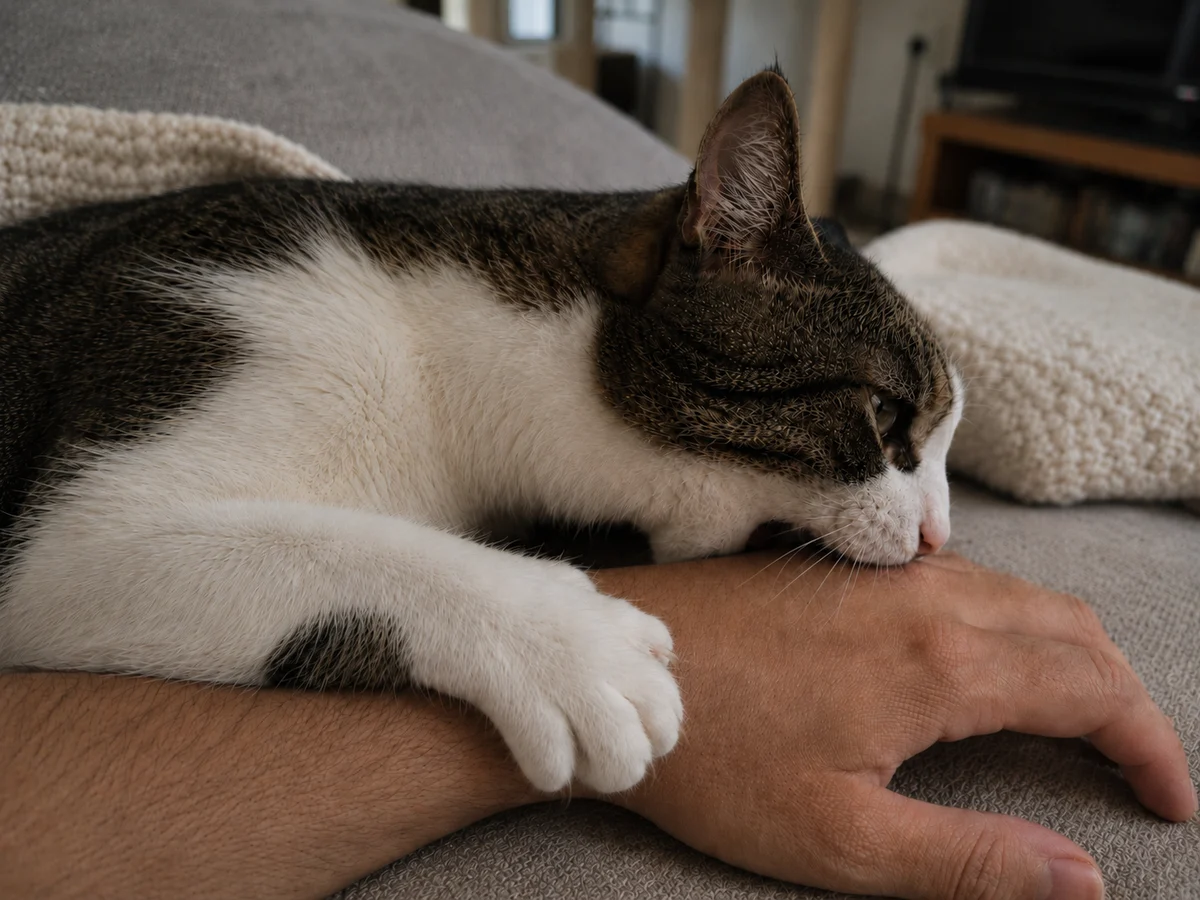
If your cat bites your hand, it doesn’t necessarily mean they’re aggressive or badly behaved. In most cases, biting is simply another way cats communicate. A bite can mean “let’s play,” “leave me alone,” “I’m scared,” or even “something hurts.”
In this article, we’ll look at what your cat may be trying to tell you, how to identify the reason behind the biting and what you can do to help stop it.
Common reasons cats bite
- Play
Kittens and young cats often bite during play. It’s how they practice essential hunting skills—stalking, catching, grabbing and biting their prey. If hands and feet become part of those games, your cat may start seeing them as perfectly normal targets.
Playful biting is usually easy to tell apart from true aggression. During play, a cat is relaxed, doesn’t hiss and isn’t trying to cause real harm. If your cat flattens their ears, arches their back, growls or looks frightened, the bite is likely caused by something other than play.
- Your cat has had enough petting
One of the most common reasons cats bite is overstimulation. Many cats enjoy being petted—but only up to a point. Once they’ve had enough, they’ll usually try to warn you before resorting to a bite.
Common warning signs include:
- twitching or flicking the tail;
- a tense body;
- ears turning back;
- turning the head away;
- trying to walk away.
If you keep petting your cat after these signals, biting may become their way of ending the interaction.
- Hunting instinct
Moving feet, hands under a blanket or loose clothing can easily trigger your cat’s hunting instinct. This behavior is especially common in kittens and young, energetic cats.
To keep your cat from treating people as prey, it’s important to use toys from the very beginning. Wand toys, balls and interactive toys give your cat a healthy outlet for those natural hunting behaviors.
- Not enough activity
Even the most pampered indoor cat is still a predator. Without enough opportunities to play and burn off energy, they’ll often find their own entertainment—and that may include chasing and biting hands, feet or even your face.
For many cats, just 10–15 minutes of active play each day can make a noticeable difference
- Fear
A frightened cat may bite because they feel they have no other choice. This often happens during veterinary visits, after moving to a new home, when meeting another pet or when they’re forced into situations that make them uncomfortable.
Instead of trying to “correct” this behavior, remove the source of stress whenever possible and give your cat time to calm down.
- Pain or illness
If your cat has never bitten before and suddenly starts doing so, it’s worth considering whether they’re in pain. Just like people, cats can become irritable when they don’t feel well.
Unexpected biting may be caused by:
- dental disease;
- arthritis;
- injuries;
- internal health problems;
- other medical conditions.
If the biting starts suddenly or is accompanied by other changes in behavior, schedule a veterinary appointment as soon as possible.
Should you punish a cat for biting?
Never. Punishing a cat for biting is unlikely to help. In most cases, your cat won’t connect the punishment with the bite itself, especially if your reaction comes even a few seconds later or the bite happened because they were frightened or overstimulated. Instead, your cat may simply learn that you’re unpredictable or something to be afraid of, which can increase stress and make the problem worse. It’s far more effective to understand why your cat is biting and address the underlying cause.
How to stop your cat from biting
In many cases, a few simple changes can make a big difference:
- don’t use your hands or feet as toys;
- provide toys that encourage healthy hunting behavior;
- end play sessions if your cat becomes too rough;
- respect your cat’s signals when they’ve had enough attention;
- make time for active play every day;
- if the behavior changes suddenly, have your cat checked by a veterinarian.
When to seek professional help
If your cat bites frequently, causes serious injuries or suddenly starts biting for no obvious reason, don’t put off a visit to the veterinarian. If your cat is healthy, a certified cat behavior specialist can help identify the cause and develop a plan to improve the behavior.
Remember, cats don’t bite because they want to hurt people. More often, they’re trying to communicate, protect themselves or let you know that something isn’t right. Learning to recognize these signals will not only reduce biting but also help you build a stronger relationship with your cat.