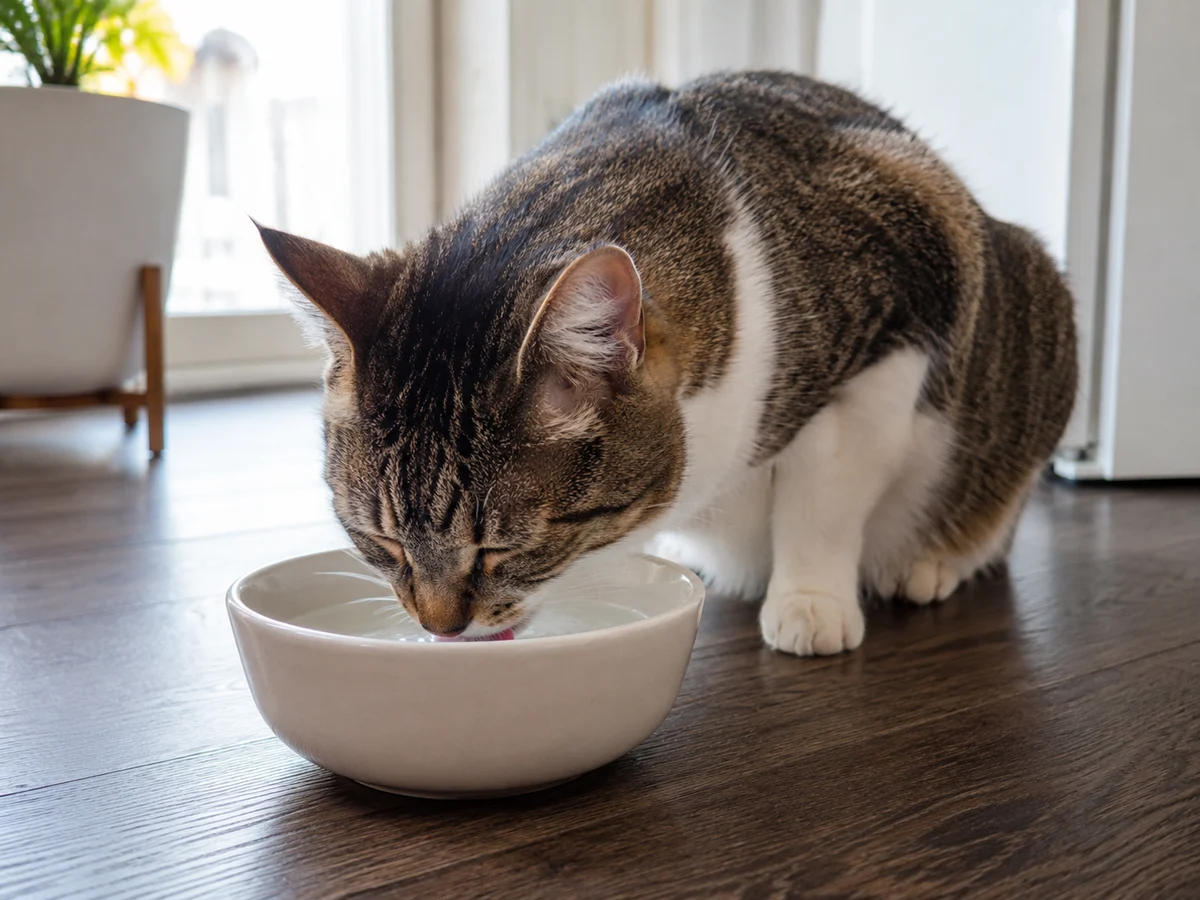
Water can look perfectly fine after sitting in your cat’s bowl all day. It is still clear, there is no obvious smell and your cat barely touched it. Even so, your cat may no longer want to drink it. Cats notice small changes in smell, temperature and taste, and that can be enough to put them off.
Here is how often to replace the water and how to keep bowls and fountains clean.
Why fresh water matters to cats
Domestic cats descend from animals that lived in dry regions and got much of their moisture from prey. That legacy remains: many cats simply are not big drinkers.
This makes freshness especially important. Water that has warmed up or picked up an unfamiliar smell may be much less appealing, even when it still looks clean to us. Refreshing it regularly gives your cat one less reason to avoid the bowl.
There is no single schedule that suits every cat. Some barely touch their water during the day, while others empty the bowl. Diet, room temperature and the type of bowl or fountain all make a difference.
The basic rule: fresh water every day
Give your cat fresh water at least once a day. Empty the old water, rinse the bowl and refill it rather than simply topping it up. Change it sooner if food, fur or debris gets into the bowl, or if the water has warmed up or started to look unusual.
In hot weather, check the bowl at least morning and evening. This matters even more if it sits in direct sunlight, near a heater or in a warm room.
When to change it more often
- Wet food vs. dry food
Cats who eat wet food get some of their moisture from their meals, so they may visit the water bowl less often.
With dry food, drinking water becomes the main source of moisture. It is especially important to keep it fresh and available at all times.
- Hot weather
Water warms up quickly in summer, and cats often drink more as temperatures rise. If the bowl is in direct sunlight or a warm room, check it several times a day.
- Water fountains
Many cats prefer fountains because moving water catches their interest. A fountain still needs fresh water and regular cleaning, though. Residue, fur and debris collect inside over time, so take the unit apart and wash it regularly. Replace the filter according to the manufacturer’s instructions.
Signs the water needs changing
Freshness is not just about how long the water has been sitting out. Replace it if:
- a film has formed on the surface
- the water looks cloudy or smells different
- food or debris has fallen into the bowl
- the sides of the bowl feel slippery
- your cat sniffs the water and walks away
A slippery coating on the bowl or inside the fountain is biofilm—a buildup of bacteria and organic residue. At that point, changing the water is not enough. Wash the bowl or fountain thoroughly.
If fresh water still does not tempt your cat, move the bowl or try a different one. The location, shape or smell of the bowl may be putting them off.
How to clean the bowl
Wash your cat’s water bowl every day with warm water and a mild, unscented dish soap. Rinse it thoroughly so no soap residue is left behind.
Good materials for water bowls include:
- stainless steel
- chip-free ceramic
- glass
Plastic scratches over time and can hold onto odors. Check plastic bowls regularly and replace them once they become damaged.
Many cats prefer wide, shallow bowls that do not brush against their whiskers. Put the bowl somewhere quiet and away from the litter box. Some cats also drink more readily when their water is placed away from their food.
Read our guide to choosing cat bowls for more details.
How to clean a water fountain
Fountains have more parts where buildup can hide, so changing the water is only one part of the routine. Take the fountain apart and clean it regularly.
When cleaning:
- wash the reservoir and all removable parts
- clean the pump and narrow crevices
- replace the filter on schedule
- check for buildup or unpleasant odors
- follow the manufacturer’s instructions
If the stream becomes weaker or the fountain starts making more noise, the pump may need cleaning or the water level may be too low.
Common questions
Can I just top off the bowl?
You can add water during the day if the level gets low, but you should still empty, wash and refill the bowl once a day.
What kind of water should I give my cat?
Any drinking water that is safe for people is generally suitable for cats. Tap, filtered or bottled water can all work, depending on local water quality and your cat’s preference.
Do not use mineral or distilled water as the everyday option unless your veterinarian recommends it.
Does my cat need cold water?
Most cats are happy with room-temperature or slightly cool water. It does not need to be icy; keeping the bowl in a cool spot is usually enough.
Why does my cat drink from the faucet but ignore the bowl?
Moving water often seems fresher and more interesting. If your cat ignores the bowl, try a fountain, a different bowl or several bowls in different rooms. The bowl itself or its location may be the problem.
What if my cat barely drinks?
Cats who eat wet food may visit the bowl less often because they get moisture from their meals. If your cat eats dry food and still drinks very little, try a different bowl, move the water away from the food or offer a fountain.
If low water intake comes with lethargy, dry gums, less frequent urination or other changes, contact your veterinarian.
Why is my cat suddenly drinking much more?
Hot weather, a diet change or increased activity can all make a cat thirstier. A sudden and persistent increase, however, can point to a health problem. If your cat is drinking and urinating noticeably more than usual, make an appointment with your veterinarian.
A comfortable bowl, a quiet spot and more than one source of water around the home can matter just as much as a daily refill. Pay attention to your cat’s habits—they will help you find the setup that works best.