Learning to use pee pads is one of the first everyday skills a puppy picks up. The key is consistency: puppies learn gradually through repetition and clear associations.
When pee pads make sense
Pee pads are useful:
during the first months of a puppy’s life
after vaccinations, when outdoor walks are limited
at night or during bad weather
for small breeds (like Pomeranians, Yorkies or Chihuahuas)
during the adjustment period in a new home
Even if your dog will eventually go outside, pee pads can be a helpful transitional step.
What to keep in mind
A puppy cannot control bladder function the same way an adult dog can. Accidents early on are a normal part of the process, not “bad behavior” or stubbornness.
Puppies usually need to go:
after sleeping
after eating or drinking
after active play
first thing in the morning
How to set up training
1. Choose a fixed spot
Place the pad in a quiet, easy-to-reach area. Avoid moving it unless necessary. Consistency helps your puppy learn faster.
2. Limit the space
If your home is large, it can be harder for a puppy to figure things out. At first, it helps to keep them in one room or place pads in several areas.
3. Take your puppy to the pad at the right times
After sleep, meals or play, bring your puppy to the pad and wait a few minutes.
4. Reward immediately
As soon as your puppy uses the pad, praise them and offer a treat.
5. Repeat consistently
The more successful repetitions, the faster the habit forms.
If your puppy misses the pad
Do not scold or punish after the fact. Your puppy will not connect the correction to something that already happened and will not understand what went wrong.
What to do instead:
clean up calmly
use an odor remover
think about what you missed
adjust your routine and supervision
Helpful tips
remove rugs for now
watch for signals: puppies often circle and sniff the floor before going
stay calm and patient
When to expect results
Some puppies learn quickly, others take more time. It depends on age, routine, personality and your consistency. Progress usually does not happen overnight — it builds step by step.
The most effective way to teach your puppy to use pee pads is a clear routine, calm training and regular positive reinforcement. Patience and repetition work far better than punishment.
Every day, dogs lose fluids through breathing, activity and normal body processes, so that water needs to be replaced regularly. Proper hydration helps support your dog’s health and overall well-being.
How much water does a dog need each day?
On average, a healthy adult dog needs around 40 to 70 ml of water per kilogram of body weight per day:
5 kg dog: about 200–350 ml
10 kg dog: about 400–700 ml
20 kg dog: about 800–1400 ml
If your dog eats dry food, they will usually need more water. With a wet-food diet, part of their fluid intake comes from meals.
What affects thirst?
The amount a dog drinks can change from day to day. For example, after a walk or during hot weather, the bowl may empty faster than usual — and that can be completely normal.
Thirst often increases with:
hot weather
active walks and playtime
dry indoor air
dry food
pregnancy and nursing
recovery after exercise
How to tell if your dog is drinking too little
Pay attention if your dog:
has dry gums
rarely goes to the water bowl
urinates less than usual
seems lethargic or sleepy
refuses food
struggles in hot weather
These signs can point to dehydration, so do not delay contacting a veterinarian.
If your dog drinks too much
Increased thirst is also worth paying attention to. Sometimes it is linked to hot weather or diet, but if your dog suddenly starts drinking noticeably more than usual without a clear reason, it can also be associated with various health issues. This is especially important if the increased thirst comes with frequent urination, weight loss, weakness, vomiting or a reduced appetite.
How to support healthy drinking habits
fresh water should always be available
wash the bowl regularly
change the water daily, and more often in hot weather
bring water and a portable bowl when traveling
place several bowls around the home if you have a large space
There is no single number that fits every dog. Look at your dog’s weight, lifestyle and the weather. If your dog is active, eating well and feeling good, small variations are usually nothing to worry about. Sudden changes in thirst, however, should not be ignored.
Bringing a kitten home is exciting, but good preparation makes all the difference. A safe environment and the right essentials will help your new pet settle in quickly, feel secure and adapt more easily to your home routine.
In this guide, we explain how to prepare for a kitten so your first days together feel calm, comfortable and stress-free.
Prepare your home in advance
For a small kitten, even ordinary household items can be risky. The calmer and safer the space feels at the beginning, the easier the adjustment period will be.
Make your home safe
Hide electrical cords and cables your kitten could chew.
Keep cleaning products, medicines and small objects out of reach.
Check your windows. Use secure screens or safe ventilation locks.
Make sure your houseplants are safe for cats, as some are toxic.
If you have high surfaces, limit access at first so your kitten cannot climb and fall during play.
If you have small children
Explain in advance that a kitten is not a toy, but a living animal that also needs time to adjust to a new home. The first few days are especially important for a calm start.
It helps to agree on a few simple rules:
do not pick up the kitten without an adult
do not wake the kitten while it is sleeping
do not pull the tail, paws or ears
do not shout nearby or scare the kitten
always let the kitten walk away or hide
use proper toys for play, not hands
A gentle introduction helps both the child and the kitten become true friends.
Keep the first days stress-free
Prepare a quiet corner where your kitten can rest. On day one, avoid too much attention or excitement. Your kitten needs time to explore new smells, observe the space and feel safe.
There is no need to introduce every room right away. At first, one area with a bed, water, food and a litter box is enough. This helps your kitten adjust to the new environment and daily routine.
What to buy first
Here are the essentials to have ready before your kitten arrives:
Choose a litter box that suits your kitten’s size. Your pet should be able to step in easily and turn around comfortably. For very young kittens, low-sided boxes are usually best. Place the litter box in a quiet area away from noise and drafts. There are many litter types, and the best option often comes down to trial and observation. If your kitten is already used to a certain litter, it is best not to change it right away.
3. Food
The right diet depends on your kitten’s age, breed and your veterinarian’s advice. Young kittens need food specially formulated for growth. Avoid sudden diet changes. If your kitten was eating something different before, switch gradually over several days.
4. Carrier
A carrier is useful for much more than vet visits. It keeps your kitten safe during travel and can also become a cozy hiding spot at home. Choose a sturdy carrier with good ventilation and a secure door. Leave it open regularly so your kitten can start seeing it as a familiar and safe place.
5. Scratching post
A scratching post helps protect furniture and gives your kitten a natural place to scratch and maintain its claws. Place it near your kitten’s future resting area. To make it more appealing, choose one with a hanging toy or add a little catnip.
6. Toys
Toys are essential for healthy development and mental stimulation. Shared playtime also helps build trust between you and your kitten. Choose balls, wand toys and soft safe toys without small detachable parts.
What you need for kitten care
Here are a few essentials for regular care and overall health:
1. Grooming basics
Useful items may include:
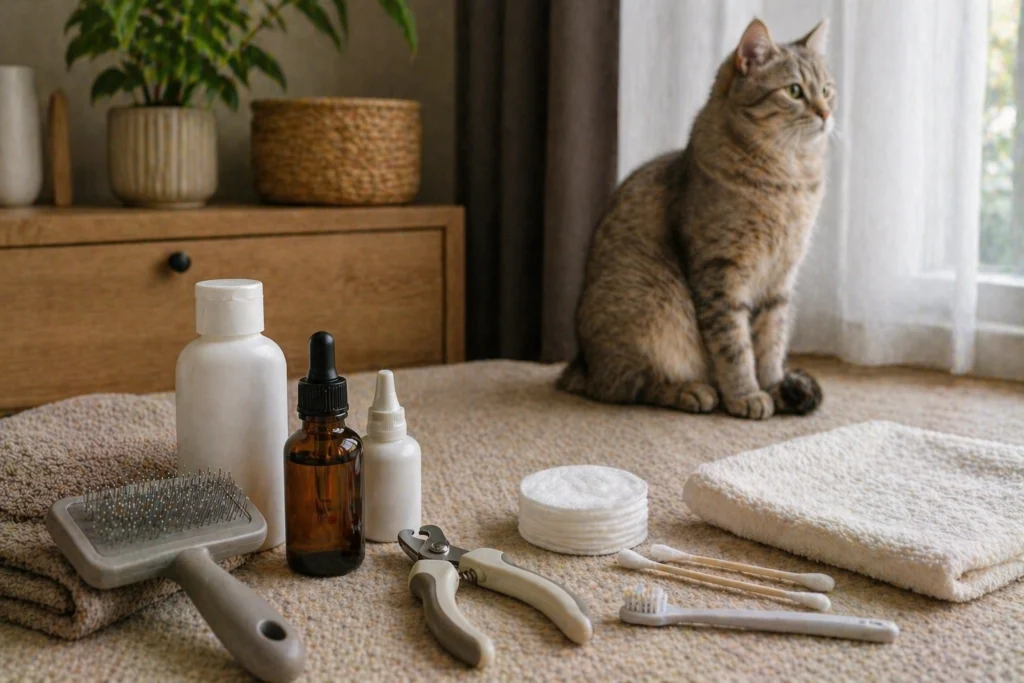
a brush or comb
nail clippers
pet wipes
shampoo, if needed
Do not use products made for humans. They are not suitable for animals’ sensitive skin. At first, a basic set is enough, along with gentle introductions to grooming routines.
2. Parasite protection
Even indoor cats need protection from external and internal parasites. Drops and tablets should always be chosen based on age and weight, as unsuitable products may be unsafe.
3. When to see a vet
A routine check-up soon after bringing your kitten home is a smart idea. A veterinarian can assess overall health, recommend vaccinations, advise on parasite prevention and answer feeding or care questions. If your kitten loses appetite, becomes lethargic or develops digestive issues, seek veterinary care without delay.
Common issues in the first weeks
Every kitten adjusts differently. Temporary challenges are common at first and are usually resolved with patience, calm routines and consistency.
1. Not eating
After moving to a new home, a kitten may refuse food because of stress. Give it time, keep the environment calm and make sure fresh water is always available. If appetite does not return within 24 hours or other symptoms appear, contact a veterinarian.
2. Hiding
This is a normal response to a new environment. Do not pull your kitten out by force. It will come out when it feels more confident. A calm voice and predictable surroundings will help your kitten settle in faster.
3. Not using the litter box
The cause may be stress, an inconvenient location or an unsuitable litter box. Keep the area clean and remove strong smells nearby. You can also try a litter training aid.
4. Biting and scratching
Your kitten may bite or scratch while playing, defending itself or burning off energy. Redirect attention to toys and avoid encouraging play with hands. With patience and consistency, this behavior usually improves over time.
Taking good care of a kitten is not only important for health, but also a wonderful way to build a strong bond during the first stage of your life together. A happy kitten will thank you with gentle purring and affection.
A litter box is one of the essentials for any cat at home. To help your cat build good toilet habits as quickly as possible, the box should always be clean and the right size. In this article, we look at the main types of litter boxes, along with their pros and cons.
Types of litter boxes for cats
Some cats are perfectly happy with a simple open tray, while others prefer a more private and enclosed space. The best option for you and your pet is often found through trial and error.
If you want to switch from one litter box to another, here is the best way to do it:
Place the new litter box next to the old one. Do not remove the old box right away — your cat needs time to get used to the new item.
Use familiar litter. At first, keep the same litter and the same depth your cat already knows.
Let scent help. Add a small amount of used litter from the old box into the new one.
Be patient. Some cats adjust in a day, while others need more time.
Reward success. If your cat uses the new box, praise them with affection or a treat.
Once your cat starts using the new litter box regularly, the old one can be removed.
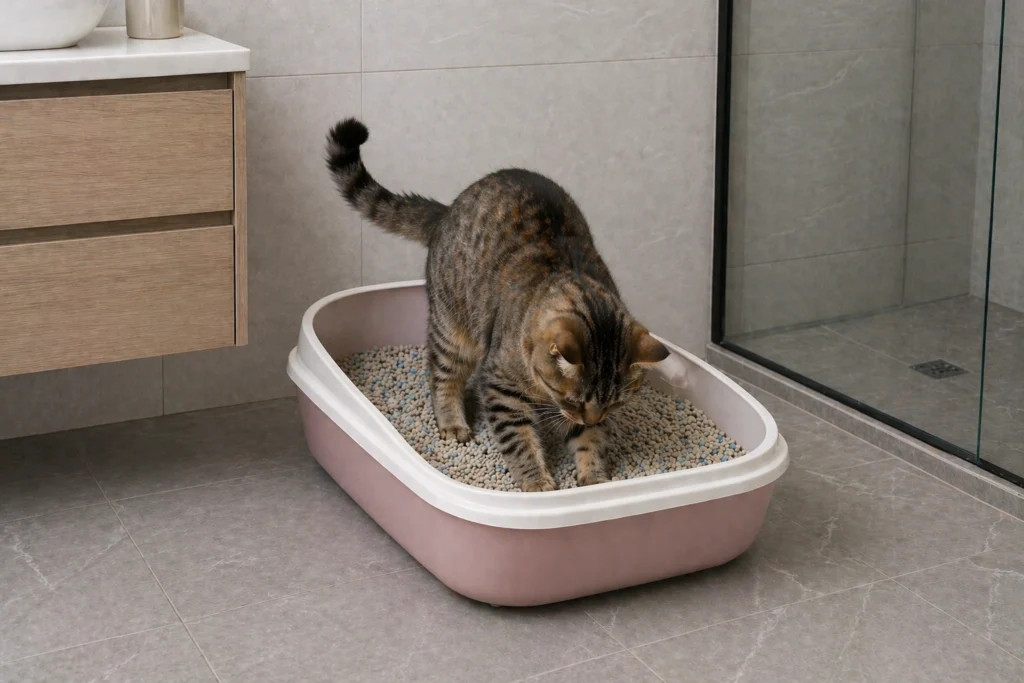
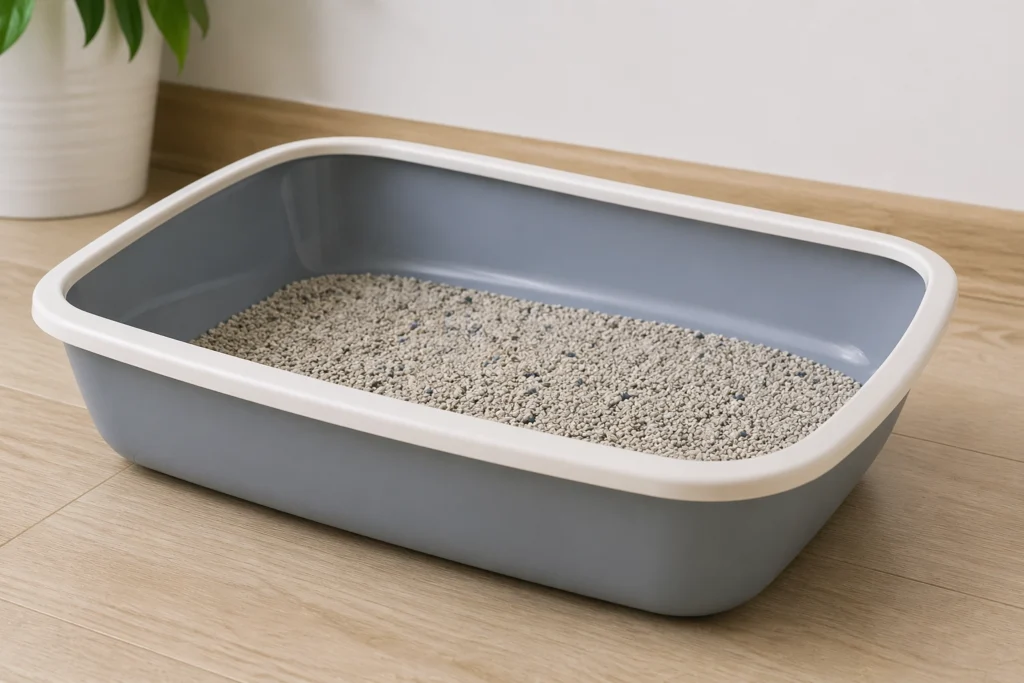
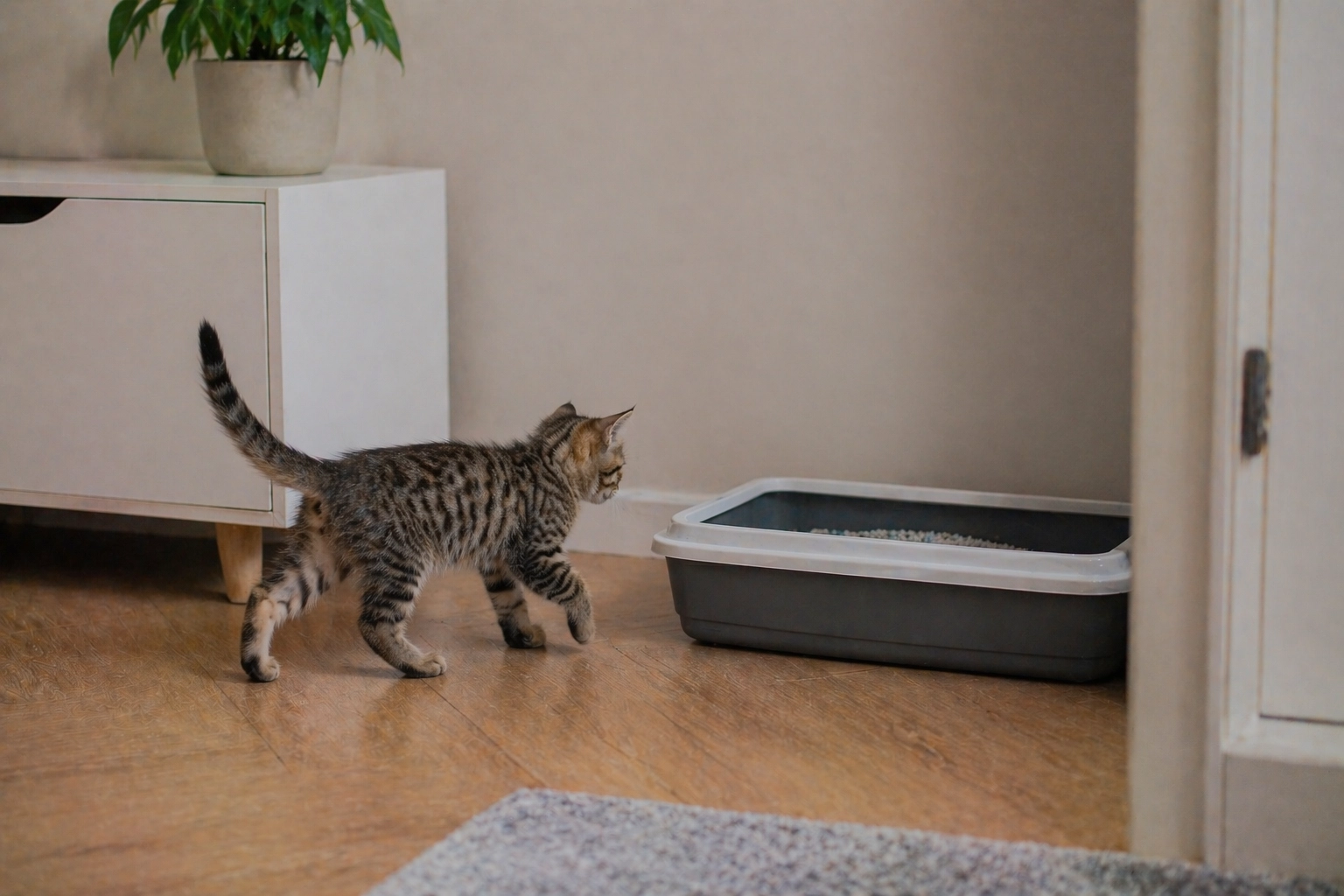
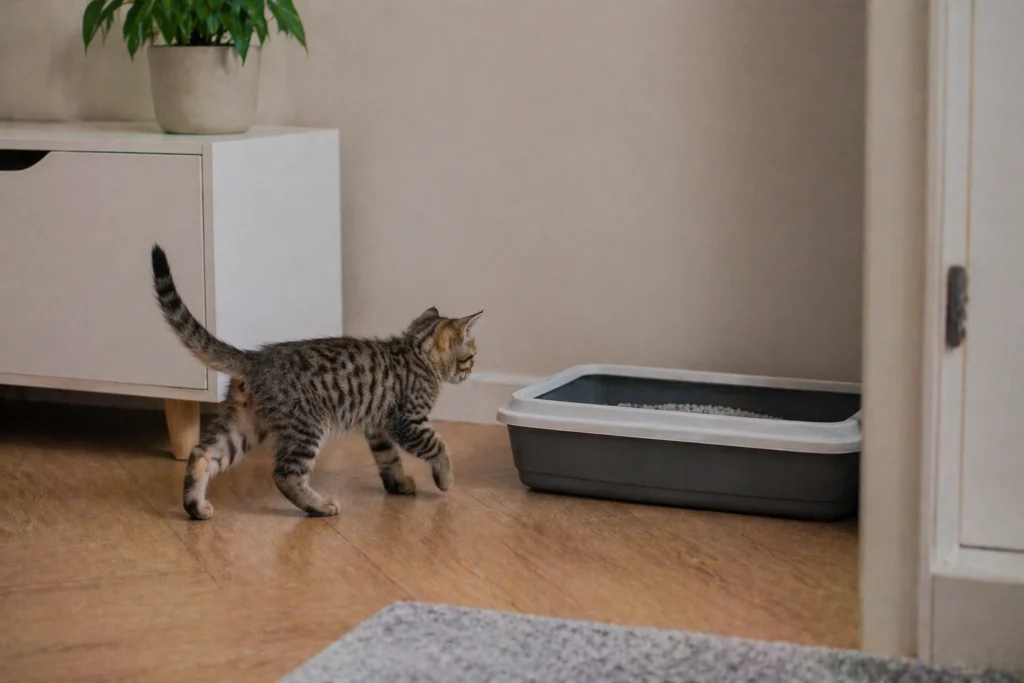
Classic open litter box
The most common and familiar option is a simple plastic tray with low or medium sides.
Pros:
affordable
easy to wash and scoop
Cons:
litter often gets kicked outside the box
odors may spread more easily
everything is visible
Despite these downsides, an open litter box is usually the best choice for kittens and senior cats.
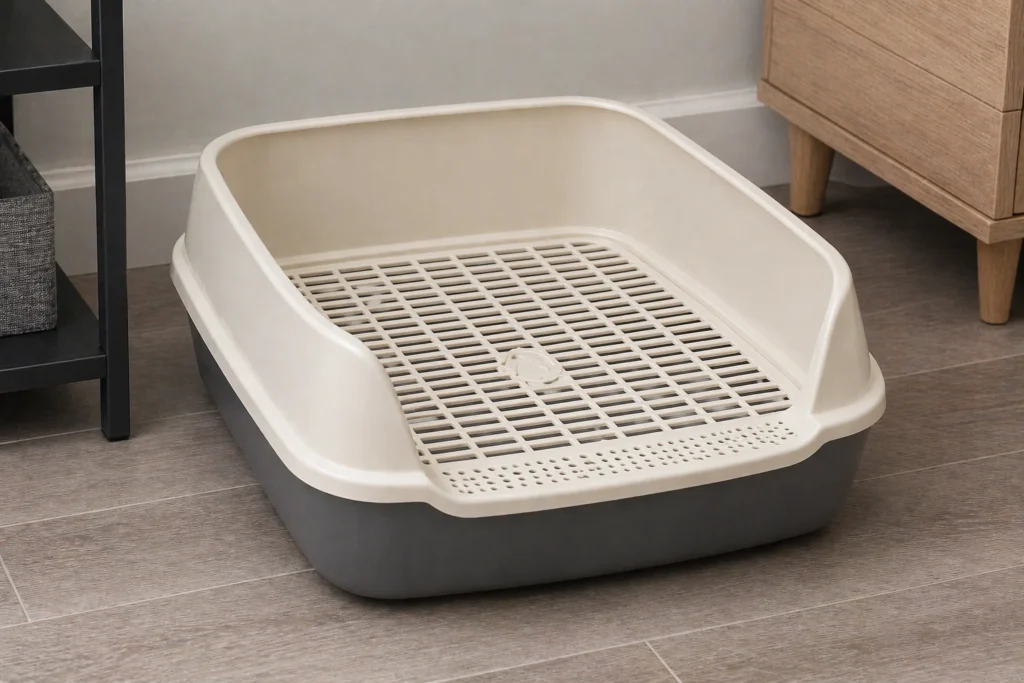
Litter box with grate
This is an open litter box with a plastic grid placed over the tray. Litter goes underneath the grate or may not be used at all.
Pros:
litter does not stick to paws as much
uses less litter, or none at all
the cat cannot eat the litter
Cons:
needs frequent cleaning
odor appears quickly
some cats miss the ability to dig
may take time to get used to
This option can work well for owners who are ready to clean the box several times a day to keep the area tidy. It is worth knowing that grate-style boxes can be harder for some cats to accept.
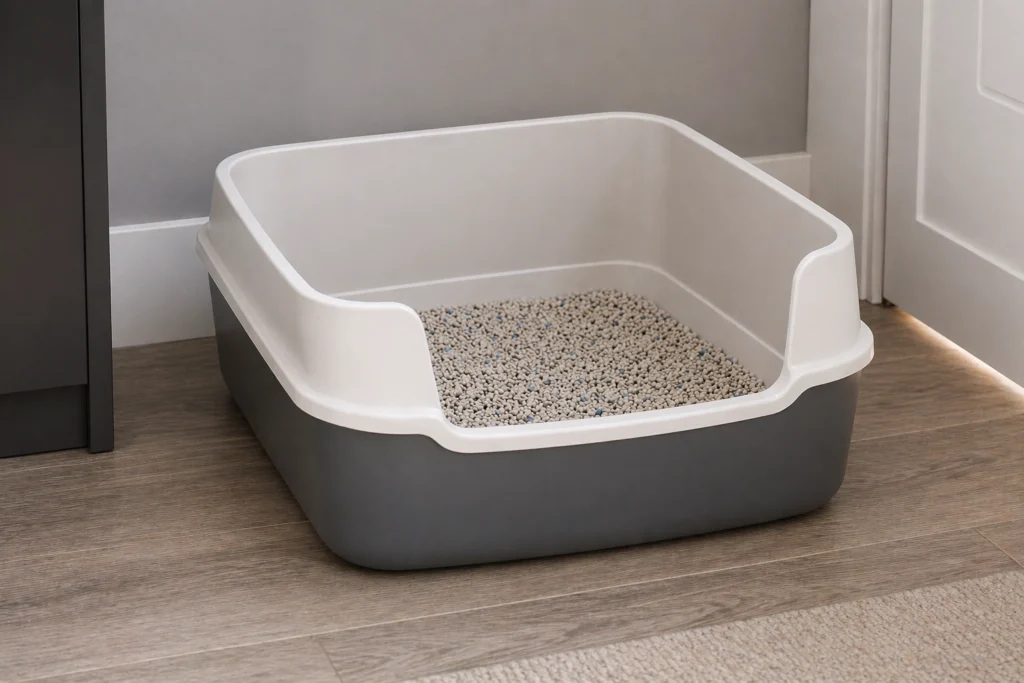
Litter box with high sides
High-sided boxes are ideal for cats that love digging energetically in their litter.
Pros:
much less mess around the box
more room for larger cats
Cons:
not ideal for kittens or senior cats, as getting in may be difficult
A great choice for active adult cats.
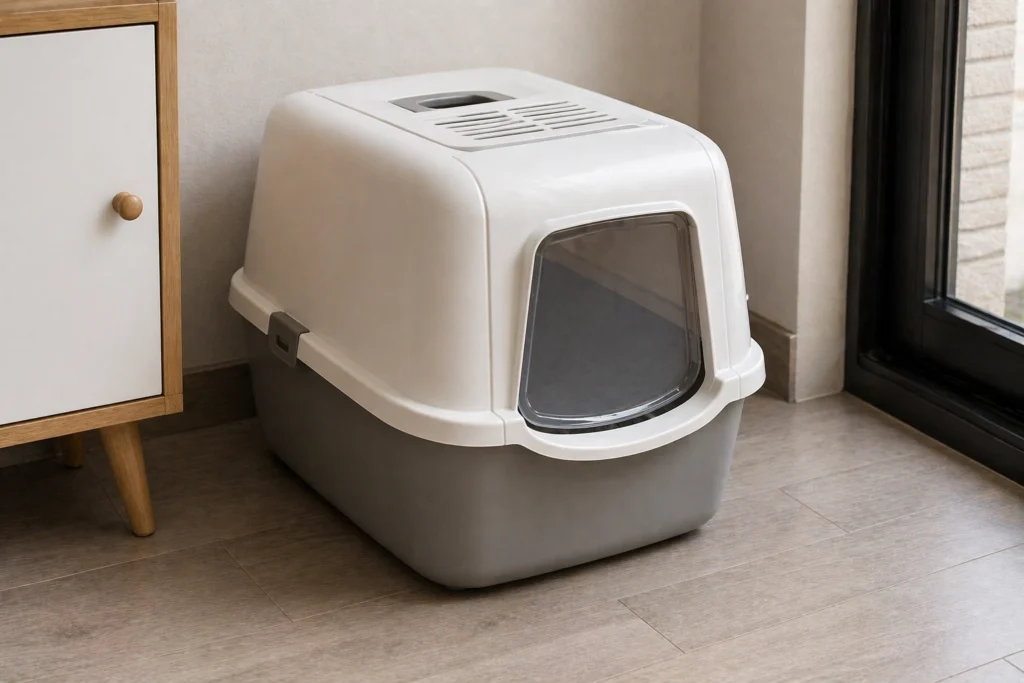
Covered litter box
Enclosed “house-style” models with a lid and an entrance on the side or front.
Pros:
less odor outside the box
litter stays inside more easily
more privacy for the cat
Cons:
takes up more space
still needs regular cleaning
not every cat likes enclosed spaces
A good option for shy cats and owners who value a tidy home.
Tip: The ideal height of a covered litter box is the distance from the litter surface to the tip of your cat’s ears while sitting, plus 5 cm (about 2 inches).
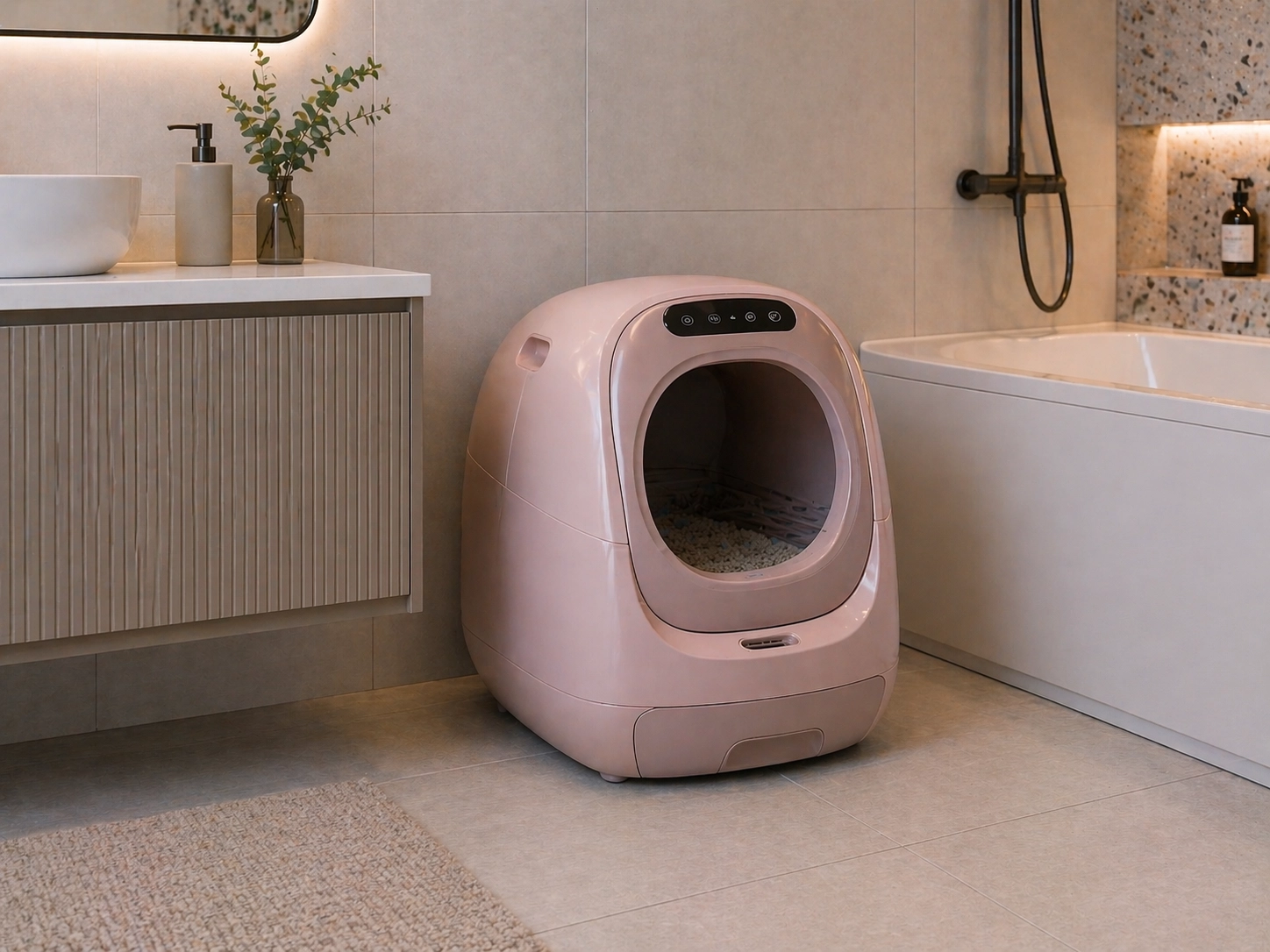
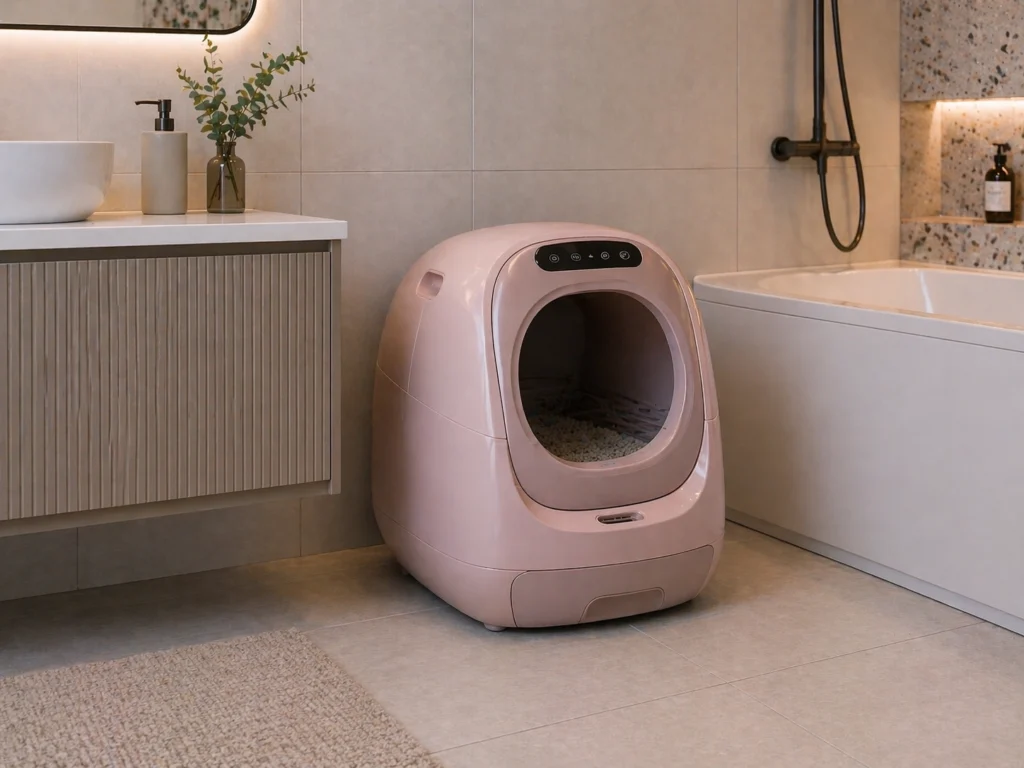
Self-cleaning litter box
An automatic model that removes waste after use.
Pros:
minimal manual cleaning
litter stays cleaner and fresher
some models include health tracking and notify owners how often the cat uses the box
Cons:
expensive
requires power
may scare some cats; poorly designed models can be unsafe
A convenient option for busy owners or frequent travelers, but not suitable for every cat. If you choose this type, reliable safety sensors are essential.
Useful accessories
Items that make litter box care easier:
Scoop. Choose one with slots large enough for clean litter to fall through, but small enough to hold clumps.
Litter mat. Helps catch litter from your cat’s paws and keeps the floor cleaner. If your cat likes chewing non-food items, this may not be the best choice.
Waste bags. Useful for quick and tidy disposal of used litter.
Litter storage container. Keeps extra litter nearby and protects it from moisture.
When choosing a litter box, do not focus on appearance alone. It should fit your cat’s size, feel comfortable and be placed in a calm location. If your cat avoids the box, the problem is usually not personality — it is often that the setup simply does not suit them.
Most kittens learn to use a litter box quickly when the setup is clear and the process isn’t rushed. Your main job is to choose the right box, pick a suitable litter and stay patient.
Choose the right litter box
Kittens do best with a litter box that has low sides so they can climb in easily. Place it in a quiet, low-traffic area away from noise and drafts where your kitten can feel safe and have privacy.
If you live in a large home, it’s a good idea to set up at least two litter boxes in different areas, especially at first.
Pick the right litter
To help your kitten learn faster, choose an unscented litter. Good options include wood pellets, corn-based litter and clumping clay litter.
Silica crystal litter controls odor well, but some kittens may try to chew or swallow it, which can be dangerous.
Later on, you can test different types to see what your cat prefers.
Gentle reminders work best
Place your kitten in the litter box after naps, meals or active playtime. These are the moments when they’re most likely to need the litter box.
Do not force, hold down or scare your kitten. Calmly showing the right spot several times is usually enough.
Reinforce the habit
If your kitten uses the litter box, praise them with affection, a gentle voice or a small treat.
Accidents happen
Mistakes during the first few days are a normal part of settling in.
What to do:
clean the area thoroughly to remove odor
check whether the litter box location is convenient
move the box gradually if a better spot is needed
try a different type of litter
use a litter training attractant spray
remind your kitten more often after naps and meals
Never rub your kitten’s nose in the mess, yell or punish them.
Health issues
If your kitten regularly avoids the litter box, cries when trying to go, has constipation, diarrhea or seems tired and unwell, the cause may be medical rather than behavioral. If you notice any of these signs, contact a trusted veterinarian as soon as possible.
Can I litter train an adult cat?
Yes, but it usually takes longer than with a kitten because adult cats may already have habits and past experiences.
The method is the same: choose a comfortable litter box, place it in a quiet spot and find a litter your cat likes. Stay calm, be consistent and avoid punishment. If the cat used to go outdoors or in another place, full adjustment may take several weeks.
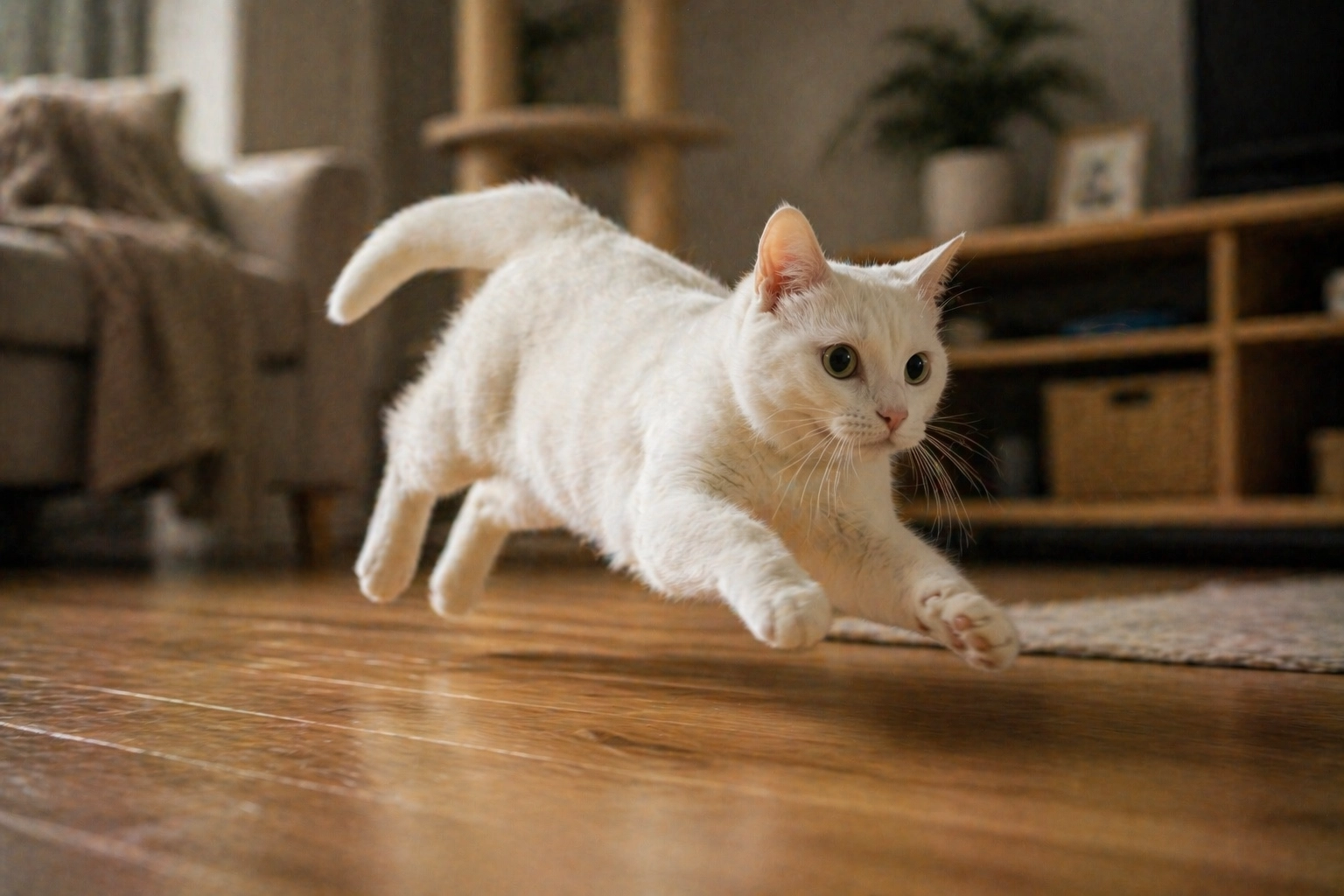
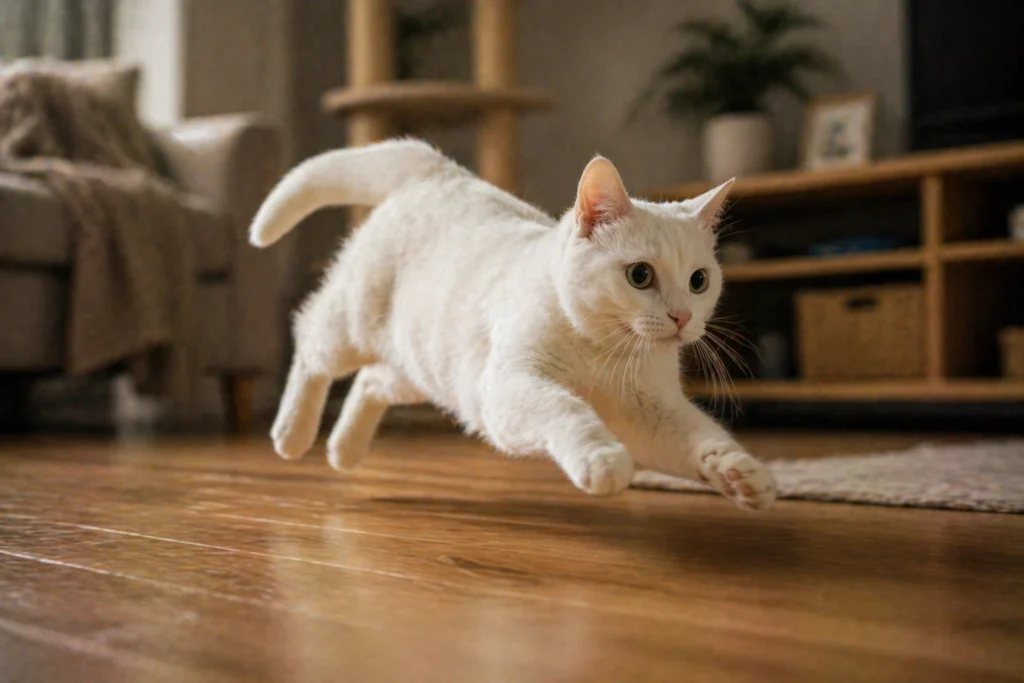
Just a second ago, your cat was peacefully lying on the couch. Then suddenly — a dramatic launch, a sharp turn, a leap through the hallway and a full-speed sprint across the house. That is the famous zoomies: a sudden burst of energy familiar to almost every cat owner.
It may look strange, sound chaotic and sometimes feel annoying, but in most cases it is completely normal cat behavior.
Why cats suddenly start running
1. Built-up energy
Cats sleep a lot, but that does not mean they do not need exercise. After a long rest, the body may need to release energy, and that can look like a wild race through the home.
2. Hunting instincts
Even if the only prey in the house is slippers and a blanket, your cat’s instincts are still there. Hiding, pouncing and chasing are part of being a little predator.
3. Natural rhythms
Many cats are especially active early in the morning and in the evening. That is why nighttime zoomies are a classic part of life with a cat.
4. After using the litter box
Some cats do a victory sprint after going to the bathroom. There are several theories about this. One suggests that the feeling of relief may stimulate nerves linked to a pleasant sensation.
What owners can do
There is usually no reason to worry if your cat:
runs with excitement, not fear
relaxes normally afterward
eats well
plays normally
moves freely without signs of pain
Here are a few ways to help redirect that energy:
1. Play with your cat
10–15 minutes of active play during the day and in the evening often reduces nighttime activity.
2. Add more enrichment
Tunnels, scratching posts, climbing shelves and toy mice can help your cat burn energy at times other than 3 a.m.
3. Do not punish the behavior
Cats do not run out of spite. This is their natural (and not bad) behavior.
4. Adjust the routine
Sometimes it helps to schedule active play in the evening, followed by a meal. This matches a natural pattern: hunt, eat, rest.
When to take a closer look
If the running comes with fear, aggression, painful meowing, itching, limping or other concerning symptoms, it is a good idea to speak with a veterinarian.
Nighttime zoomies are not a problem or a personality flaw. Your cat is simply following natural instincts and practicing life as a mighty hunter. Yes, sometimes loudly and while sending things flying – but that is such a cat thing to do!
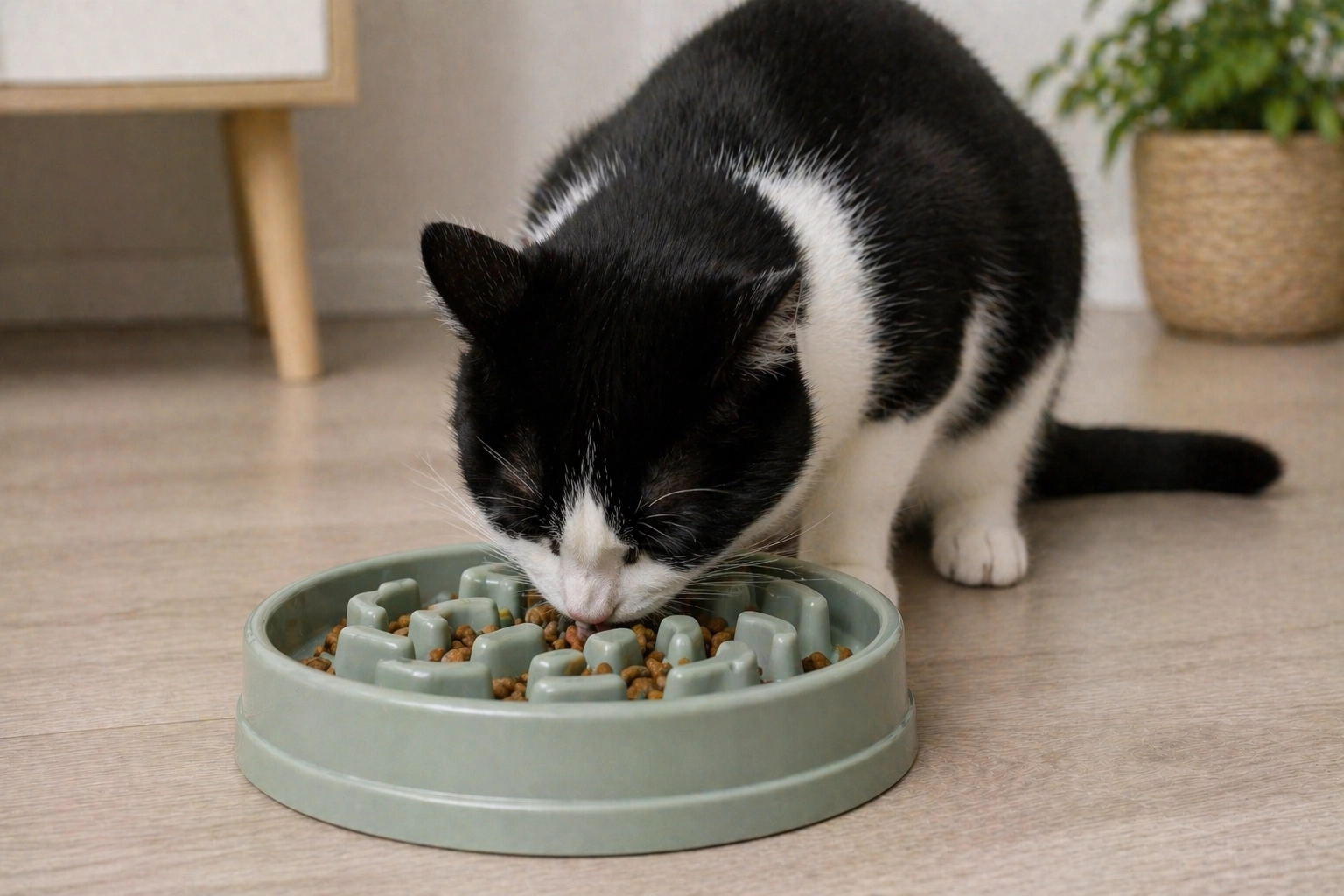
If your cat eats too quickly, it is not just a funny or harmless habit. Eating too fast can cause discomfort and may leave your cat feeling hungry all the time. The good news is that in many cases, simple changes to feeding habits can help.
Why it can be a problem
Eating too fast may lead to:
regurgitation right after meals
nausea
hiccups
gas and stomach discomfort
overeating
weight gain
If this happens often, it is worth looking for the cause.
Why cats eat too fast
There can be many reasons:
Competition around food. If there are several pets in the home, your cat may rush to eat before someone else gets their food.
Infrequent meals. If there are long gaps between meals, your cat may become overly eager at feeding time.
Stress or anxiety. Moving, noise, new pets or changes at home can affect how a cat behaves around food.
Past experiences. Cats adopted from shelters or rescued from the street often keep the habit of eating quickly whenever food is available.
It tastes too good. A favorite food, especially wet food, may disappear in seconds.
What you can do
The easiest solution is to make it harder for your cat to eat so quickly as before:
Use a slow feeder. A slow-feeder bowl or puzzle feeder encourages smaller bites and slower eating.
Split meals into smaller portions. Many cats do better with smaller meals more often. You can also place small portions of dry food in different spots around the home.
Feed pets separately. Removing competition can reduce the urge to rush.
Keep a routine. Regular mealtimes often help reduce anxiety.
When to see a vet
If your cat is constantly hungry, losing weight, regurgitates after every meal or suddenly changes behavior, it is best to speak with a veterinarian. Sometimes fast eating can be linked to an underlying health issue.
Taking good care of a cat involves more than just a litter box, food bowls and toys. There are a few everyday essentials that help support your cat’s health, comfort and overall well-being. Here are five useful items worth having at home.
1. Brush or grooming comb
Regular brushing helps remove loose fur, reduce mats and noticeably cut down on shedding around the home. Despite the common myth, grooming is important for all cats with fur, not only long-haired breeds.
It can also become a great bonding moment that helps build trust between you and your cat.
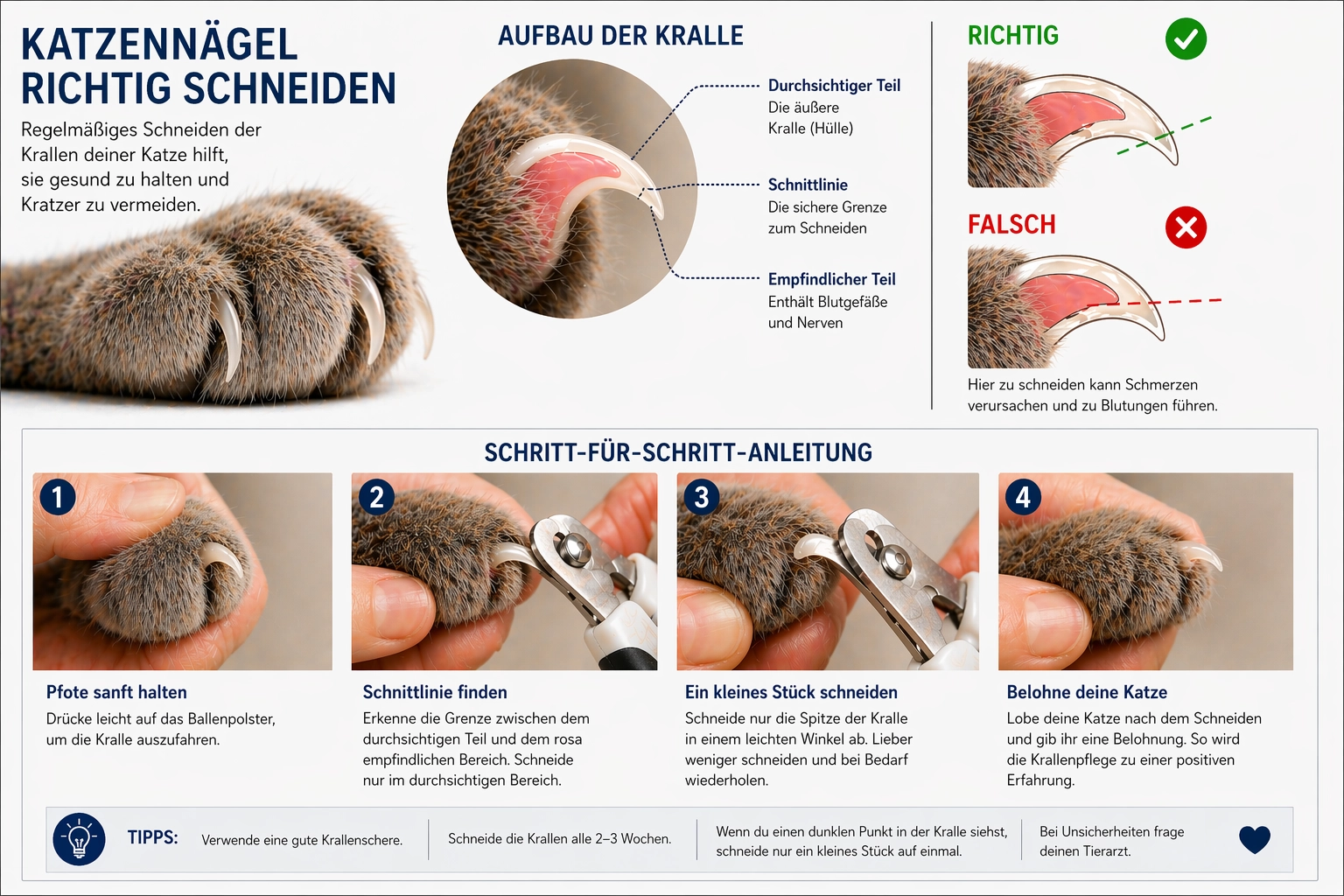
2. Nail clippers
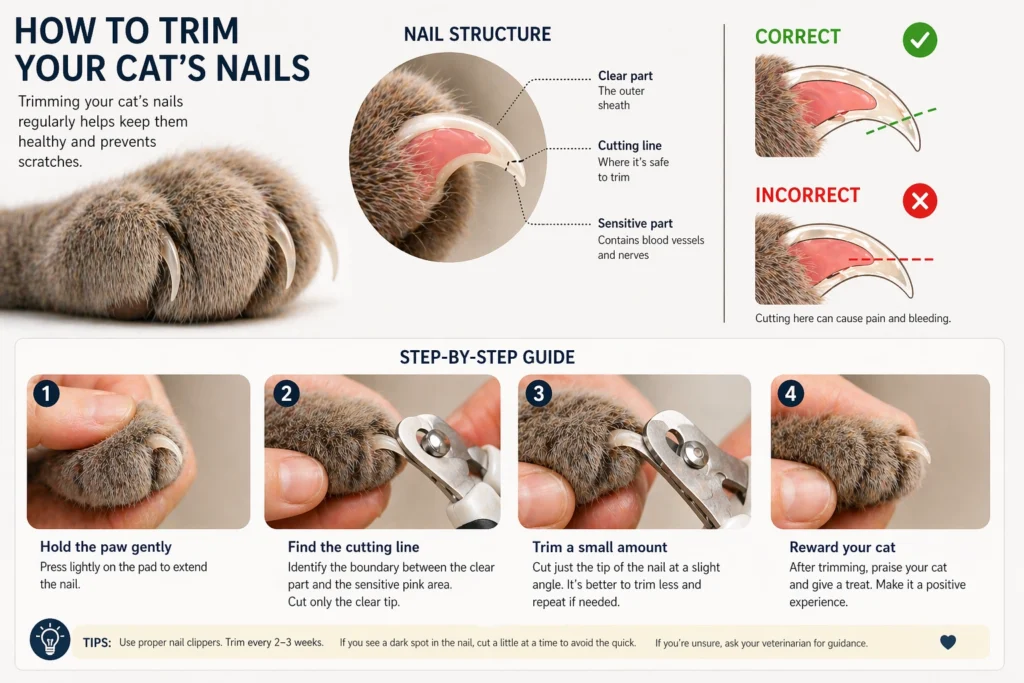
If your cat’s claws do not wear down naturally, they may need occasional trimming. For this, it is best to use nail clippers made specifically for pets, as they are safer and easier to handle than regular scissors.
Important: Only trim the clear tip of the claw and avoid the sensitive inner part. If your cat gets nervous, it is perfectly fine to split the task into several short sessions.
3. Parasite protection
Even indoor cats need protection from fleas, ticks and internal parasites. There are different options available, including spot-on treatments, tablets and pastes. The right product should always be chosen according to your cat’s age and weight.
4. Wipes, soft pads and cotton swabs
Useful items for small daily care tasks: wiping the eyes, removing dirt from the coat or gently cleaning the chin and paws after coming home.
5. Toothbrush and toothpaste for cats
Dental care is often overlooked. Regular oral hygiene helps reduce the risk of plaque, dental disease and gum problems. Cats should only use toothbrushes and toothpaste designed specifically for pets.
To complete your basic setup, keep a simple pet first-aid kit at home and save the contact details of a trusted veterinarian.
Leash training is the foundation of calm, comfortable walks. Some dogs accept a leash right away, while others need more time and support from their owner. A calm, step-by-step approach helps reduce stress and build the skill more quickly.
When to start
It is best to introduce the leash early, once your puppy has settled in at home and is ready to explore new objects and routines. Adult dogs can learn too — they may just need a little more time and patience.
What to prepare first
A few basics will make training easier:
a lightweight leash of the right length
a comfortable harness or collar that fits properly
treats for rewards
If your dog feels uncomfortable or scared, training becomes much harder.
How to get your dog used to a collar or harness
Step 1. Let them investigate
Show your dog the collar or harness and let them sniff it. Do not force it on right away. Reward curiosity with praise or treats.
Step 2. Put it on indoors
Put the collar or harness on for one or two minutes in a calm setting.
During that time, try to:
start a game
offer treats
keep your dog busy with an easy activity
Take it off before your dog becomes stressed.
Step 3. Increase the time gradually
Add a little more wearing time each day: a few minutes at first, then longer sessions.
Step 4. Check the fit
The collar or harness should not hang loosely or feel tight. You should be able to fit two fingers between the gear and your dog’s neck or body.
If your dog scratches or tries to remove it
This is normal at first. The sensation is new and unfamiliar. Gently redirect your dog’s attention with play, movement or treats.
When to introduce the leash
Once your dog can wear the collar or harness calmly indoors without paying attention to it, you can clip on the leash and move to the next stage.
How to leash train your dog
Step 1. Introduce the leash
Just like with the collar, do not rush. Place the leash nearby and let your dog sniff it. Praise any interest with your voice and treats. Repeat over several days.
Step 2. Clip it for a short time indoors
When the leash no longer causes concern, clip it on briefly. Let your dog stand, move around or explore freely, but do not pull them along.
Do not wait until your dog becomes nervous. It is better to build time gradually while distracting with play or treats.
Step 3. Teach your dog to move with you
Take a few steps around the house. When your dog walks beside you or comes to you willingly, praise and reward right away. This helps your dog learn that staying close to you pays off.
Step 4. Respond to leash tension
If your dog pulls forward, do not follow.
Instead:
stop moving
wait for the leash to loosen
call your dog back to you
continue only when the leash is loose
This teaches your dog that pulling does not move the walk forward.
Step 5. Practice outside
Start in quiet places: a yard, a calm street or an empty park. Then gradually move to more everyday environments.
If you begin somewhere noisy or busy, it will be much harder for your dog to focus.
Common problems and fixes
Your dog freezes in place
Do not pull. Crouch down, call them, offer a treat or take a step back
Bites the leash
Redirect to a toy or movement and reward calm behavior
Pulls constantly
Reduce distractions and change direction more often
The dog is afraid of outside
Keep walks short and let your dog get used to the environment gradually
How long to train
Five to ten minutes every day is better than one long session once a week. Consistency brings faster and more reliable results.
What not to do
do not jerk the leash
do not shout
do not punish fear
do not overload your dog with training
do not expect perfect behavior in one day
If you move gradually and avoid overwhelming your dog, the skill will develop much more easily. In time, the leash will stop being a source of stress and become part of relaxed, enjoyable walks.
Not all foods that are safe for humans are safe for dogs. Some can cause mild digestive upset, while others may lead to serious poisoning and require urgent veterinary care.
Foods dogs should never have (even “just a little”)
For a small dog, even a small amount can be a significant dose. Sensitivity also varies: something that caused no problems once may trigger a serious reaction another time.
1. Chocolate and cocoa products
Contain theobromine and caffeine, which are highly toxic to dogs.
2. Grapes and raisins
Can cause acute kidney failure, even in small amounts.
3. Onions and garlic (all forms)
Contain organosulfur compounds that damage red blood cells and can lead to anemia.
4. Xylitol
A sweetener found in gum, candy, some baked goods and even certain toothpastes. It can cause a dangerous drop in blood sugar and lead to liver failure.
5. Alcohol
Dangerous even in very small amounts and can be present in unexpected foods. There is a risk of severe poisoning and even a fatal outcome.
6. Coffee, energy drinks and tea
Due to caffeine, these can overstimulate the nervous system and cause a rapid heart rate, tremors and other serious symptoms.
7. Cooked bones
Especially poultry bones. They can splinter and cause serious injury to the digestive tract.
8. Fatty, fried or very salty foods
May lead to vomiting, diarrhea and even pancreatitis.
9. Raw yeast dough
Expands in the stomach and can cause dangerous bloating. As it ferments, it also produces alcohol, which adds another layer of risk (see p. 5).
What to do if your dog eats something dangerous
Do not wait for symptoms. Some types of poisoning take time to develop, even if your dog seems fine at first.
What to do right away
remove any remaining food
note what was eaten, how much and when
keep the product packaging if possible
contact a veterinary clinic as soon as possible
follow professional advice
Do not try to induce vomiting unless a veterinarian specifically tells you to do so. In some cases, it can make things worse.
The general rule is simple: if you are not sure, do not feed it. Stick to dog-safe foods and treats made specifically for dogs.