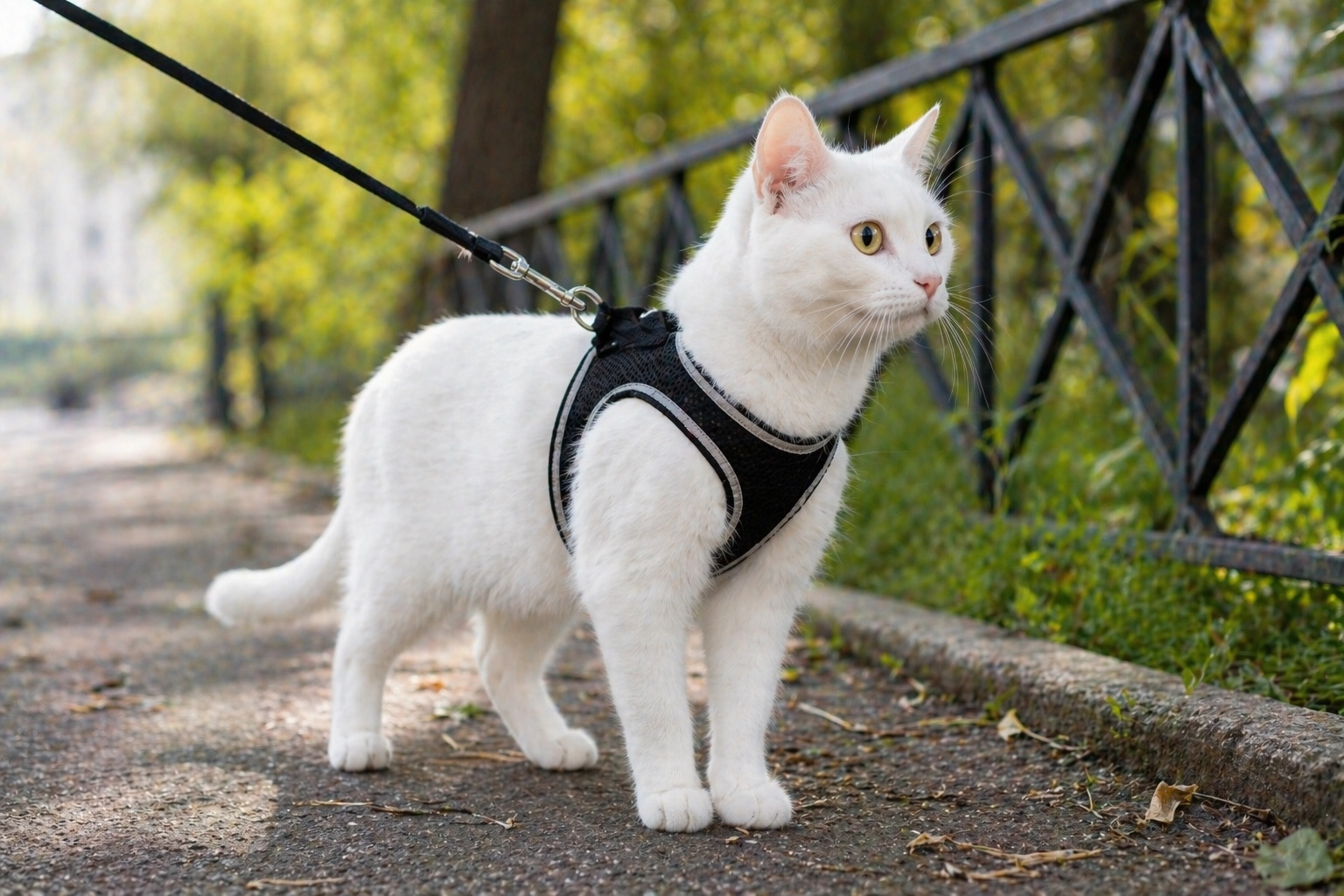
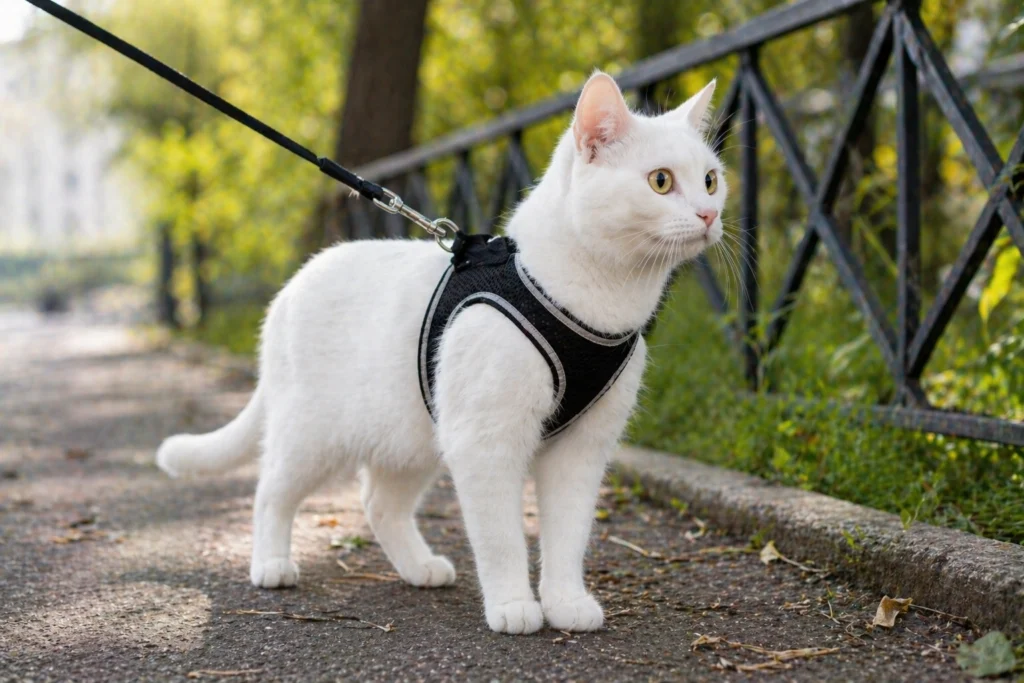
Walks are not right for every cat, but for some pets they can be a great way to explore, stay active and enjoy new experiences. The key is not to take your cat outside on impulse.
Do all cats need walks?
No. Many indoor cats live perfectly happy lives with playtime, scratching posts, climbing shelves and attention from their owners. Walks are not an essential part of cat care — they are simply an extra option.
They are usually best suited to curious and confident cats.
Walks are not recommended for:
- kittens under six months old
- unvaccinated cats
- cats recovering from illness or surgery
- highly anxious cats
- senior cats that clearly feel uncomfortable outdoors
Why free roaming is risky
We strongly advise against letting an indoor cat roam outside alone without supervision. Free roaming comes with a high risk of injury, poisoning, fights with other animals, infections, traffic accidents and getting lost. Even a quiet yard cannot guarantee safety.
If your cat is interested in going outside, the safer option is a supervised walk with a harness.
What to do before the first walk
1. Vaccinations and parasite prevention
Before going outside, your cat should be up to date on core vaccinations. Regular protection against fleas, ticks and other parasites is also important.
Even a short walk means contact with the outside environment, so prevention matters.
2. Choose the right harness
For walks, use a harness rather than a collar. A harness distributes pressure more safely and reduces the risk of injury.
It should fit snugly without being too tight.
3. Practice at home first
Let your cat get used to the harness indoors first. Allow time to sniff it, inspect it and wear it for a few minutes at a time.
Once your cat is comfortable, gradually introduce the leash.
Pick quiet places
Choose calm areas without dogs, cars or crowds. A quiet courtyard, enclosed space or peaceful park with trees can work well.
When not to go outside
Skip walks in these situations:
- bad weather: cold, heat, rain or strong wind
- noisy times or crowded places
- if your cat feels nervous or unwell
Cold weather can be especially risky for short-haired cats, kittens and cats without a thick undercoat.
What a walk looks like
You will not walk a cat the same way you walk a dog. Cats prefer to set their own pace. They stop, sniff, observe and decide where to go next.
Your role is to follow along and keep them safe.
Depending on your cat’s mood, a walk may last five minutes or thirty. Both are completely normal.
Important things to remember
- do not pull the leash to force your cat in another direction
- do not approach unfamiliar animals
- do not remove the harness outdoors
- watch your cat’s mood and physical condition carefully
When it may be better to wait
It is best to pause outdoor walks if your cat becomes very frightened, hides, stays stressed or needs a long time to recover afterward. In that case, home life is clearly the better option.
You can walk a cat, but only if your cat genuinely enjoys it. The best walk is one that leaves your pet calm, comfortable and content afterward.