

Category: Cat Care

  • How to help a kitten you found outside

    How to help a kitten you found outside

    Found a kitten outside and decided to bring it home? The first few hours can feel overwhelming. How do you get the kitten home safely, what should you feed it, where should it stay and what comes next? Here is a simple guide to help you through the first days together.

    Make sure the kitten really needs help

    A kitten alone does not always mean an abandoned kitten. The mother cat may be nearby. One important note: very young kittens that are still blind need a nursing mother or bottle-feeding with kitten formula on a strict schedule. That is a separate topic. This guide is for kittens that can already eat on their own — usually from around three weeks old, ideally four weeks or older.

    If the kitten is near a road, looks weak, dirty, underweight or seems to have been alone for a long time, it is best to step in quickly.

    Bring the kitten home safely

    Use a pet carrier, a box with air holes or a container lined with a soft towel or blanket. The kitten should not be able to jump out and should feel secure during the trip.

    Do not carry the kitten in your hands in the car or outside. If possible, use a towel, blanket, gloves or a carrier first, and avoid unnecessary hand contact until the first veterinary check-up.

    First steps at home

    1. A quiet space of their own

    Set up a small calm area: a separate room, a quiet corner or a large crate/playpen. During the first few days, many kittens adjust more easily in a smaller safe space than in the whole home right away.

    2. Warmth and rest

    Even an older kitten may arrive scared and cold after life outside. Give them a chance to hide, warm up and catch their breath.

    3. Water and food

    Provide fresh water and offer age-appropriate kitten food. Start with small portions. There is no need to give too much food at once out of pity.

    Add a litter box

    Place an easy-to-access litter box near the resting area, but not right next to the food and water bowls.

    You may also like our guide A kitten at home: what to buy and how to prepare, where we cover the essentials for a smooth start.

    What to do in the next few days

    1. Book a vet visit

    A veterinary check-up should be one of your first priorities. The kitten should be assessed for overall condition, eyes, skin, abdomen, parasites, approximate age and general health.

    2. Start parasite treatment

    Any treatment should be chosen based on the kitten’s age and weight.

    3. Plan vaccinations

    Your veterinarian will tell you when it is the right time to begin vaccinations.

    Keep pets separated at first

    If you already have a cat or dog, do not introduce them immediately. Keep the new kitten in a separate room for the first two weeks.

    Help the kitten settle in

    • keep noise to a minimum
    • do not force contact
    • allow time to explore and feel safe
    • play gently and in short sessions
    • keep a calm daily routine
    • speak in a soft voice

    Some kittens climb into your arms right away. Others need a few days.

    Essentials to buy first

    • food and water bowls
    • kitten food
    • litter box and litter
    • a bed or blanket
    • a toy
    • a carrier

    If you decided to take a found kitten home, the most important things in the first days are safety, calm surroundings, basic care and a veterinary check-up. Do not worry if everything is not perfect right away. For a kitten like this, even simple care, safety and a peaceful home can already change life for the better.
  • How to walk a cat safely

    How to walk a cat safely

    Walks are not right for every cat, but for some pets they can be a great way to explore, stay active and enjoy new experiences. The key is not to take your cat outside on impulse.

    Do all cats need walks?

    No. Many indoor cats live perfectly happy lives with playtime, scratching posts, climbing shelves and attention from their owners. Walks are not an essential part of cat care — they are simply an extra option.

    They are usually best suited to curious and confident cats.

    Walks are not recommended for:

    • kittens under six months old
    • unvaccinated cats
    • cats recovering from illness or surgery
    • highly anxious cats
    • senior cats that clearly feel uncomfortable outdoors

    Why free roaming is risky

    We strongly advise against letting an indoor cat roam outside alone without supervision. Free roaming comes with a high risk of injury, poisoning, fights with other animals, infections, traffic accidents and getting lost. Even a quiet yard cannot guarantee safety.

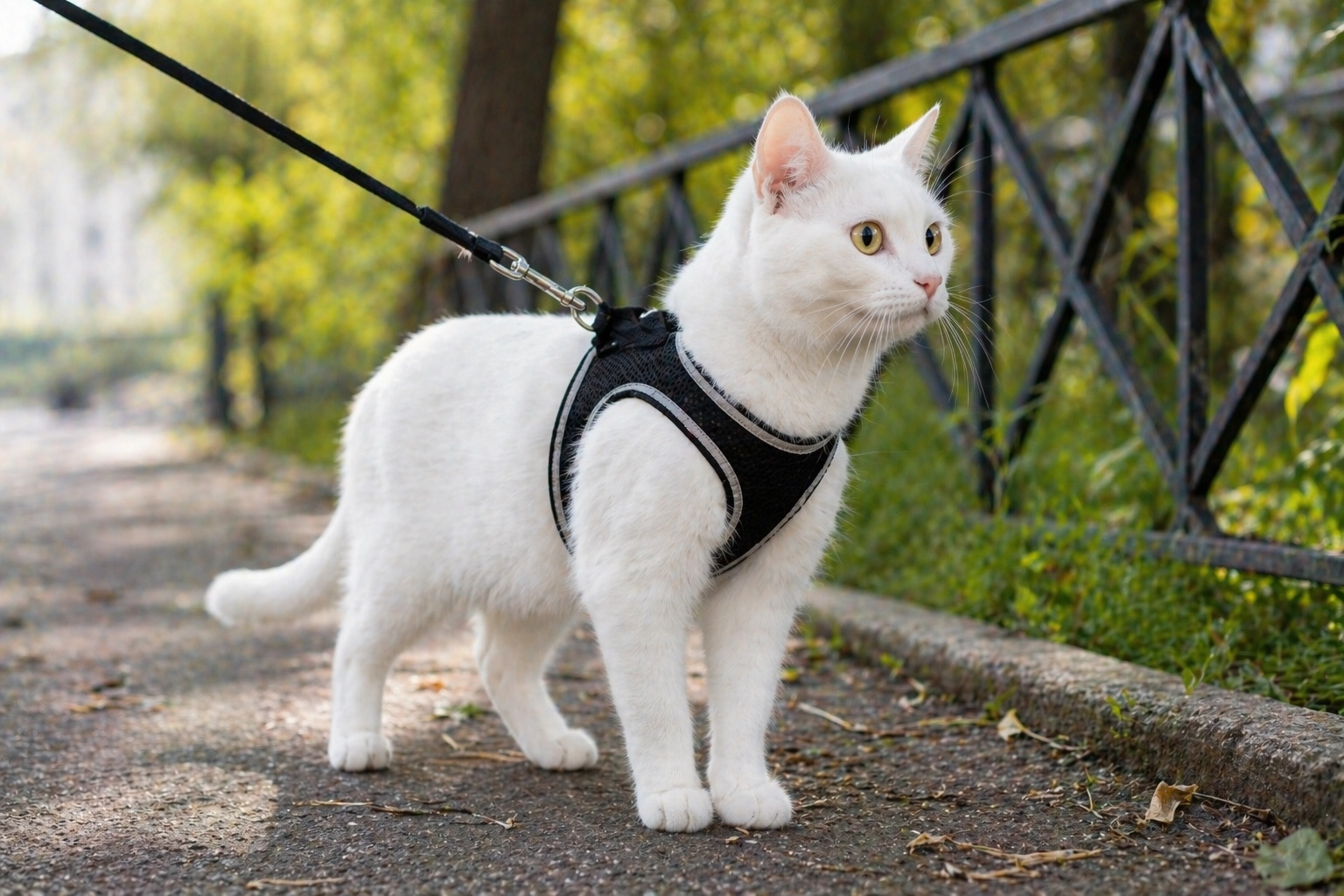
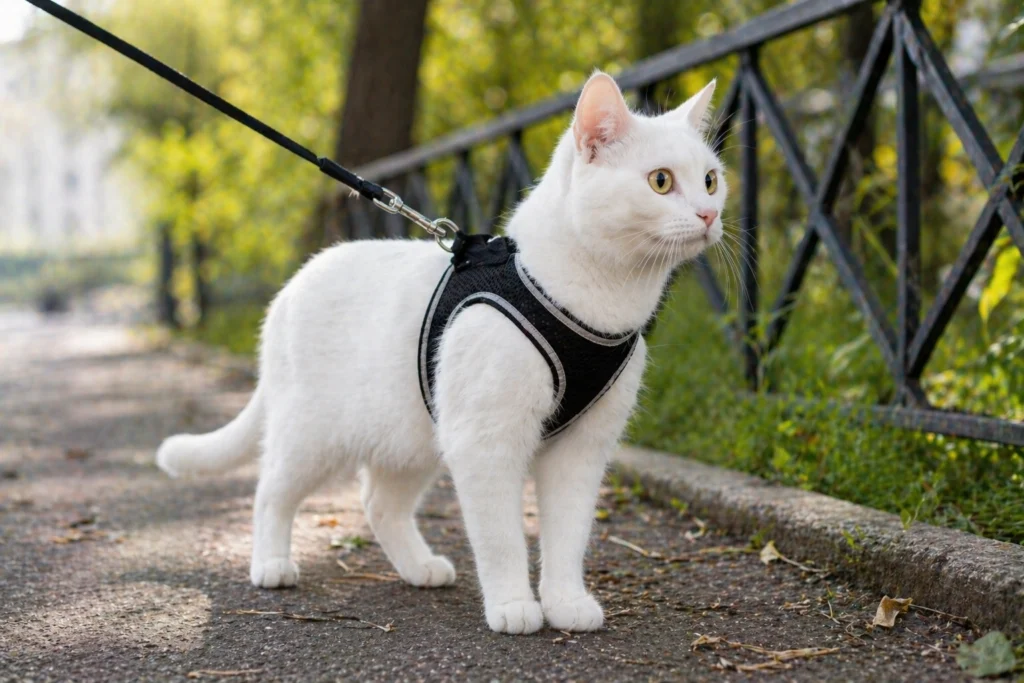
    If your cat is interested in going outside, the safer option is a supervised walk with a harness.

    What to do before the first walk

    1. Vaccinations and parasite prevention

    Before going outside, your cat should be up to date on core vaccinations. Regular protection against fleas, ticks and other parasites is also important.

    Even a short walk means contact with the outside environment, so prevention matters.

    2. Choose the right harness

    For walks, use a harness rather than a collar. A harness distributes pressure more safely and reduces the risk of injury.

    It should fit snugly without being too tight.

    3. Practice at home first

    Let your cat get used to the harness indoors first. Allow time to sniff it, inspect it and wear it for a few minutes at a time.

    Once your cat is comfortable, gradually introduce the leash.

    Pick quiet places

    Choose calm areas without dogs, cars or crowds. A quiet courtyard, enclosed space or peaceful park with trees can work well.

    When not to go outside

    Skip walks in these situations:

    • bad weather: cold, heat, rain or strong wind
    • noisy times or crowded places
    • if your cat feels nervous or unwell

    Cold weather can be especially risky for short-haired cats, kittens and cats without a thick undercoat.

    What a walk looks like

    You will not walk a cat the same way you walk a dog. Cats prefer to set their own pace. They stop, sniff, observe and decide where to go next.

    Your role is to follow along and keep them safe.

    Depending on your cat’s mood, a walk may last five minutes or thirty. Both are completely normal.

    Important things to remember

    • do not pull the leash to force your cat in another direction
    • do not approach unfamiliar animals
    • do not remove the harness outdoors
    • watch your cat’s mood and physical condition carefully

    When it may be better to wait

    It is best to pause outdoor walks if your cat becomes very frightened, hides, stays stressed or needs a long time to recover afterward. In that case, home life is clearly the better option.

    You can walk a cat, but only if your cat genuinely enjoys it. The best walk is one that leaves your pet calm, comfortable and content afterward.

  • How to choose the right bowls for your cat

    How to choose the right bowls for your cat

    A bowl may seem like a simple purchase, but it can affect your cat’s daily comfort and sometimes even their willingness to eat or drink. In this guide, we look at what kind of bowls your whiskered companion really needs.

    How many bowls does a cat need?

    At minimum, two:

    • one for water
    • one for food

    If your cat eats both wet and dry food, it is best to have separate bowls for each type.

    What kind of bowl is best for a cat?

    • Ceramic. Heavy, stable, easy to clean and resistant to odors. One of the best choices for everyday use at home.
    • Stainless steel. Durable, hygienic and long-lasting. A great option for daily use.
    • Plastic. The lightest and most affordable option, but plastic bowls can scratch easily, absorb odors and wear out faster. Poor-quality plastic may even release unwanted substances into food or water.

    How to choose the right size

    The bowl should suit your cat’s size and feel comfortable to use every day. One that is too small will empty quickly, while one that is too large may take up unnecessary space.

    For most cats, medium-sized bowls work well and hold a single portion without overflowing. For water, a larger bowl is often more practical so fresh water stays available throughout the day.

    The most important rule is simple: your cat should be able to eat and drink comfortably without pressing their face against the sides or brushing their whiskers against the rim.

    How to care for your cat’s bowls

    • wash bowls daily
    • change the water every day
    • do not leave wet food sitting out for hours
    • check regularly for chips or damage and replace bowls when needed

    Where to place the bowls

    Choose a calm spot away from noise and busy walkways. It is often a good idea to place the water bowl separately from the food, as many cats prefer to drink this way. Food and water should also not be placed next to the litter box.