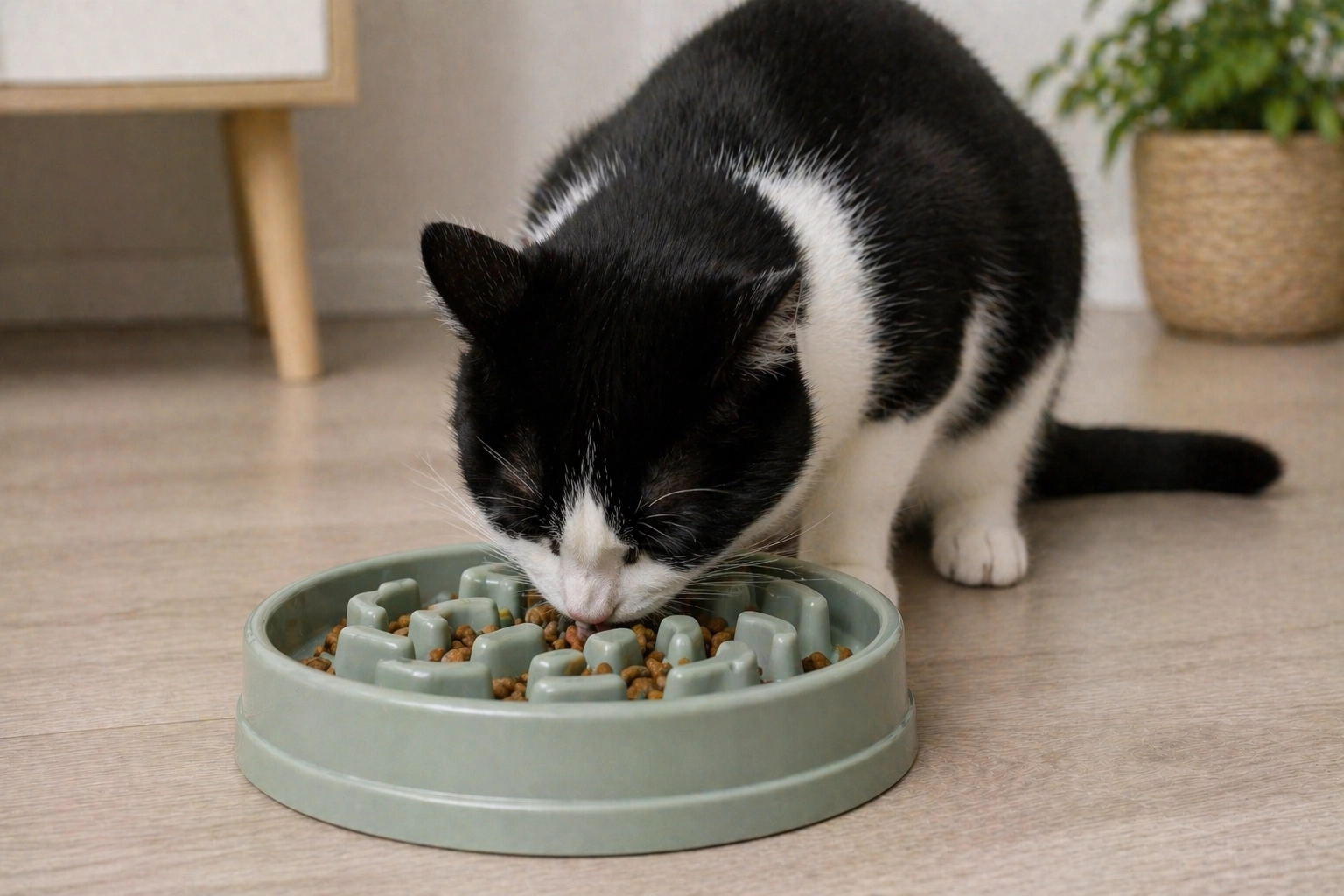
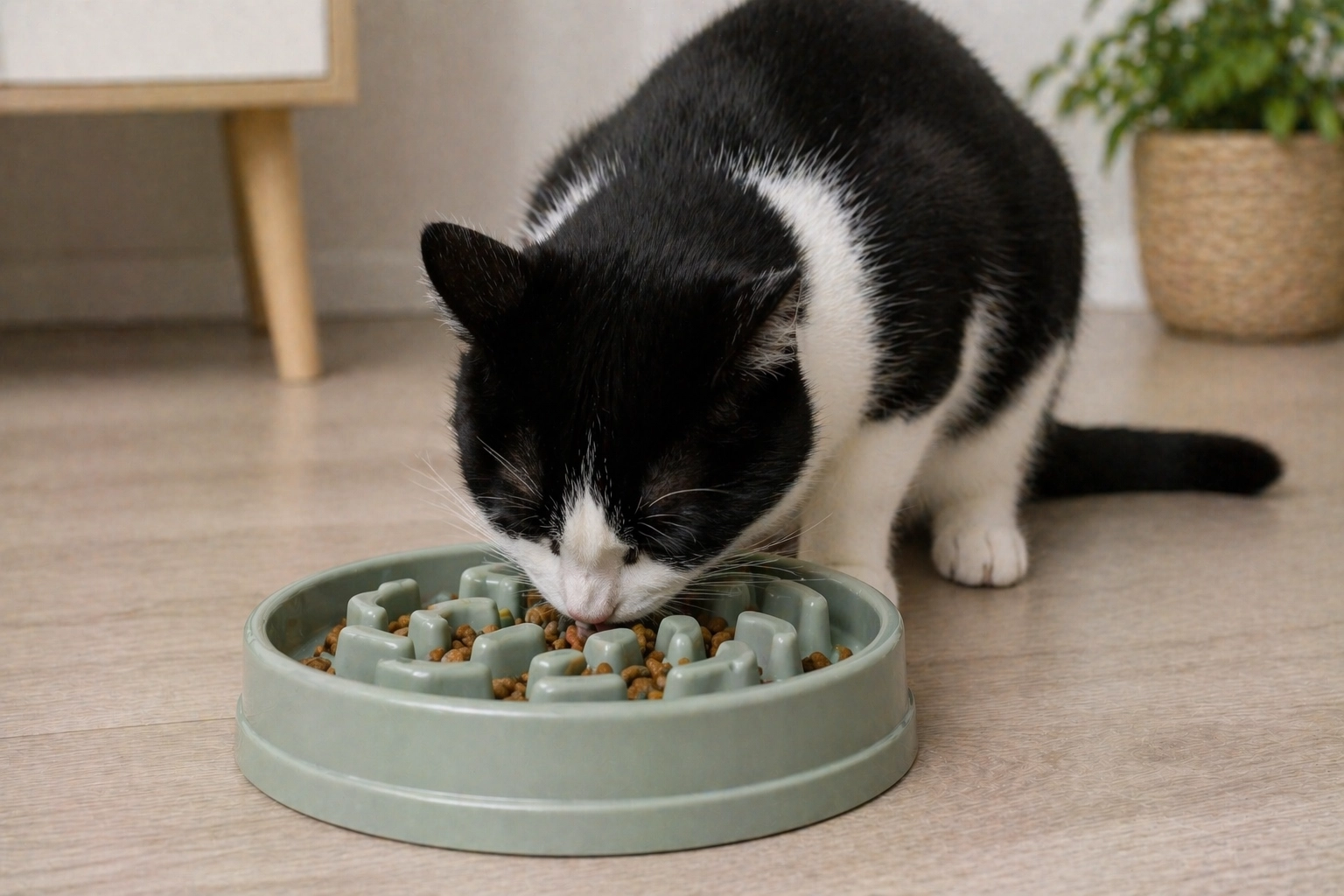
If your cat eats too quickly, it is not just a funny or harmless habit. Eating too fast can cause discomfort and may leave your cat feeling hungry all the time. The good news is that in many cases, simple changes to feeding habits can help.
Why it can be a problem
Eating too fast may lead to:
- regurgitation right after meals
- nausea
- hiccups
- gas and stomach discomfort
- overeating
- weight gain
If this happens often, it is worth looking for the cause.
Why cats eat too fast
There can be many reasons:
- Competition around food. If there are several pets in the home, your cat may rush to eat before someone else gets their food.
- Infrequent meals. If there are long gaps between meals, your cat may become overly eager at feeding time.
- Stress or anxiety. Moving, noise, new pets or changes at home can affect how a cat behaves around food.
- Past experiences. Cats adopted from shelters or rescued from the street often keep the habit of eating quickly whenever food is available.
- It tastes too good. A favorite food, especially wet food, may disappear in seconds.
What you can do
The easiest solution is to make it harder for your cat to eat so quickly as before:
- Use a slow feeder. A slow-feeder bowl or puzzle feeder encourages smaller bites and slower eating.
- Split meals into smaller portions. Many cats do better with smaller meals more often. You can also place small portions of dry food in different spots around the home.
- Feed pets separately. Removing competition can reduce the urge to rush.
- Keep a routine. Regular mealtimes often help reduce anxiety.
When to see a vet
If your cat is constantly hungry, losing weight, regurgitates after every meal or suddenly changes behavior, it is best to speak with a veterinarian. Sometimes fast eating can be linked to an underlying health issue.