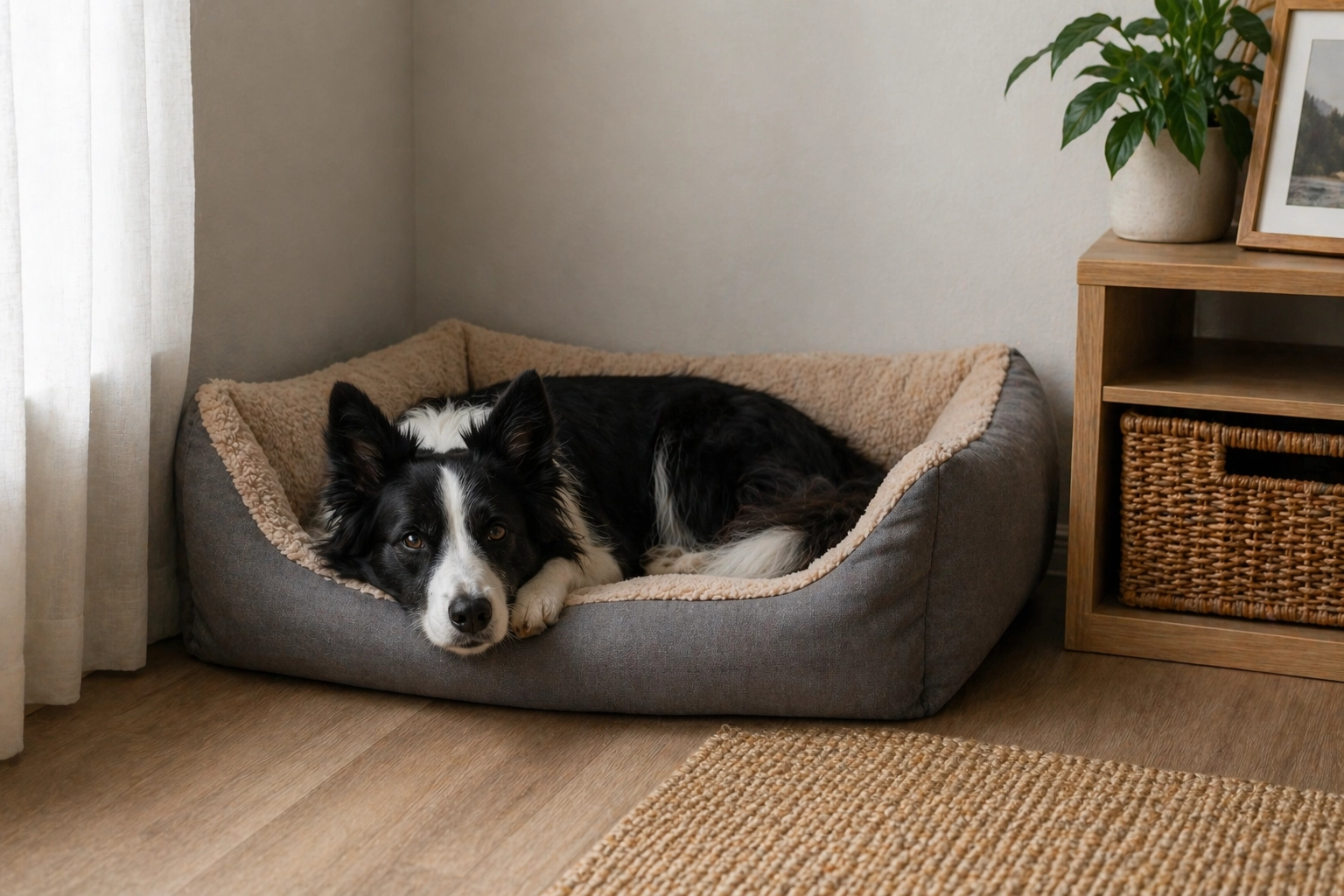
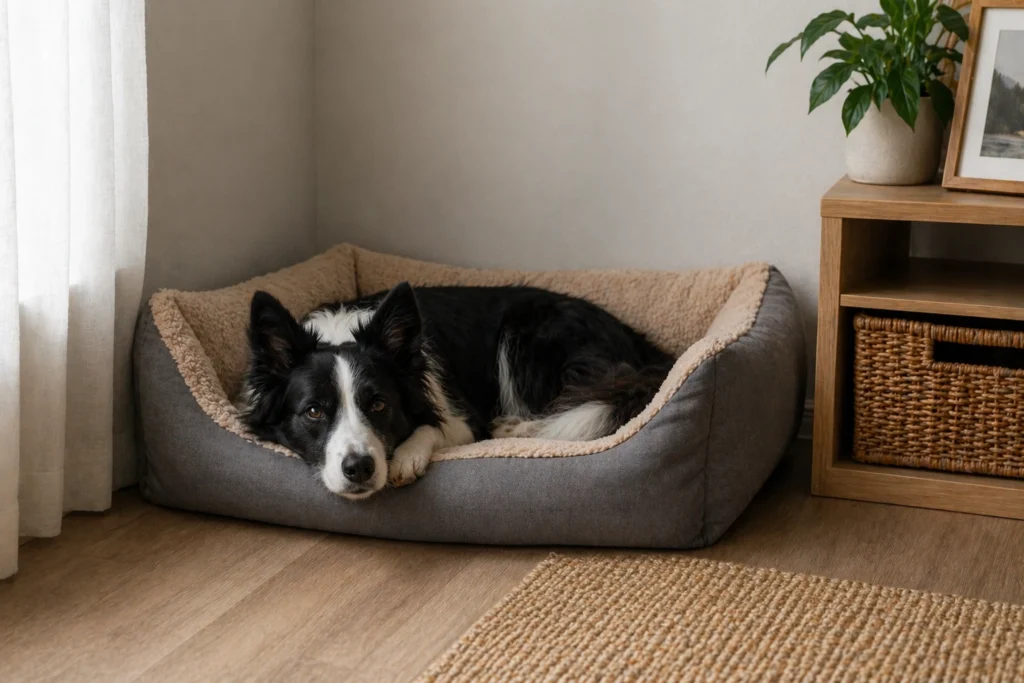
A dog bed is where your dog sleeps, rests and spends a big part of the day. Its comfort directly affects your dog’s daily well-being. That’s why it’s worth choosing carefully, taking into account your dog’s size, age and even their preferred sleeping position.
Size: allow extra space
The bed should let your dog lie comfortably in a natural position without feeling cramped. Some dogs stretch out fully, while others curl up and change position throughout the night.
To estimate the right size:
- measure your dog from nose to the base of the tail while lying down
- add extra space so they can shift positions freely
- keep in mind that raised sides reduce the usable space inside
If the bed is too small, your dog may avoid it or only use part of it.
Types of dog beds
- Mattress or cushion
A flat, open surface without raised edges.
Suitable for: dogs that like to stretch out, large breeds, warm indoor spaces.
- Bolster bed
Soft raised edges around the perimeter.
Suitable for: dogs that like to curl up and rest their head on something.
- Enclosed bed
A covered design that provides a sense of shelter and privacy.
Suitable for: cautious, small or noise-sensitive dogs.
That said, not all dogs enjoy enclosed spaces.
Filling
A good filling should hold its shape and distribute weight evenly instead of clumping.
Common options:
- high-density foam
- hollow fiber and other synthetic fills
- memory foam
For large, senior dogs or dogs with joint discomfort, choose a firm base with good support.
Bed care
A dog bed is used every day, so easy maintenance matters.
What to look for:
- a removable cover
- machine-washable materials
- durable, wear-resistant fabric
- clean stitching without loose threads
- a non-slip base for smooth floors
If your dog sheds heavily, light fabrics may need more frequent cleaning. If your dog tends to dig, choose more durable materials.
Age matters
1. Puppy
Choose something easy to wash. Many puppies chew on fabric, so an affordable option is often best at first.
2. Active adult dog
Durable, easy-care beds are the best choice.
3. Senior dog
Look for a low entry, stable shape and a firm, supportive surface.
If your dog has chronic joint or spine issues, or is recovering from an injury, it’s best to consult a veterinarian before choosing a bed.
Where to place the bed
Even a good bed may go unused if it’s placed in the wrong spot. Choose a calm area without drafts. Unlike cats, many dogs prefer to stay close to their people rather than being isolated.
It may take some trial and error to find the right location.
Common mistakes
- choosing a bed that is too small
- thin filling that quickly loses shape
- fabric that is difficult to clean
- high beds that are hard for older dogs to access
- choosing based only on appearance
- expecting your dog to love it immediately
The right bed combines comfort for your dog with practicality for you: the right size, a supportive surface and easy care. The better it matches your dog’s habits and needs, the more likely it is to become their favorite place to rest.